SOURCE :- THE AGE NEWS
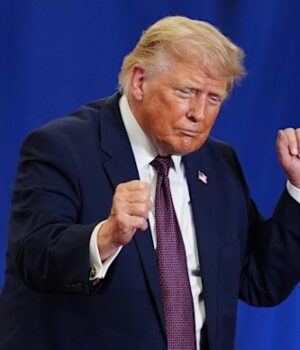
US President Donald Trump has faced scrutiny for bruising on his hands, swelling in his ankles and apparent drowsiness, among other questions about his health. Some doctors say they’re worried about another risk: the 23 pounds (10 kilograms) that Trump may have gained since his last campaign for president.
In August 2023, when he was charged in Georgia in an election interference case, Trump’s booking record listed his weight as 215 pounds (98 kilograms). He weighed 238 pounds (108 kilograms) in May, according to a medical report released by the White House that month.
That would leave him about 0.8 of a kilogram shy of being classified as “obese”, as he was in 2019 and 2020, given his height of 190.5 centimetres.
Trump’s medical measurements have long been dissected, and it’s unclear where the 2023 weight figure came from. But the president has appeared heavier in photos than he did during his campaign, and the administration said he gained 14 pounds (six kilograms) between his most recent annual medical checkups.
White House physicians have said they’ve advised Trump – who has made little secret of his love for fast food and his distaste for intense exercise – to focus on weight loss, improving his diet and sustained physical activity. Outside doctors put it more directly: the 80-year-old president would be safer if he reduced his waistline.
“We know that obesity is a strong risk factor for numerous health issues – as well as premature disability and death,” said Scott Kahan, a George Washington University physician and director for the National Centre for Weight and Wellness.
never taken a GLP-1 anti-obesity drug.Getty Images
“Addressing obesity to protect the president’s health should be a priority similar to ensuring Secret Service protections for his life.”
The White House did not directly respond to questions about Trump’s weight, pointing instead to his energy and stamina.
Trump has demonstrated signs of healthy ageing. His weekly White House schedule frequently includes intense periods of meetings, press events and public remarks; he spends many weekends playing golf. His physicians have repeatedly said that they’ve been impressed by his energy, cognitive fitness and other positive markers.
“I told him he could do a better job with his diet, and he would be a little healthier if he exercised and lost some weight, but other than that, he was in outstanding shape for his age,” Ronny Jackson, who served as Trump’s physician in his first term, wrote in a 2022 memoir.
But Trump’s weight is a risk factor, medical experts have said, acknowledging that many Americans struggle with similar challenges.
More than 40 per cent of adult Americans are obese, and an additional 30 per cent-plus are overweight, according to federal data. Health Secretary Robert F. Kennedy jnr and other senior officials have said that helping reduce Americans’ weight should be a priority as part of their campaign to “Make America Healthy Again” and help people live longer lives.
The president has also repeatedly invoked weight – his own and others’ – in public remarks. It is a favourite taunt he uses against opponents such as Democratic Illinois Governor J.B. Pritzker and his former adviser Chris Christie.
“I would never call anybody fat,” Trump said in a speech at last month’s White House correspondents’ dinner, where he mocked the idea of Christie and Democratic New York Congressman Jerry Nadler fighting over a cheesecake. “I have my own problems, you know?”
Trump has sometimes quipped about his own appearance, saying he hasn’t wanted to wear bulletproof vests because they could make him look fat. He has also jokingly defended his diet.
“Maybe junk food is good and the other food is no good,” Trump said in the Oval Office in May. “I know many, many people that all they do is watch their weight, their this, their that, and they kicked the bucket, and here we are. I feel great.”
In a statement, the White House praised Trump’s fitness and contrasted him with predecessor Joe Biden.
“President Trump’s sharpness, unmatched energy, relentless work ethic and historic accessibility stand in stark contrast to what we saw during the last administration, when Democrats and the legacy media intentionally covered up Joe Biden’s serious mental and physical decline from the American people,” spokesman Davis Ingle said in a statement.
“President Trump is the sharpest and most accessible president in American history who is working non-stop to solve problems and deliver on his promises.”
The White House did not respond to other questions about the president’s health, including physicians’ recommendations this year that Trump address his weight and whether he has ever taken a GLP-1 anti-obesity drug.
Trump has said he has never taken a GLP-1 drug.
Trump’s diet and weight have been scrutinised across his political career, with his love for McDonald’s a staple. Pressed by interviewer Barbara Walters in 2015 on whether there was anything they would change about their father, Trump’s children eventually conceded that they didn’t like his diet.
“I want him to eat healthier,” Ivanka Trump told Walters.
Trump also discussed his weight in a September 2016 appearance on The Dr Oz Show. A letter released by Trump’s personal physician that month said he weighed 236 pounds.
“The one thing I would like to do is be able to drop 15, 20 pounds,” Trump told Mehmet Oz, the show’s host – now the Medicare and Medicaid chief in Trump’s administration – saying that it was difficult because of his lifestyle.
Trump has since joked about the experience.
“I went on his show and he determined that I should lose weight,” the president said earlier this year, reflecting on his conversation with Oz. “He said, ‘I think you should lose weight.’ I said, ‘I don’t need you saying that in front of millions of people. You don’t have to tell me that.’”
Contrary to his goal, Trump grew heavier during his first term as president. Jackson in January 2018 said that Trump weighed 239 pounds (108.4 kilograms), about a pound shy of being classified as obese under body-mass index (BMI) calculations.
“I think a reasonable goal, over the next year or so, is to lose 10 to 15 pounds,” Jackson told reporters that month. “We talked about diet and exercise a lot. He’s more enthusiastic about the diet part than the exercise part, but we’re going to do both.”
It is unclear whether Trump adopted any changes to his diet or began more exercise during his first term, and spokespeople for the White House and Jackson did not respond to questions about it.
Sean Conley, Jackson’s successor, said in February 2019 that Trump weighed 243 pounds (110 kilograms), making him technically obese. Conley in June 2020 said Trump weighed 244 pounds.
Four months later, Trump contracted a serious case of COVID-19, the impact of which is linked with obesity, physicians have found. The president received a then-experimental antibody cocktail, produced by Regeneron, that he credited with helping save his life. He left office in January 2021.
Trump was noticeably thinner as he announced another campaign for president in 2023. A doctor’s note released by the campaign in November said that he had “reduced his weight through an improved diet and continued daily physical activity”.
Trump has continued to face questions in his second term about his weight. Those questions were renewed recently after Stat News reported that the administration had worked with Eli Lilly to expedite access to a new weight-loss medication for an unnamed patient who was 79 at the time. The White House has denied that Trump received the drug, retatrutide, which is more powerful than traditional GLP-1 medications.
Eli Lilly said it could not comment on any individual patient’s medical prescription, including whether Trump had ever been prescribed retatrutide, a GLP-1 or other drugs.
Some doctors, who declined to comment specifically on Trump, disagreed on how to interpret a hypothetical 80-year-old patient with a BMI of 30.
“BMI is a great screening tool, but it’s not everything,” said Gitanjali Srivastava, a physician who specialises in obesity. Srivastava, who said she has treated patients in their 70s and 80s with obesity, said that weight could be a secondary issue to other markers of health.
“At that age, it’s less about a number, but more about, what is the per cent body fat? What are we trying to improve including overall health, function, body fat?” she said.
David Kessler, who served as head of the Food and Drug Administration under presidents George Bush snr and Bill Clinton, said that he was deeply concerned about Americans’ excess body fat, which he said contributes to premature death.
“That fat around the midsection – that visceral adiposity – is fat around our liver, pancreas, our heart where it doesn’t belong,” Kessler said.
For his part, Trump has said he was wary of growing heavier, invoking former president William Howard Taft, who weighed more than 300 pounds (136 kilograms).
“He was our heaviest president, and I have to be careful because I don’t want to supersede his record,” Trump told second lady Usha Vance in a podcast posted last month.
“And a thing like that would be possible if I allowed it to happen.”
Washington Post
Get a note directly from our foreign correspondents on what’s making headlines around the world. Sign up for our weekly What in the World newsletter.