Source : THE AGE NEWS
Federal Energy Minister Chris Bowen has set a deliberately high bar for states wanting to bypass new national green power rules for data centres, as the Albanese government moves to heavily restrict the use of coal and gas in the country’s booming AI infrastructure sector.
Bowen on Friday said newly agreed national standards requiring data centres to source 100 per cent of their electricity from renewables, backed up by firming assets like batteries and fast-start gas power stations, would remain in place across Australia and that “no carve-outs” or blanket exemptions would be given to any state or territory.
However, under a deal struck this week between state and federal energy ministers, government-owned energy utilities would be able to make their case for using fossil fuel generation where they can demonstrate it would be cheaper for energy bills and better for grid reliability than renewables.
The Australian Energy Regulator would assess those cases individually, Bowen said in an interview. He said any claim that fossil fuels could power data centres more cheaply than renewables would require substantial evidence and it would undergo intense scrutiny. “It will be a very high bar,” he said.
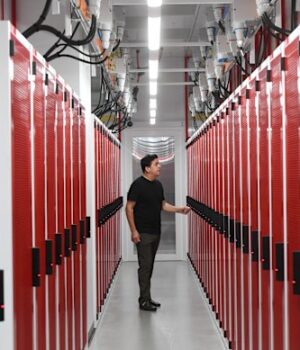
Plans to build dozens of new data centres – buildings filled with servers that store and transmit online data – are attracting intensifying scrutiny across Australia, partly due to the vast amounts of electricity they will require around the clock to run their high-intensity computing systems.
Critics fear the data centre boom, if not strictly managed, will raise the need to continue using coal-fired power stations and natural gas plants beyond their expected closure dates, increasing the national output of climate-polluting greenhouse gas emissions. The Greens and Greenpeace have called for a moratorium on new data centre approvals.
The federal government’s compromise is aimed at preserving its new set of national standards requiring data centres to fully offset their electricity use with investments in firmed renewables amid a pushback from Queensland and the NT.
“We said we would legislate data centre standards which would require 100 per cent renewables, plus peaking and firming. That is unchanged,” Bowen said.
“The only change is where a state government-owned energy company wants to make a case that they can do it cheaper than renewables. That will be considered on a case-by-case basis.”
The industry’s peak body backed the idea of a single national framework but it said Australia would lose investment if clean, firmed power could not be delivered at the speed the global market was moving.
Data Centres Australia chief executive Belinda Dennett said operators were already offsetting their energy use through power purchase agreements and large-scale generation certificates, adding 1.5 terawatt hours of renewable energy to the grid.
“Clean, firmed energy must be available at the same pace at which the global data centre market is moving,” Dennett said. “We need to be focused on how we achieve this – utility connection times, transmission, firming – because adding complexity and uncertainty, or just adding additional costs onto one sector, risks pushing Australia out of what is a very globally competitive market.”
Dennett said operators shared the government’s goal of putting downward pressure on household power bills, and they paid for the energy infrastructure they used.
She put the investment at stake at $40 billion to $50 billion, along with 23,000 ongoing operational jobs, not counting construction, if the policy settings were right.
AirTrunk, the Sydney-based operator bought by Blackstone in a $24 billion deal in 2024, said a high bar for exemptions was appropriate but the rules needed to work commercially.
“Data centres should pay their fair share of the energy they use and help fund the new renewable energy Australia needs, and we support a consistent national framework to achieve it,” said AirTrunk associate vice president for utility and energy Sabooh Whitelaw.
The company is matching 86 per cent of its Australian electricity use with renewable energy and it had committed to 100 per cent by 2030, Whitelaw said.
Climate advocates have welcomed the introduction of binding national standards for data centres to be powered by renewables, but they feared the potential exceptions could undermine the government’s attempt to ensure the rapid expansion of the facilities did not lock Australia into fossil fuels for decades to come.
“Australia has one shot at getting this right,” Climate Council chief executive Amanda McKenzie said. “Clear and consistent national standards that deliver additional renewable energy, without any exceptions, is the only way to avoid higher power prices and pollution.”
Australia is home to 165 operating data centres, which consume 2.8 per cent of total electricity demand on the eastern seaboard today. The Australian Energy Market Operator assumes that that figure could rise nearly seven-fold to 13 per cent of demand by 2035.
While firmed renewable energy was likely to prove the cheapest option in most circumstances, the economics could differ in certain remote locations in northern Australia, where entirely new renewable infrastructure could prove costly, Grattan Institute senior fellow Tony Wood said. He said the potential for case-by-case carve-outs could “open the door” to large increases in emissions if it permitted state-owned energy providers to power data centres with under-utilised gas-fired peaking plants.
“Running gas-fired power stations as base-load would have a material impact on emissions,” he said.
New national emissions data released on Friday show Australia’s output of greenhouse gases was 1.6 per cent lower across the 12 months to March 2026 due to declining emissions from the electricity sector, agriculture and coal mining.
The Market Recap newsletter is a wrap of the day’s trading. Get it each weekday afternoon.
 Nick Toscano is a business reporter for The Age and Sydney Morning Herald.Connect via X or email.
 David Swan is the technology editor for The Age and The Sydney Morning Herald. He was previously technology editor for The Australian newspaper.Connect via X or email.