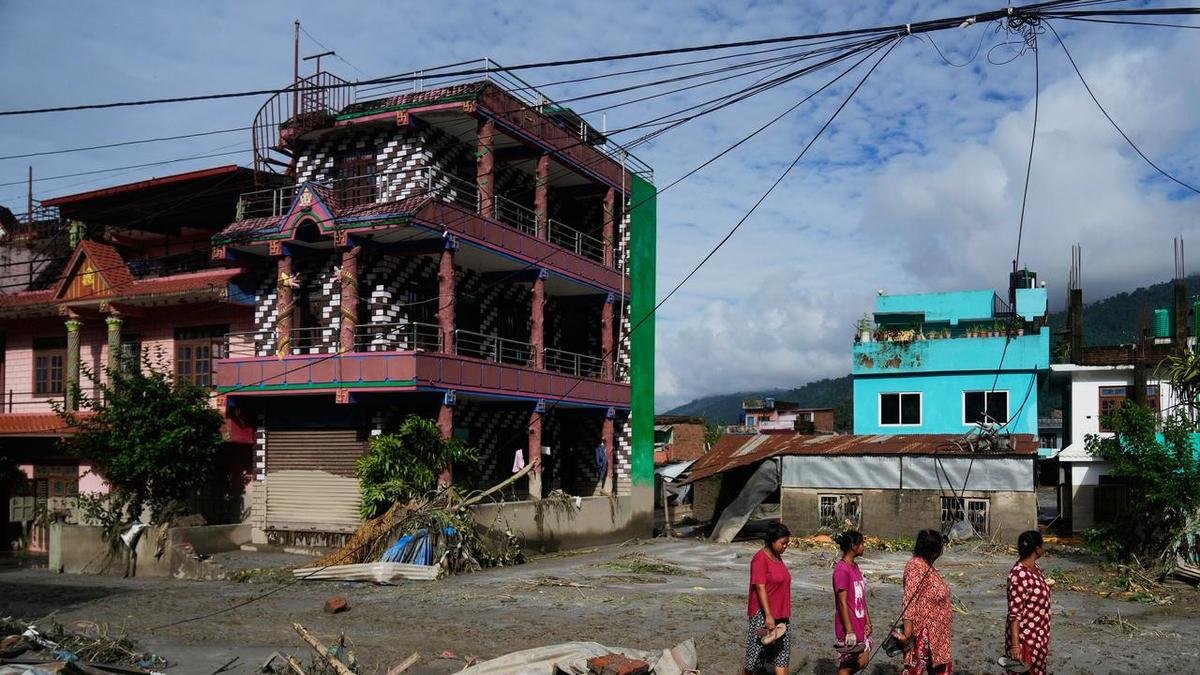
Source : Perth Now news
Climate change, unchecked development by China and a lack of regional collaboration could result in more flooding on the fragile Tibetan plateau, scientists and advocacy groups warn.
Scientists believe the catastrophic floods on the Nepal-Tibet border were triggered by an ice avalanche that fell from a glacier 5200 metres above sea level in the Langtang Valley on Wednesday.
The force of the avalanche sent a surge of water, sediment and boulders downstream, killing more than 450 people in the Rasuwa mountain district of Nepal.
Hundreds more, including 39 Australians, are missing after a landslide hit communities downstream.
Above average temperatures in the region in the last month may have triggered the chunk of ice to break off and drop up to 2000 metres, geoscientist Jakob Steiner told AAP.
“We have a strong suspicion that climate change played a role here,” Dr Steiner, a fellow at the Asian Mountain Alliance, told AAP.
“We do see an increase in the magnitude of such events that we have such huge events happening more and more often, and that’s a bit concerning.”
Senior Cryosphere specialist Mohd Farooq Azam said the tragedy underscored the need for stronger regional collaboration, with governments taking coordinated action to respond to cross-border hazards.
Better communication between the Nepali government and Chinese authorities, which occupy Tibet, was also imperative.
“For these kind of climate risks, globally we have to be on the same page and and here the coordination is lacking,” Mr Steiner said.
Neera Shrestha Pradhan, from the international Centre for Integreated Mountain Development, called on decision makers to urgently implement community-based early warning systems to pass on flood information.
Kalsang Tsering, a member of the Tibetan Parliament in exile in Australia, said censorship of Tibetans made cross-border communication difficult.
“If someone shares natural disaster information in Tibet they get arrested,” Mr Tsering claimed.
Australia, and other global governments, should demand transparency from China on developments on the plateau, with the superpower building the world’s largest hydroelectric project on Tibet’s Yarlung Tsangpo River, the Australia Tibet Council told AAP.
“At the very least, Australia should be questioning China’s mega development activities in Tibet in the wake of this tragedy,” chief executive Zoe Bedford told AAP.
The Australian government has established a $5 million assistance package for affected communities.
An initial team of three humanitarian response specialists will be sent to help 20 staff already on the ground in Nepal.