

SOURCE :- THE AGE NEWS
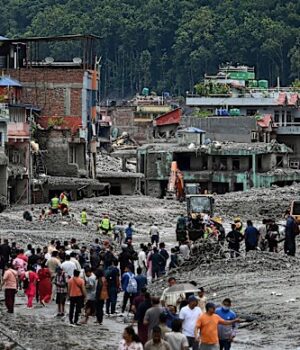
It wasn’t a mere flood that dumped these metres of mud and carved new riverbanks through homes and shops; that swept away a pair of bridges on a sunny morning, and the people standing on them.
It was a beast, arriving with the roar of a jet engine on a runway, says KP Bharaisain, a 68-year-old resident of Dhunge, a small town in Nepal’s devastated Nuwakot district.
He ran up the nearest hill, watching helplessly. “It was a giant wave of water, bouncing up and down like a football,” he says.
The river kept rising for about 15 minutes after the initial surge, before quickly receding. Within half an hour, he says, the new wasteland of Dhunge was revealed.
“I never expected something this big to happen,” he says, gesticulating to the main street and the rushing Trishuli River, which, at about 9.30am on Wednesday morning, were one and same.
A glacial lake, about 50 kilometres north, had collapsed not an hour earlier, unleashing a rapid surge of water that has left thousands dead or missing along the river system, 41 Australians among them.
It has been days since the disaster, and while it may be cool at altitudes, the valleys bake.
Dhunge, busy with passing Hindu pilgrims this time of year, is now the last town before the roads become impassable.
Every aid agency is here, even the Scientologists. Police blow piercing whistles at people moving too close or seeking scant shade in areas that may be unstable.
Everywhere is mud, and though it has the appearance of being compact, it is quicksand capable of swallowing a person two times over in some parts. Straying and sinking onlookers need help back to solid ground.
What must be greeting the choppered-in crews upstream, where people had no warning or time to react? Australian tourists like Sreedharan Iyer and his family, who had just checked out of their hotel near the source of the floods at 8.45am and were making their way to sacred Mount Kalaish – what must they have seen?
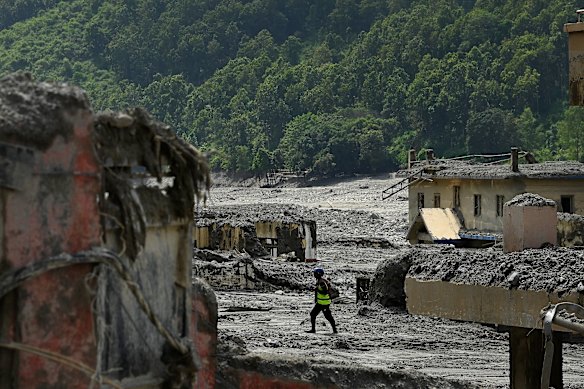
No human in Dhunge has been pulled from the debris alive since rescue workers have been on the scene.
Some joy on Saturday morning, though, when they helped retrieve a dog from the ruins in which it had been hiding. “Last night we were close to getting it, but it was trying to bite us,” says one.
And neither have they recovered bodies. Any remains have been washed downstream, buried in mud or wedged under broken concrete walls. Police say they can see body parts on the sparsely populated opposite bank, but it’s impossible to cross the river now because the bridges are gone.
Residents say people were standing on them when the surge arrived, trying to get a neat photo. Though there had been some warnings from upstream, no one imagined it was going to be like this.
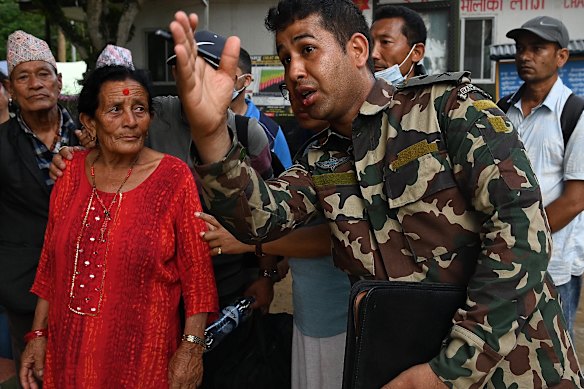
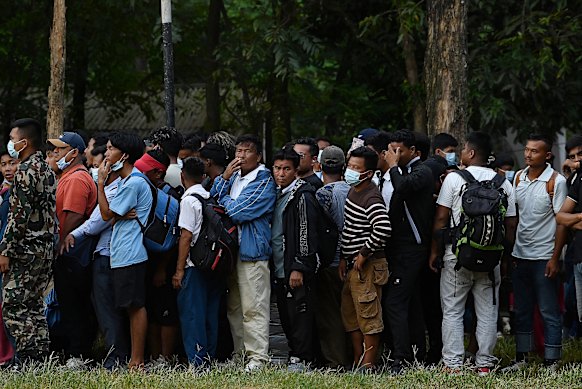
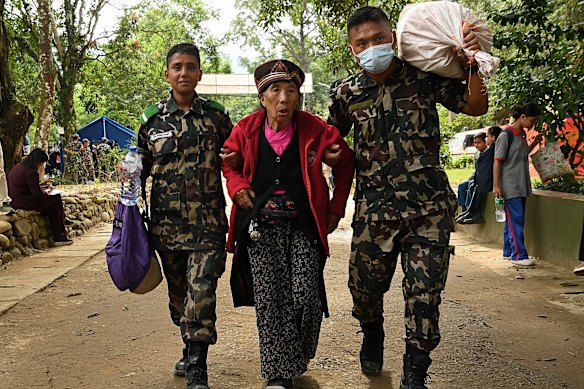
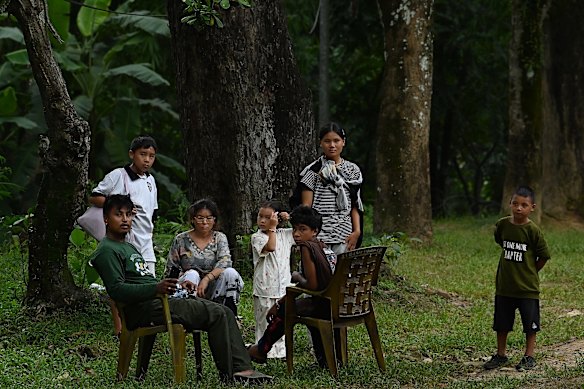
A nearby army camp has been set up as a staging ground for helicopters delivering survivors and the dead from upstream, attracting dozens of families desperate to see disembarking loved ones.
People are trying to go the other way too. They want to look for their relatives and friends, or they have been cut off from their unaffected villages and need to get home.
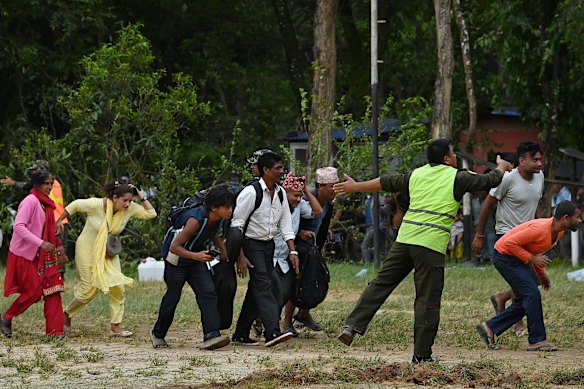
Even in the short breaks between coming and leaving helicopters, the scene at the camp’s gates is chaos, a clamour of whistles, pleas and megaphones.
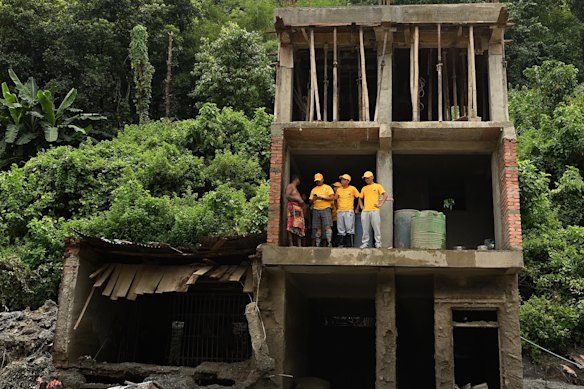
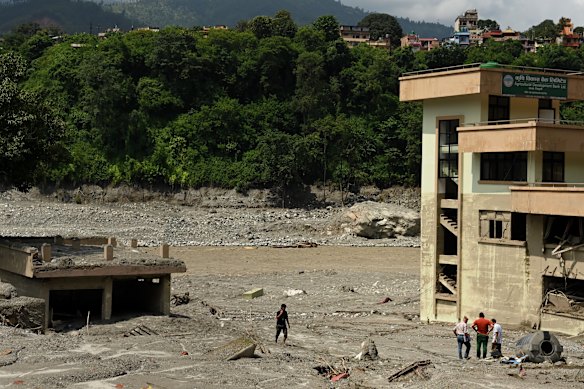
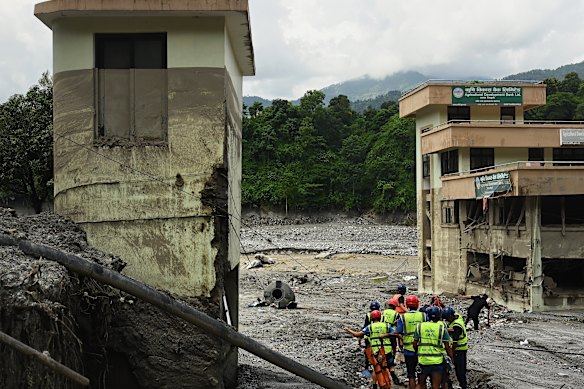
At Dhunge, there is talk that rescuers have located human remains in the ruins of the Agricultural Development Bank, which has blown-out doors and windows inclusive of the second floor. The building is only about 30 metres from stable ground.
First, however, you have to get through the quicksand. Some rescue men use sheets of plywood as platforms. Most of the others follow a route conceived by an army man plunging the mud with a big stick to test for depth and cavities.
After more than an hour in the beating sun, it’s a false alarm, and a window to the painstaking work still to come.
Read more on the Nepal flood disaster:
Get a note directly from our foreign correspondents on what’s making headlines around the world. Sign up for our weekly What in the World newsletter.


