

SOURCE :- THE AGE NEWS
London: When the British government imploded in June, one key factor was a public dispute between ministers about how much the country could afford to spend on defence.
The goal was so pivotal for the defence secretary at the time, John Healey, that he quit the cabinet in protest when the prime minister, Keir Starmer, would not agree to lift the outlay to 3 per cent of GDP by 2030.
Healey set off a detonation that made the leader look doomed. Starmer resigned 11 days later.
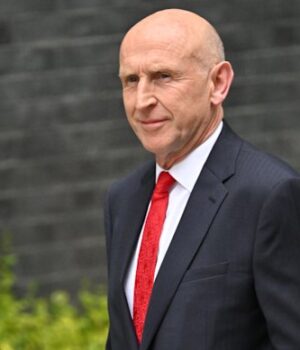
Now, that same target is haunting the government led by Prime Minister Andy Burnham. And it is causing trouble for Healey, who was one of the big winners in the new ministry when he was promoted to chancellor of the exchequer.
His decision is to go soft on the hard target. Healey is going to shelve the 3 per cent goal, according to reporting in The Financial Times and other media. Rather than doing what he thought was so important only six weeks ago, he is sending the matter to a review over the next year.
This exposes Healey to accusations of hypocrisy or weakness, of course, and it is a reminder of the self-serving positioning by ministers in the dying weeks of the Starmer government. But it also highlights a more important truth: changing a few leaders does not solve Britain’s budget mess.
And it is a reminder of the risks for Australia when so many defence projects, including AUKUS, depend on the British defence industry.
On the surface, leaders from Britain and Australia try to show that everything is fine. Healey hosted Deputy Prime Minister and Defence Minister Richard Marles in London in June to display a steady friendship. But Healey quit the next day, so the visit merely highlighted the instability at the top of this relationship.
Australia is already dealing with erratic allies in Washington. It could do without the same in London. Things are settling down under Burnham. The UK’s new defence secretary, Wes Streeting, is a friend of Australia – he visited in 2023. At a personal level, the alliance between the UK and Australia is in good hands. The next logical step is for Marles and Streeting to set up a meeting.
But there’s a problem. Britain is already spending beyond its means and is in no position to commit to an even bigger increase in its defence outlays. This does not directly endanger AUKUS, but it highlights how stretched national security is in one of Australia’s most important allies.
Britain’s defence budget is forecast to reach £62.0 billion (about $117 billion) this financial year, rising to £79.1 billion in 2029-30, according to the House of Commons Library. The spending is on track to reach 2.7 per cent of GDP by 2030.
Going further, however, looks simply too hard.
Burnham and Healey have been mugged by reality. One estimate suggests they would need to find an additional £10 billion per year to reach 3 per cent. They obviously cannot find the money.
This is not a problem of their own making. The previous Conservative government allowed defence spending to stagnate and budget deficits to deepen over 14 years in power. It would take years to turn this around if Britain’s leaders could ever agree on how to do so.
The UK’s public sector net debt just passed £3 trillion, according to market estimates based on official numbers from the Office for Budget Responsibility. This is the net figure after accounting for public assets. It is 94 per cent of GDP.
And it is not getting any better as the years pass. The government’s overall borrowing – the difference between total public sector spending and income – was £56.7 billion in the year to the end of June. The debt will grow. The bond markets are watching and will punish the government if it cannot restrain its spending.
There is no consensus, however, on how to manage the budget. Tax increases would please the Labour left but undermine Burnham’s pro-growth message. Spending cuts could split the government. Attempts to scale back some welfare programs were blocked by a backbench revolt within Labour ranks last year.
Australia faces similar challenges, although its borrowing is lower. Marles pledged in April to hit the 3 per cent goal by 2033.
Britain’s military leaders have warned loud and long about the weaknesses in defence. The chief of the defence staff, Air Chief Marshal Sir Rich Knighton, said in June the country was facing the “most dangerous period” he has known in his career.
The author of the government’s review of defence, Lord George Robertson, called for more investment in April. “We are underprepared. We are underinsured. We are under attack. We are not safe,” he said. He is a former Labour defence secretary.
The challenges were laid bare when Iran attacked Cyprus in March during the first wave of drone strikes around the region. The Royal Navy struggled to send a warship to respond swiftly, with several ships unavailable and destroyer HMS Dragon only setting sail one week after the attack.
The pressure will only increase as long as Russia remains a threat to Europe. The Russian attacks on Ukraine are highlighting the shortage of Patriot interceptors and other systems to counter Russian missiles. The Russian strike on a Kyiv ammunition depot, killing 37, was the latest sign of this.
Britain, along with its major allies in Europe, is now trying to make up for lost time by developing new hypersonic missiles and missile defence systems. (Some of these will be tested at Woomera in South Australia.) It also has to spend on protections against Russian hybrid warfare, such as cyberattacks. None of this comes cheap.
The broader context is the withdrawal of American support under President Donald Trump, who wants Britain and other NATO allies to spend more on their own security.
Healey thought he had the answer to this in June when his job was to spend the money. It is harder now that his job is to find the money.
Burnham, meanwhile, is enjoying a honeymoon in the opinion polls, as most leaders do after taking office with high hopes. This changes when leaders start making hard decisions. Burnham has spent his first weeks setting ambitious and worthy goals, such as tackling homelessness, but he has yet to do anything that risks offending the Labour base.
The hard decisions are yet to come. One of them will be how to pay for more defence spending. Australia has a stake in what Burnham and Healey decide.
Get a note directly from our foreign correspondents on what’s making headlines around the world. Sign up for our weekly What in the World newsletter.
 David Crowe is Europe correspondent for The Sydney Morning Herald and The Age.Connect via X or email.

