Source : Perth Now news
Thousands more Australians with advanced cancer will soon gain cheaper access to an immunotherapy treatment under an expanded Pharmaceutical Benefits Scheme listing, a move expected to save eligible patients thousands of dollars.
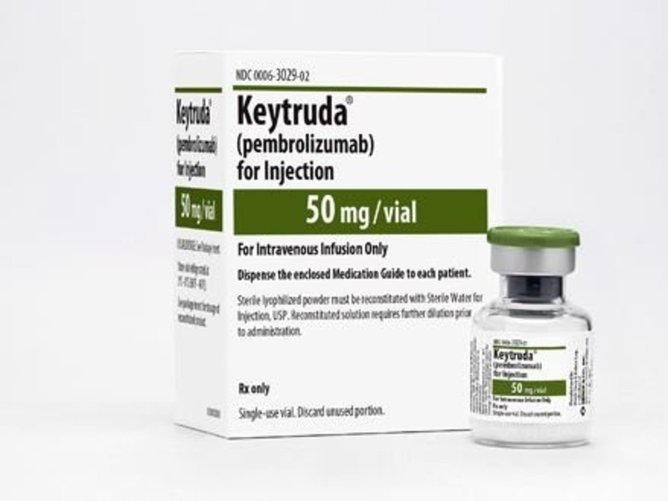
From September 1, pembrolizumab, sold as Keytruda, will be available on the PBS under a broader multi-cancer listing for eligible patients with advanced or metastatic cancers that cannot be surgically removed and are considered sensitive to immunotherapy.
Without the PBS subsidy, patients could otherwise face costs of about $14,800 per script for Keytruda.
The Keytruda and Padcev combination could cost up to $4800 per script.
Under the subsidised scheme, eligible patients are expected to pay $7.70 on concession or $25 for general patients for each infusion of Keytruda treatment.
The change means clinicians will be able to use their judgment, backed by clinical evidence, to decide whether the treatment is suitable, rather than relying on separate PBS decisions for each individual cancer type.
Keytruda has already been listed on the PBS for 17 cancer indications. Under the new arrangements, it will also be newly listed in combination with enfortumab vedotin, sold as Padcev, for people with stage 3 or 4 urothelial cancer, an advanced form of bladder cancer.
The federal government announced Keytruda’s PBS access will be significantly expanded to cover more cancers, including advanced cholangiocarcinoma, also known as bile duct cancer, ovarian cancer and Merkel cell carcinoma, a rare skin cancer.
About 700 Australians a year are expected to benefit from the new multi-cancer listing, while more than 490 people a year are tipped to benefit from the bladder cancer listing.
MSD Australia said the broader change would provide subsidised access to more than 10,000 newly eligible Australians over the next four years.
Health Minister Mark Butler said the expanded listing would help more people get access faster and at a lower cost.
“Keytruda is one of the most extraordinary drugs available in the country and now it is listed to help so many more Australian patients,” Mr Butler said.
“This is another illustration of the beauty of our Pharmaceutical Benefits Scheme, bringing the best medicines in the world, to Australia at affordable prices.”
For women such as Helen Frankas, 62, from Taylors Lakes in Victoria, the change carries particular weight.

Like many of the roughly 2000 Australian women diagnosed with ovarian cancer each year, Ms Frankas first noticed symptoms that were easy to brush off, including bloating, back and pelvic pain, and bowel changes.
Even as a midwife with medical knowledge, she did not initially suspect a life-threatening illness.
She was later diagnosed with stage 3B ovarian cancer. Major surgery and chemotherapy in 2022 removed tumours from her ovaries and bowel, but the cancer returned the following year.
Ms Frankas then joined a global clinical trial at Epworth led by Associate Professor Sumitra Ananda, testing Keytruda in combination with chemotherapy as a treatment for ovarian cancer.
She completed two years of treatment in early 2025 and has been in remission since.
“When I joined the clinical trial, I was excited and incredibly grateful to be receiving immunotherapy as there had been so much hope around its potential as a successful treatment,” Ms Frankas said.
That hope gained momentum in April 2026, when results from the study were published.
The findings helped clear the way for Keytruda to become the first TGA-approved immunotherapy for advanced ovarian cancer earlier this month, and now for eligible women to gain subsidised PBS access without the long wait that often follows regulatory approval.
Professor Ananda described it as an “important moment” for patients.
“Today’s announcement will help make this immunotherapy treatment option more affordable and potentially remove the financial burden that patients with advanced or metastatic cancer may face,” Professor Ananda said.
For Ms Frankas, the policy shift is about what comes next for other patients.
“Immunotherapy offers a new path for women with ovarian cancer and I believe it has tremendous potential to change outcomes,” Ms Frankas said.
She is now enjoying retirement and road trips to the Sunshine Coast with her husband Peter to visit their son and granddaughter, while hoping other women will have the same chance she had.
“I was a midwife, but it is a different story being on the other side. I felt so grateful and humbled by the nurses, surgeons and everyone involved in my care. I feel blessed and I hope my story gives other women more hope for their future.”