Source : THE AGE NEWS
Do the two sides of politics want more affordable housing or not? They would die before they admitted it, but if you judged them by the way they’ve behaved, no, they don’t.
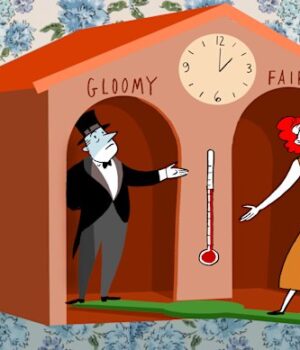
What they’d like is to live in two worlds at once. A world for home owners where house prices kept roaring up to the skies, and a world for would-be home owners where house prices kept gently falling.
The impossibility of living in both worlds at the same time explains why they invented the clumsy and pompous term “housing affordability” – which allows them to allude to the possibility of falling house prices without having to say the word. The trouble is that in the real world, you can’t do what pollies would love to do: have their cake and eat it.
But if you force them to choose, the pollies will always go for rising house prices. Why? Arithmetic. The number of voters owning their home far exceeds the number of voters who, at that point in time, are seriously trying to afford a mortgage.
This is my best explanation of why our politicians have allowed our housing industry to get into the terrible state it’s in. Do you realise that the median house price in Australia is roughly double the median price in America? Do you reckon that makes us twice as well off as the Yanks? If the houses are of comparable size and location and quality, only in our dreams. We’ve bid our prices to twice the level they’ve bid theirs to.
We’re living in our own little expensive Australian bubble. Our kids are having to take on mortgages that are about twice the size Americans kids have to take on.
Why hasn’t the government done something to stop this mad auction? Because so many punters love seeing house prices rise.
Of course, to every action there’s a reaction. In this case, for us, it’s been the establishment of the bank of mum and dad. You’d think that, by now, parents having to shell out for their kids must be starting to wonder whether the game we’re playing mightn’t be a bit crazy. Our kids need special help because we, along with other oldies, have been ripping them off.
Just bad luck for kids in families that have too many kids to be helped, and the children of parents who’ve never been able to afford to buy a home in the first place.
Keep this up and it won’t be long before we’ve divided Australia in two alien sections: a smaller, ever-shrinking number of people who own their home, and a larger, ever-expanding number of people who don’t. And this from a country that used to pride itself on its high rate of home ownership.
But not to worry – sort of. This craziness can’t continue. Because it is literally unsustainable.
You’d expect house prices to rise roughly in line with other prices, or with people’s incomes but, in fact, they’ve been rising much faster than incomes for decades. In America’s case, the median house price is about 4.8 times the average annual income. In Australia, however, it’s now about 9.7 times.
Obviously, the higher the multiple, the harder the home is to afford. So at some point – probably the point where the bank of mum and dad lies exhausted on the ground – house prices will have to stop growing faster than incomes and maybe fall back a bit.
What did we do to cause house prices to rise so quickly? Lots of different things. We just let it rip and this is what happened. And, since rising house prices pleased so many existing home owners, we let it rip some more.
Great game. Pity about the youngsters. Only now are we starting to realise how discontent and disillusioned this is leaving the younger generation. The silly kids have concluded the system is stacked against them. And they’d be right. Except that it’s happened more by neglect than design.
Fortunately, the Albanese government’s measures in this year’s budget to limit the use of negative gearing and revert to the original method of allowing for inflation in the taxing of capital gains have made a start to fixing the broken housing system.
The Howard government decided in 1999 to change capital gains tax in a way that ignored inflation but halved the rate of tax, making investment in (other people’s) housing hugely attractive to lazy investors. But this just pushed up auction prices as first home buyers competed with investors to buy properties.
Which brings us to the present fall in house prices. It’s common for the inexorable rise in house prices to be interspersed with brief periods of falling prices, and this one got started before the budget. But I have no doubt that the budget changes are the main contributor to the present fall.
With greatly reduced demand from investors, the fall may continue for a while. It could turn into a rout that scares the pants off people elsewhere in the economy and causes a serious economic downturn, but with any luck, it won’t become “disorderly”.
The saver is that housing is too fundamental to daily life for housing to go unoccupied for long. We all need somewhere to lay our head.
It turns out to be another case of cake-or-eat-it. It would be nice if housing could be a wonderful, tax-preferred investment as well as providing us with the tenure and security that owning your own home has long been valued for. But we’ve learnt the hard way that it can’t be both.
With the investor tax breaks reined back, we can now hope that, when the rise in house prices resumes – as it undoubtedly will – the rate of growth will be quite a bit slower.
If so, problem solved? No. There are other problems within housing that we also need to work on.
Ross Gittins is economics editor.
Ross Gittins unpacks the economy in an exclusive subscriber-only newsletter. Sign up to receive it every Tuesday evening.