SOURCE :- THE AGE NEWS
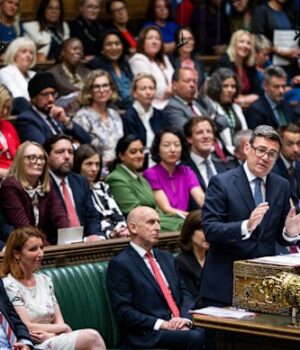
London: Smooth talk could not save Andy Burnham from the rough reality of the debt markets on Wednesday (London time) when he took his first questions in parliament since becoming British prime minister just over six weeks ago.
Burnham faced his first question time – known as Prime Minister’s Questions in Westminster – with good humour and an earnest promise to lead the country to better times. He is, after all, a good communicator.
One simple question, however, had him ducking and weaving when his main opponent in parliament, Conservative Party leader Kemi Badenoch, reminded him of all the policy ideas he had welcomed during hours of debate the previous day.
Her question: “Can he name a single spending request to which he answered ‘no’?”
Burnham dodged. He tried to sound tough on budget policy but could not name a single spending cut. Instead, he spoke about investing in programs for young people to get them off welfare – a worthy goal, but not the same thing.
Badenoch, who knows how to skewer her opponents with a smile, responded with mockery rather than the cheap thunder so many others deploy. She gently reproached Burnham for avoiding her question.
“He did not say no to a single spending request,” she told parliament.
“And, personally, I think it’s delightful that he wants to make everyone happy. But a prime minister needs to be a leader, not a people-pleaser.”
Badenoch is in no position to lecture a prime minister on budget discipline. She commands the wreckage of the Conservative Party, which – after it ruled for 14 years and left Britain with higher spending and more debt – is now eclipsed in the polls by Nigel Farage and his Reform UK movement.
Her questions, however, were good ones. They went to the heart of the mess in Britain’s finances and highlighted the tough choices ahead for Burnham – if he has the stomach to make any.
The bond markets are telling Britain what they think of its debt, and the news is not good. UK government bond yields are at their highest level since the global financial crisis: nearly 5.3 per cent for a 10-year bond on Wednesday.
Confidence in UK fiscal policy is in short supply because nobody can be sure whether Burnham is willing to cut spending, increase taxes or do both. The waiting game will continue until the Chancellor of the Exchequer, John Healey, delivers the budget on October 28.
With net public debt now on track to surpass £3 trillion ($5.65 trillion), the government has only one way to jump on spending. The cost of servicing the debt was £130 billion in the year to June, according to government statements, and appears likely to keep rising.
Other priorities are squeezed because of the astonishing cost of the debt. The interest bill was roughly double the defence outlay last year.
The nation’s welfare bill keeps climbing, and Burnham is reluctant to talk about cuts. The topic is so sensitive, in fact, that some government documents call these outlays “social protection” rather than welfare. Whatever the name, the cost is eye-watering: £407.3 billion last year, the biggest single chunk of the budget. This was up £21 billion from the previous year.
With one false move, Burnham and Healey can easily startle the markets. Their critics in the British media are already drawing parallels with the crisis in 2022, when Conservative prime minister Liz Truss oversaw a budget that spooked investors and ended her leadership.
Badenoch claims to have the answer. She is calling for cuts to welfare to help fund an increase in defence spending. She is light on details about how to do this. Ultimately, it is for Burnham to make the hard calls.
One option is to scale back disability benefits, mirroring the difficult debate in Australia. Without growth being curtailed, the cost of these benefits is forecast to rise from £39.1 billion to £58.1 billion over the five years to 2029.
Over two decades, the number of people in Britain who are entitled to receive a disability benefit has risen from 4.4 million to 6.9 million, according to the House of Commons Library. It is now about 11 per cent of the population.
Another option is to get young people into work, which is also parallel to the policy challenges in Australia. Until a few months ago, Britain had more than 1 million people aged 16 to 24 who were not in employment, education or training. These NEETs, as they are known, are the subject of an agonising argument about why 13 per cent of this age group seem doomed to fail.
In one small piece of good news, the number of NEETs fell to 981,000 in the three months to June. There may be hope for Burnham in using carrots and sticks to fix the problem, but he will not change anything by playing it safe. When he talks about investing in training, Badenoch laughs at the idea that he will spend money in the hope of cutting the welfare bill.
It is hard to see any room to cut health spending, given the pressure on the National Health Service, which delivers more free services than Medicare in Australia. Spending on health rose by £12.7 billion to £217.4 billion last year. As with welfare, this was well above inflation.
How, then, can Britain hope to pour massive amounts of money into defence? Labour, the Conservatives, and Reform all pledge to do more on security, but anything they do will require inflicting pain on some other part of the budget. There is no option to simply borrow more money to build more missiles, aircraft, ships and submarines.
(And Australia, of course, cannot build the AUKUS submarines on its own without a viable fiscal plan in Britain to develop these new vessels and their nuclear power plants.)
One of the most revealing questions to Burnham on Wednesday came from one of his own side. Tan Dhesi, the Labour MP who chairs the House of Commons defence committee, urged Burnham to make hard decisions now on spending.
“Defence is definitely one area where vibes alone just isn’t [sic] going to be enough,” Dhesi said. He warned that Britain would face a “fiscal event in the future” if it kept kicking the can down the road on these budget decisions. For Dhesi and others, the key goal should be to spend 3 per cent of GDP on defence by 2030.
Burnham replied by pledging to do more on defence, and for a moment he sounded as if he wanted to hit the 2030 target. In fact, he merely has a review over the next year to consider his options.
The honeymoon will be over for Burnham as soon as he confronts the budget reality.
One Labour MP, Darren Jones, dismissed some of the dreams about what Burnham can do. Jones, who was an aide to former prime minister Keir Starmer, warned on Tuesday that Britain would not get richer by spending more public money or taxing billionaires who could move overseas.
“Britain is poorer than we often think,” he wrote in The Times. “We shouldn’t rely on public spending as a route to some romantic version of making Britain great again.”
That was a hard truth for the greater public. It is interesting that this worry about spending can be found within Labour, not just among Conservatives such as Badenoch.
Burnham and Healey may choose to impose tax hikes on wealthier Britons, but it is hard to see a solution that relies on tax revenue alone.
One thing is certain: they cannot expect the bond markets to lend them limitless amounts of money when the annual interest bill is already so formidable.
Smooth talking will not fix their budget. They will have to cut spending.
Get a note directly from our foreign correspondents on what’s making headlines around the world. Sign up for our weekly What in the World newsletter.
 David Crowe is Europe correspondent for The Sydney Morning Herald and The Age.Connect via X or email.