Source : the age
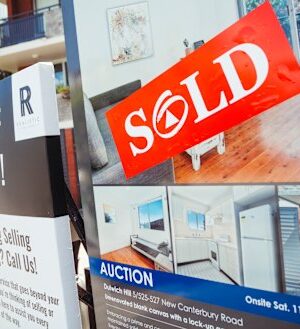
Housing affordability has slumped to its lowest level on record, two separate measures have revealed, with falling house prices not enough to offset the financial hit delivered by the Reserve Bank’s three interest rate rises.
Both realestate.com.au and the Housing Industry Association’s affordability indicators slipped in the June quarter, with some of the biggest hits to people hoping to buy in smaller capitals, while Sydney remains the nation’s least affordable city and Melbourne’s market goes sideways.
The indicators cover the period in which the RBA lifted the cash rate from 3.6 per cent to 4.35 per cent. Financial markets put the chance of another quarter-percentage-point increase at the bank’s late September meeting at four in five.
According to realestate.com.au, a median-income household earning $125,000 a year could afford just 12 per cent of all homes sold in the 2025-26 financial year. There had been a slight improvement the previous year as official interest rates fell.
Victoria is the most affordable state, where 16 per cent of homes were within financial reach, although this was down from the 19 per cent level in 2024-25.
South Australia, which has gone through a surge in property prices over the past two years, is now the least affordable state, overtaking NSW, which has held that position since 2011. A median-income household in SA could afford just 7 per cent of homes sold across the state.
It now takes just over six years for an average household to save a 20 per cent deposit on a median-priced home. At the turn of the century, it took three years.
Senior economist with realestate.com.au, Angus Moore, said the February, March and May rate increases delivered by the Reserve Bank had added to the pressure facing people wanting to buy a home.
“Looking ahead, affordability may improve marginally if home prices continue to soften, but this is unlikely to be a turning point for many buyers,” he said.
“Without a meaningful increase in housing supply, affordability will remain a significant challenge, particularly for lower-income households.”
Figures released this week by property analytics firm Cotality showed house values have fallen for five consecutive months. The Commonwealth Bank is expecting price falls of up to 13 per cent in Sydney by April.
The HIA’s dwelling-price-to-earnings measure has fallen in Sydney, Canberra and Melbourne since March, each city having experienced drops in prices since the RBA started lifting rates.
But affordability deteriorated in all other capital cities, with Brisbane and Perth almost as difficult to buy into as Sydney. Both cities have experienced price rises of more than 20 per cent over the past two years, though they are now starting to fall.
HIA senior economist Tom Devitt said the recent lift in interest rates meant mortgage costs were climbing faster than incomes, reducing the affordability of the entire housing market.
He said buyers, particularly investors, had pulled back from the market, which had led to the recent drop in prices that would probably continue through the rest of 2026.
“This will not be the makings of a sustainable improvement in affordability because it does not address the fundamental demand-supply mismatch that persists in Australian housing,” he said.
“When established home prices fall but the cost of land, labour, materials, infrastructure, finance and regulation does not, fewer new housing projects are financially viable.”
The drop in housing affordability may be feeding into the jobs market.
Figures released by the Australian Bureau of Statistics on Friday showed a record 1.05 million people now have a second job, an 11 per cent jump over the past 12 months.
More than one in 14 people holds down at least two jobs, the highest rate since the bureau started tracking the data in 1994.
The federal government has been accused by the Coalition of actively trying to push down house prices and “destroy” the wealth of Australian families.
But Housing Minister Clare O’Neil said the government’s budget changes to property taxation, such as negative gearing, on top of its efforts to build more public and social housing, were recognition that homes were out of the reach of ordinary people.
O’Neil, who on Friday opened a 285-home development in Melbourne’s south-east made up of social, affordable and market rent properties partly financed by the federal government, noted the drop in affordability was not due to the government’s budget measures.
“The challenge we face is that Australian house prices have increased by around 400 per cent since 2000. If that happens again over the next generation, Australia will become a fundamentally less equal country where home ownership is beyond the reach of too many young people,” she said.
 Shane Wright is a senior economics correspondent for The Sydney Morning Herald and The Age.Connect via X or email.