source : the age
The sun was shining in a clear blue sky last weekend in Adelaide when about 100 Anglican women gathered at St Peter’s Cathedral for a clergy conference. There was no fanfare, no media coverage, no razzle or dazzle, no influencer poses, just comfortable shoes and a series of workshops and talks. When I walked into one of the sessions on Saturday, I was struck by the cheer.
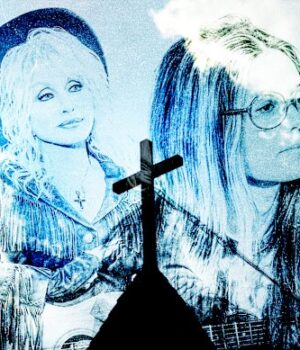
Dolly Parton had died that week, and the women had toasted her at dinner the night before. Parton, as was pointed out in these pages, told Andy Warhol (whom she described as the only person she’d ever met who was weirder than her) that she saw herself as a preacher. Who might not have been allowed at a Southern Baptist pulpit, but who created her own platform, and united vast swathes of America – the world, really – as few others could.
Interviewed last year, Dolly said: “I like trying to make people happy and lift people up and glorifying God. That’s my mission in life, so I just hope to get to do more of that.” Her faith was rooted in love, tolerance and inclusion, though myriad news reports skipped over it entirely.
Can you imagine the many thousands of conservative evangelical men who bop to her songs, who believe women should submit to men and shouldn’t vote, and who were at times so distracted by her glamour that they didn’t clock – or want to clock – that she was one of the most influential faith leaders in their country?
Thinking of Parton reminds me of the bald truth that women have long had authority from God, if not permission from the church. And of the fact that the enduring struggles inside the church are rarely aired. Some progress has been made, but many places still don’t ordain women as priests (most notably Sydney), and in some dioceses they struggle to maintain a foothold, as a recent report into Canberra-Goulburn revealed.
Women clergy are often ignored by mainstream feminists, whether from a belief that the church is intractable, concern about religion being used to oppress women (Gloria Steinem, who died this week, called it “politics in the sky”), or an impatience with faith. But as I looked around the room at these decent, caring women, who still face enormous opposition, who are not fully recognised in places like Sydney, whose authority and ministry is constantly questioned, whose work is often considered secondary, who report rising numbers of blokes who’d like them to submit to men, who have to grit their teeth during debates about the basic worth of women, I realised that this fight that they are still, quietly, engaged in is arguably the longest fight for emancipation and basic equality in Western feminism.
Hear me out here. I know in many ways, on many fronts, as Steinem said, we have just started.
But, happily, most obvious, basic barriers to equal participation were removed decades ago – even though backsliding is evident in many places. Think of the Seneca Falls Convention in 1848, the first national American women’s rights conference which produced the Declaration of Sentiments, listing 12 resolutions demanding equal social, civil and religious rights for women.
Their core demands were: the right to vote. Tick. Legal equality, especially for married women who wished to own property, manage their own wages and have independent legal standing. Tick. Family and divorce rights, especially over child custody. Tick. Equal access to higher education, universities, professional trades. Tick. And finally, religion – an equal voice and participation in religious institutions and the abandoning of the idea of a “separate sphere” for women. Womp-womp.
In the 1890s, after she was elected president of the National American Woman Suffrage Association, Elizabeth Cady Stanton pulled together a group of women to edit and publish The Woman’s Bible, which caused a scandal – including among other suffragists who thought it was a distraction. This bestselling tome laid out an argument against the subservience of women to men that the church claimed to be an immutable truth, an argument that still needs to be heard today.
When we talk about the manosphere, instead of blaming a “feminised curriculum” for the toxic sludge online, as Nationals leader Matt Canavan did, we need to stop and look in other directions.
It’s significant that women were campaigning for the right to vote and the right to be equal in the church at the same time – and that now it is fundamentalist evangelical pastors in the US who are saying women should not vote. Back then, Stanton wrote to her critics: “The only difference between us is, we say that these degrading ideas of woman emanated from the brain of man, while the church says that they came from God.” Quite.
Our parliaments are heavily populated with people of faith, many of whom have not ever been exposed to women in positions of authority in their upbringings, schools or congregations. We routinely forget or underestimate this, yet it is my belief that the reason the pushback from religious men has been so sustained and ferocious is because this is about the bedrock belief that women do not possess authority in the same way men do.
And this leaks into more cultural pockets than we recognise.
It also means Christianity is more likely to be associated with a strongly male, American nationalism in the public imagination than a quiet, forceful compassion.
So, when we talk about the manosphere, instead of blaming a “feminised curriculum” for the toxic sludge online, as Nationals leader Matt Canavan did this week, we need to stop and look in other directions. Where are women equal, upheld and respected? Where are women speaking? Where are they prevented from speaking? Why does this matter?
The organiser of the Adelaide conference, the whip-smart Bishop Sophie Relf-Christopher, told me the mood of the conference – where the governor of South Australia, Frances Adamson spoke along with the Archbishop of Perth, Kay Goldsworthy, was “jubilant”.
“We persevere,” she said, “because we are unwilling to cede the Holy Church of God to people who do not support the full and equal worth of women when Jesus did. We are unwilling to leave the church a place that girls and women are coerced and controlled.”
Relf-Christopher wants women who have left the church to return “to work with us in a new reformation”. She said: “If what you believe about God requires women to remain permanently grateful, un-ordained, quiet, or endlessly available, it is not a theology that is compatible with the message of Jesus Christ. Patriarchy is not synonymous with Jesus’ ideas, but more the Roman Empire that wanted to suppress them.”
As Billy Bragg said last week, “at a time when followers of Jesus Christ are talking about ‘the sin of empathy’ and claiming that loving thy neighbour as thyself will lead to the end of Western civilisation, Dolly’s faith led her to embrace everyone”.
Julia Baird is a journalist, author and regular columnist. Her latest book is Bright Shining: how grace changes everything.
 Julia Baird is a journalist, author and regular columnist. Her latest book is Bright Shining: how grace changes everything.Connect via X, Facebook or email.