

Source : Perth Now news
A Cairns woman has issued a desperate warning after her beloved dog contracted a rare and highly contagious disease during playtime, forcing her to walk around her own home in full PPE for months.
Luna spent three months living in quarantine, with no access to the outside world, other animals or even sunshine, as she battled a rare and highly contagious infectious disease.
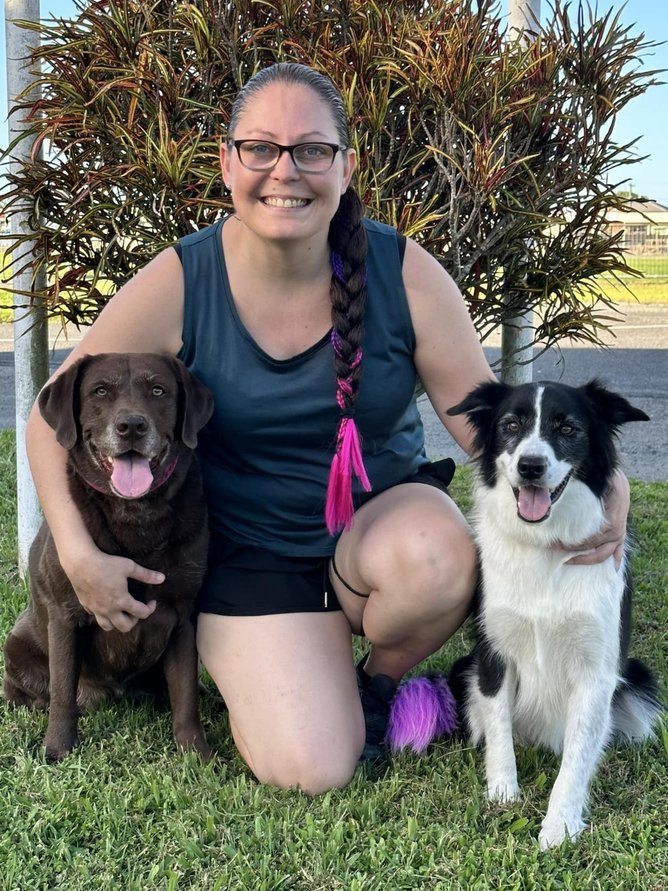
Karen Winzar, who operates a dog training centre in Cairns and volunteers with Cairns Active Dog Sports, had only adopted her border collie Luna for two months when she got caught in a “scuffle” with another dog.
“She seemed fine at the time, I didn’t think much of it,” she told NewsWire.

About an hour after the scuffle between the dogs, Ms Winzar noticed an unusual wet patch on the side of Luna’s body, and took her straight to the vet.
“Dog bites are normally pretty infectious or pretty dirty, so I thought I’d better get the vet to check her out,” she said.
With the wound cleared up and Luna given a dose of antibiotics, it was about a week later that Ms Winzar noticed the injury started to change in appearance.
“It started going a bit of a funny colour, and it started to go quite brown and yellow,” she said.
“It looked a bit gooey as well, which was a bit gross.”
They returned to the vet for more treatment, but nothing was working.


In fact, the wound had got worse, growing to the “size of a tennis ball” within a couple of days, leaving Ms Winzar no choice but to go back to the vet.
“(The vet) did some skin tests to see what the bacteria was that we were dealing with, and lo and behold, she rang me back probably within a couple of hours and said yep, unfortunately it is what I thought it is,” she said.
“A flesh-eating bacteria called Meliodosis.”
Meliodosis is a rare but serious bacterial infection caused by the bacteria Burkholderia pseudomallei, which thrives in warm and tropical climates like the Northern Territory and Far North Queensland.
“It thrives in heat, moisture and disturbed soil. Cases rise after heavy rain, flooding and monsoonal storms in the wet season,” Southern Cross Vet Sydney founder Sam Kovac told NewsWire.

Cats and dogs exposed to the illness can show symptoms like fever, skin sores, coughing and breathing trouble, as well as wobbly back legs or signs of nerve problems.
If left untreated, the outcome can be catastrophic.
“The infection can spread through the body, form abscesses in organs, cause pneumonia, affect the brain or spinal cord, and be fatal,” Dr Kovac told NewsWire.
“Untreated or late-treated disease can kill.
“Even with treatment, some pets do not make it, especially cats with nerve disease or severe internal infection. Pets that recover can do well long-term, but they need close follow-up because the infection can return.”
It doesn’t just affect dogs either.
“Usually pets and people catch it from the same muddy soil or water, not from each other,” he said.
“Direct spread from a pet to a person is uncommon, but it is possible if someone has a cut and handles pus, urine or nasal discharge from a sick animal.”

Despite the minimal risk of it spreading from dog to humans, when Luna was finally diagnosed with the rare disease, Ms Winzar was forced walk around her house for weeks dressed in full PPE.
“I needed to wear a gown, you know, like a disposable medical gown and gloves when I handled her,” she said.
“I would take her out to a spot in the front yard to pee where I could pen that off as well … just to make sure there was zero contamination of areas.”
Despite ongoing treatment, months went by and Luna was only getting worse.
“I had to keep shaving (the area) off and having to keep an eye on the wound, to watch it mutate and see what was happening,” she told NewsWire.

It took three months of Luna being stuck in quarantine – without sunshine or her regular exercise – but she has since recovered from her illness and is back to her goofy self.
However, the entire ordeal wound up costing Ms Winzar about $5000 in vet bills – but with pet insurance, she ended up getting 80 per cent of it back.
“While prevention is always the best approach, unexpected illnesses and emergencies can still occur, and the cost of veterinary treatment can quickly run into thousands of dollars,” she said.
CoverMy Pet insurance general manager Grant said in the case of serious conditions such as melioidosis, treatment could involve intensive hospitalisation, specialist care and ongoing medication.
“Having pet insurance in place can provide valuable peace of mind, with many policies covering a significant portion of eligible veterinary costs and helping families manage unexpected expenses during what can be a very stressful time,” he said.

Pet owners warned to watch for deadly diseases this summer
Mr Pugh said while warmer weather are the perfect chance to take pets out for more exercise, owners need to pay extra attention to possible dangers that come with hotter and wetter conditions.
“Our climate ranges from tropical in the north to temperate and cooler conditions in the south, and that means the risks to pets can differ by region,” he told NewsWire.
In the Australia’s tropical regions, owners should watch for melioidosis, tick-borne illnesses and mosquito-borne diseases.
Meanwhile, warmer coastal regions can be prone to parasites, such as ticks, fleas and intestinal worms.
In cooler climates such as Victoria, Tasmania and parts of South Australia, owners should pay extra caution to parasites and exposure to toxic plants.
Those in bushfire-prone regions should also ensure they monitor air quality to prevent respiratory problems.
“Regardless of location, warmer weather encourages pets to spend more time outdoors, increasing their exposure to insects, parasites, contaminated water sources and environmental hazards,” he said.

Dr Kovac said it was imperative owners paid attention to what their pet was doing to prevent serious injury or diseases.
“Do daily tick checks on the head, neck, ears and between the toes if you live on the east coast,” he said.
“Keep wounds clean and covered. In the north during the wet, keep pets out of floodwater and deep mud where you can.
“Keep vaccinations and worming up to date, and do not let dogs drink from dirty puddles or eat dead wildlife.”


