Source :- THE AGE NEWS
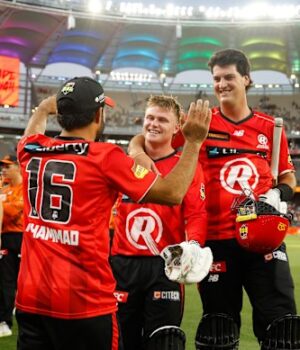
A for sale sign has been plastered on the Melbourne Renegades a matter of days after the players’ association pressed the emergency button on their pay impasse with Cricket Australia, as part of a deal that could overturn the whole BBL sale process.
On Friday, the Australian Cricketers Association sent a dispute resolution notice to CA, requesting the appointment of a mutually agreed independent arbitrator to settle numerous unresolved issues around the players’ share of any BBL windfall.
CA pushed ahead with the announcement of the green light to sell the Renegades on Tuesday, while other states continue to mull their options.
Biggest among the ACA’s questions is whether cash raised from the sale of BBL clubs to private investors counts as Australian Cricket Revenue; the pot of money from which the players’ 27.5 per cent share is calculated. ACR includes most significant revenue streams into Australian cricket with a few exceptions.
ACA chief executive Paul Marsh confirmed the commencement of a dispute resolution process to this masthead.
“This is something we broached with CA before today’s announcement, so it is not a reactionary thing,” he said. “It’s coming from a place of trying to find a way forward on an important issue for the players and Australian cricket.
“The announcement doesn’t change the work required to be done for privatisation of the BBL to proceed. We’ve still got an MoU to work through, and we want to do that. This issue is a fundamental one that we need to work through.”
Marsh stated that the players were willing to give up their 27.5 per cent share of the BBL sale windfall if their overall percentage of Australian cricket revenue increased, something CA and the states have so far refused to countenance.
“We are prepared to forego a share of the proceeds if our ongoing share increases,” he said. “But this point is an important one because we believe the deal that’s been negotiated and has been in place for a long time, entitles the players to this.
“If you think it through, the value of the BBL, the people who have driven that value are the players. That’s come off the back of 16 seasons of the players’ work.
“We think for CA to be putting a position to us where our share of revenue doesn’t change off the back of what will end up being billions of dollars of capital coming in, doesn’t seem particularly fair.”
Marsh spoke with Australian players Pat Cummins, Travis Head, Ellyse Perry and Sophie Molineux before they appeared at the Sydney press conference announcing the sale of the Renegades on Tuesday. He stressed that disputes over the definitions of Australian cricket revenue were common, but agreed this one was the biggest yet.
“We audit it every year, and there will routinely be disputes over how CA and the states have categorised different revenues, and we work through different grievance positions over the journey,” he said. “So it’s not abnormal, albeit, this is on a scale that hasn’t been seen before.”
Marsh’s predecessor at the ACA is Todd Greenberg, now the CA chief executive, who on Tuesday stressed his belief that a deal would be done. “We are in active dialogue with the players’ association, and I’m very confident we can do a deal,” he said.
CA chair Mike Baird stressed the need for the sale of clubs to grow more revenue for the game and connect Australian cricket to the burgeoning network of franchises, though New South Wales, Queensland and South Australia are still at varying levels of dispute around the process.
The SACA, which coined the “self-determination model”, which allows to states to choose whether to sell independently, has been caught in the middle of the warring states, with Victoria the keenest to sell and NSW the most staunchly opposed.
“By opening the door to private investment in the Big Bash leagues, Cricket Australia is taking a deliberate step to strengthen and secure the long-term future of the game,” Baird said. “Accelerate growth and ensuring we can keep investing in community cricket and grassroots participation, domestic and international pathways and the elite level.”
Cummins said Australian cricket needed to shore up the amounts of money on offer for cricketers to prevent ensuing generations from playing overseas instead.
“Two Tests against Bangladesh that just went past, a few of our guys would have fetched probably close to a million dollars going to play in the Hundred, but it’s not even a talking point,” he said. “It’s like, ‘oh no, we’ve got two Test matches on. Of course, we’re going to play them’.
“But I don’t think we can say that’s going to be the case forever. The next crop might think a little bit differently. There might be different challenges. I think if this helps unlock and keep Test cricket at the pinnacle and keeps the best players playing Test cricket, then I think that’s a great thing.”
CV, which has struggled to make a profit from the Renegades since choosing to sack the inaugural boards and CEOs of the two Melbourne-based clubs in 2019, applauded the decision to sell off the team, which will take part in the BBL in caretaker mode this season ahead of a new owner running the club in 2027-28.
The Renegades have already fielded informal expressions of interest from about 10 serious investors, about half of whom are based in India, for 100 per cent sale of the club.
“The sales process allows prospective parties to express their interest in purchasing the Melbourne Renegades and demonstrate why they would be the right fit for Victorian cricket,” Cricket Victoria director Shaun Richardson said.
“There’s a clear level of interest both locally and internationally, and we’re committed to working alongside Cricket Australia to identify a partner who shares our ambition for cricket in Victoria. Private investment will unlock value for reinvestment across Victorian cricket, from the grassroots through to the elite game.”
News, results and expert analysis from the weekend of sport sent every Monday. Sign up for our Sport newsletter.
 Daniel Brettig is The Age’s chief cricket writer and the author of several books on cricket.Connect via X.
 Tom Decent is the chief sports writer for The Sydney Morning Herald.Connect via X or email.