Source : Perth Now news
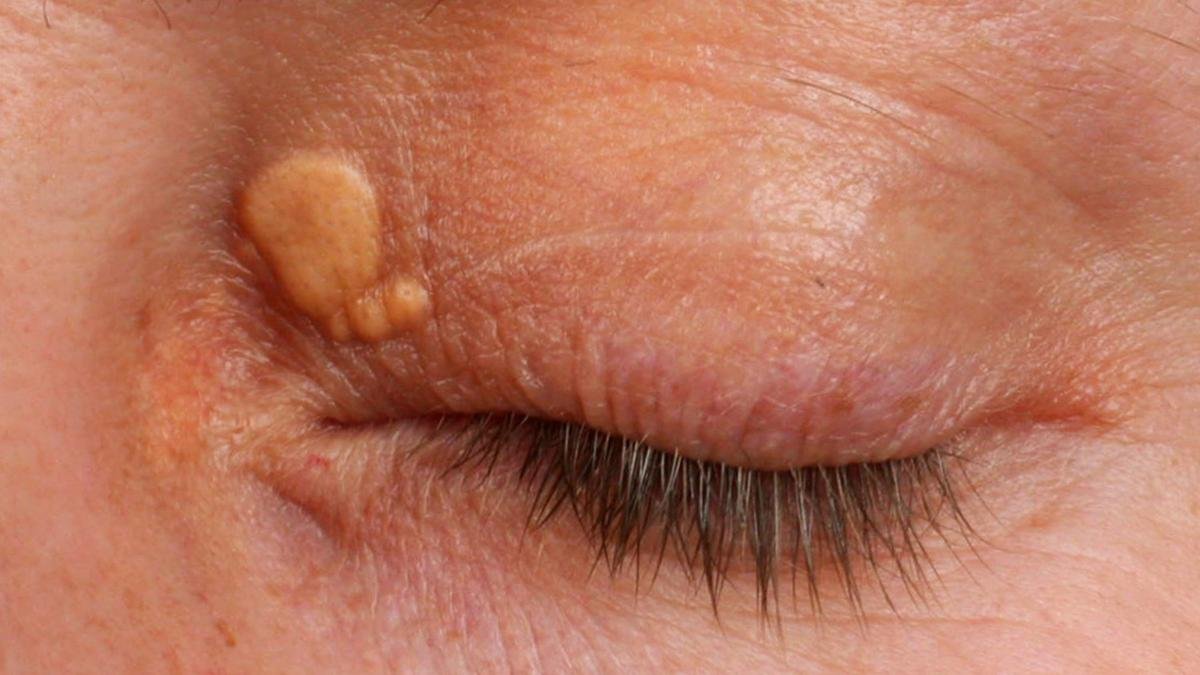
Yellow patches around your eyes may signal a higher risk of heart attack and stroke.
The fatty deposits, known as xanthelasma, usually appear on the upper or lower eyelids and are often associated with high cholesterol.
Now researchers at Stanford University have found people with the condition were more likely to suffer major cardiovascular events both in the short and long term.
The study analysed health data from 17,925 people with xanthelasma and compared them with the same number of people with farsightedness who did not have the fatty deposits.
Within one year, around one per cent of those with xanthelasma had suffered a heart attack, compared with 0.35 per cent of the comparison group.
The xanthelasma group also had higher rates of stroke and transient ischaemic attack, commonly known as a mini-stroke.
Crucially, the increased risk remained even among people who did not have abnormally high levels of fat in their blood.
The researchers said the findings suggest xanthelasma could potentially act as an independent marker of cardiovascular risk.
Stanford ophthalmology researcher Negin Yavari wrote in the journal Atherosclerosis: “A few studies have supported the association between xanthelasma and an increased risk of cardiovascular events.
“Others debate that it may not be an independent risk factor once traditional risk factors are accounted for.”
The increased risk continued to be seen five and 10 years later, although the difference between the groups narrowed over time.
The researchers wrote: “Xanthelasma is associated with higher short- and long-term incidence of major cardio-cerebrovascular events up to 10 years.”
Xanthelasma forms when immune cells called macrophages become packed with cholesterol and other fats.
The deposits themselves do not mean a person will have a heart attack or stroke, and the study cannot prove they cause cardiovascular disease.
However, researchers said people with the patches could benefit from having their cardiovascular health assessed.
They wrote: “Most of the patients with xanthelasma are seen by dermatologists for cosmetic reasons, while they may have undiagnosed or uncontrolled cardiovascular risk factors that contribute to this elevated risk.”
Other established risk factors include smoking, being overweight or obese, high cholesterol and high blood pressure.
Further research is now needed to understand exactly why xanthelasma is associated with increased cardiovascular risk.