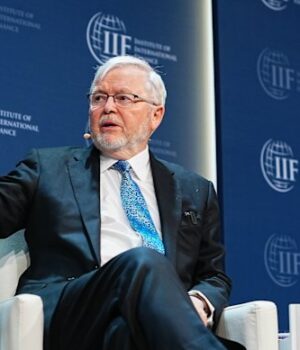
Source : the age
There is a one-in-three chance Xi Jinping will try to seize the self-governing island of Taiwan as soon as 2028, a move that could trigger a devastating war with the United States and Australia, according to former prime minister Kevin Rudd.
While it is still improbable that the Chinese president will make a move on Taiwan in the near future, Rudd said the risk was rising as the geopolitical situation and military balance of power shift.
The world-renowned China expert, who left his post as Australia’s ambassador to the United States in March, is visiting Australia for a series of speaking engagements, including a Thursday address to the National Press Club in Canberra.
“All factors considered, over the next three years, through until the end of ’28, I think … unilateral Chinese military action across the Taiwan Straits to take Taiwan is not a probability,” Rudd told the Australian Institute of International Affairs think tank.
“It is, however, an increased possibility. And when I say an increased possibility, I don’t mean from 5 per cent to 10 per cent. I mean an increased possibility, which I argue is around about one in three, and I don’t use that lightly.”
Rudd said the US, Australia and other allies needed to work to deter China from taking military action, including by forging ahead with the AUKUS nuclear-powered submarine pact.
The head of the Asia Society has previously mooted the possibility of a 2028 Chinese invasion of Taiwan, including in a recent New York Times podcast interview with Ezra Klein, but did not put a percentage on the likelihood of the scenario.
Since he last addressed the foreign policy think tank five years ago, Rudd said that “the military balance has changed” in China’s favour.
“Since I last spoke to you, China’s calculus of the United States has changed, and since I last spoke to you, new dynamics have emerged in Taiwanese domestic politics,” he said.
The re-election of current Taiwanese President Lai Ching-te – whom Rudd described as “pro-independence” – could prompt Xi to take action by claiming an anti-secession law passed by China in 2005 had been breached, he said.
The US will also be in a presidential election year in 2028, possibly distracting it from events in China and Taiwan.
“Put those factors together, we just need to be mindful of an increasing level of risk, but still in the possibility stakes, not the probability stakes,” said Rudd, who turned his doctoral thesis on Xi Jinping’s political philosophy into a recent book.
“When people ask what then shall be done about this, my response is pretty simple. What’s worked since 1949 is deterrence, deterrence, and deterrence. And for those who find this some sort of ancient Cold War rhetoric, it’s not.”
It is crucial for the US to sustain its military capabilities and sense of political will that it will act to defend Taiwan, Rudd said.
“Deterrence, properly constructed and properly perceived, is the best guarantee for sustaining the peace,” he said.
Lai’s Democratic Progressive Party says it has no plans to formally declare independence, merely that it wants to remain functionally sovereign and independent of Beijing.
He said China had made a “formidable” investment in naval capabilities over recent years, strengthening the case for Australia to acquire nuclear-powered submarines under the AUKUS pact.
Cut through the noise of federal politics with news, views and expert analysis. Subscribers can sign up to our weekly Inside Politics newsletter.
 Matthew Knott is the foreign affairs and national security correspondent for The Sydney Morning Herald and The Age.Connect via X, Facebook or email.