Source : THE AGE NEWS
Critica Limited has planted a major flag at its wholly owned Mt Lindsay project in Tasmania, putting a JORC 2012-compliant resource around what it describes as one of Australia’s largest undeveloped tin-tungsten deposits.
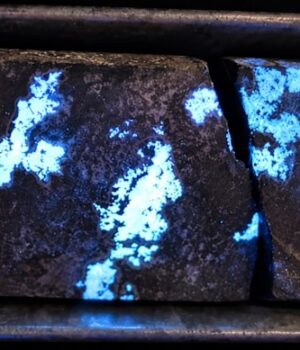
The project-wide inventory now stands at 19 million tonnes grading 1.09 per cent tin equivalent, containing 49,000 tonnes of tin and 28,000 tonnes of tungsten trioxide at a 0.4 per cent tin equivalent reporting cut-off.
Rather than adding newly discovered tonnes, the restatement brings Mt Lindsay into the modern era by updating earlier estimates into the current JORC 2012 framework using a database built from more than 88,000m of diamond drilling by previous owners and Critica.
The new numbers cover the Main, No.2, Livingstone and Reward deposits, with 12Mt classified as Indicated and containing 31,000t of tin and 20,000t tungsten trioxide. Main and No.2 hold most of that higher-confidence material, with 12Mt in the indicated category at 1.22 per cent tin equivalent and another 2.3Mt in inferred resources at 0.85 per cent.
‘We believe Mt Lindsay has the potential to become an important Australian source of these strategically important metals.’
Critica Limited chief executive officer Jacob Deysel
Livingstone contributes a further 4.4Mt in inferred resources grading 0.88 per cent on the same equivalent basis, while Reward adds 0.34Mt Indicated and 0.23Mt Inferred, grading 0.81 and 0.78 per cent tin, respectively.
Main and No.2 are modelled from surface to depths of up to 600m and remain open down-plunge, leaving Critica with plenty of geological runway to chase additional tonnes and potentially grow the resource.
Adding to the project’s credentials, the geology brings plenty to the table as well, with the project sitting within a granite-related mineral system tied to the same broad Devonian granite suite linked to some of Tasmania’s bigger deposits such as Renison Bell, Mt Bischoff and King Island.
The project also has some metallurgical runs on the board. Three tonnes of Main and No.2 material produced a 45 per cent tin concentrate at 72 per cent overall recovery and a tungsten concentrate grading more than 66 per cent tungsten trioxide at lofty 83 per cent recovery.
Critica is now putting those ingredients through a DRA Global-led, first-principles scoping study to assess a selective underground development, replacing the broader open-pit concepts considered previously. Management is chasing a sweet spot between economics, capital requirements, operational efficiency, mine life and environmental footprint, with paste or backfill under consideration to reduce permanent surface tailings.
Critica Limited chief executive officer Jacob Deysel said: “The JORC 2012 restatement provides a clear and current view of the scale and quality of the Mt Lindsay Mineral Resource. With its established infrastructure advantages and location in Tasmania, we believe Mt Lindsay has the potential to become an important Australian source of these strategically important metals.”
The new JORC provides Critica with a solid foundation for its next phase, with a scoping study targeted for completion by the end of Q3 2026, as bulk and pilot-scale metallurgical optimisation continues to fine-tune concentrate grades and recoveries.
The company says further exploration and technical work will continue to build the development case. Ongoing mining, processing and financial studies could also help reshape the economics and ultimately point to a different development cut-off from the current 0.4 per cent tin-equivalent reporting level.
Mt Lindsay is 20km west of the Renison Bell tin mine in northwest Tasmania’s established mining district, giving Critica a brownfields setting with established mining infrastructure and access to a skilled regional workforce. Plans drawn so far propose placing the main portal in an already disturbed former Hydro-Electric Commission quarry, 600m from a potential processing plant site, with sealed road and power infrastructure nearby.
The project also has road access to the Port of Burnie and Tasmania’s hydroelectric network, advantages that Critica believes could keep infrastructure costs low and the project’s environmental footprint light.
Tin’s role as the metallic “glue” connecting printed circuit boards and semiconductor packages puts it at the heart of electronics, AI infrastructure, data centres, renewable energy and electric vehicles, with Critica noting there is no practical substitute. Supply constraints from Myanmar and Indonesia add another layer to the tin story.
Tungsten brings the highest melting point of any metal and diamond-rivalling hardness, making it crucial to cutting and machine tools, defence platforms and munitions, aerospace, semiconductors and AI. Critica says China’s overwhelming control of tungsten production has proven a major supply pinch point as Western economies push for more secure supply chains.
With Mt Lindsay’s resource now reset and its development options being put through their paces, Critica appears to have given an old Tasmanian tin-tungsten play a fresh shot at joining the modern strategic metals race.
Is your ASX-listed company doing something interesting? Contact: mattbirney@bullsnbears.com.au