source : the age
The mother of a young Gold Coast man accused of murdering another Australian in strife-torn Syria is travelling to her son’s side, against government advice, believing he is innocent.
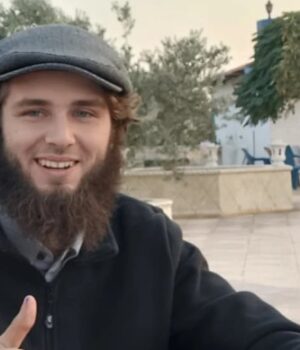
Angela Bell plans to fly out this week with human rights lawyer Bernadette Zaydan to Idlib province in Syria as her son, Patrick Stevenson – a 20-year-old convert to Islam – waits in a local prison facing charges that, if proven, could result in the death penalty.
Stevenson has been accused by Syrian authorities of killing another Australian convert, Abdullah Glen Burgess, by shooting him at least eight times with an AK-47 rifle inside the dead man’s home. Burgess’ widow, Amatullah Laurie Duniam, is a witness in the case and another Australian-born convert living in Syria.
There is no allegation that Stevenson was allied to Islamic State or any other terror group. After initially being investigated in a prison for Islamic State fighters, Syrian authorities transferred him to a civilian prison and charged him with the pre-meditated murder of his fellow Australian.
Bell and Zaydan say the prosecution’s evidence relies on a confession by Stevenson obtained in unknown circumstances, and Amatullah’s witness statement. Amatullah has so far refused offers of “blood money” payment in return for forgiveness.
Stevenson has been diagnosed with serious learning difficulties, ADHD and probable autism. How and why he travelled to Syria are a mystery to his parents. The religious leaders on the Gold Coast who converted the young man have also expressed bemusement, and said that, to their knowledge, he was not radicalised.
Bell told this masthead she was going to Syria to look after her son, and to help him fight the charges at a court hearing on September 23.
“I am frightened, of course I am. But he is my child. I cannot sit safely at home on the Gold Coast knowing Patrick is facing this on the other side of the world and wondering why his mum isn’t there,” she said.
“He’s talking to himself, refuses to eat and shower, doesn’t know where he is – sometimes he laughs and rocks.”
Stevenson’s father, Clay, visited him in prison in Darkush, a small town near the Turkish border, for a court hearing in July. He told this masthead his son was “like a sheet of glass. He didn’t even know who I was. I tried to give him a hug, and he just looked through me like I wasn’t even there”.
Bell said the Australian government has provided her son a Syrian lawyer who speaks no English (Stevenson does not speak Arabic) and has refused to fund Zaydan as his Australian lawyer. She said her son had been in custody since December last year, but that Australian consular officials had not visited him in prison.
Australia has no diplomatic presence in Syria and still imposes sanctions on groups from whom the country’s new leaders have emerged.
Lawyer Zaydan says her client “has no idea what the hell was being said” against him.
In the prosecution file, which she arranged to be translated, there was a handwritten, alleged confession “that’s very hard to read”. Stevenson does not read, write or speak Arabic so it was unclear who wrote it, she said.
“There is no way in hell a kid from the Gold Coast would have said those things, or agreed with those things,” Zaydan said.
Also on the file is a statement from the widow, Amatullah Duniam, saying she was in the neighbouring room of the apartment when Stevenson killed her husband.
“She never met or spoke with Mr Stevenson, yet she says she is 100 per cent sure she heard his voice while she was in another room at the scene of the shooting,” Zaydan said. She described both key pieces of evidence as “profoundly flawed”.
Amatullah declined to comment saying, “we will not be speaking to the media”.
Bell said in her communications with her son before his December arrest, he had never mentioned Abdullah Burgess.
Zaydan says the prosecution file contains a separate statement from Stevenson that he did not kill Burgess, and an application he made for his phone and laptop, which has not been answered.
“What’s in that file is incredibly concerning, and there’s been no legal scrutiny. I don’t believe from what I’ve read so far that Patrick is responsible,” Zaydan said.
“Our strategy is that unless we’re there in front of the court … then Patrick’s legal rights will never be afforded.”
Bell said there was no way her son could have organised or paid for a trip to Syria on his own. Bell says Stevenson called out of the blue from Bali, then the next time they heard from him, he was in Syria.
“This child couldn’t plan to go to the supermarket with his wallet and his shoes; if he had to buy me coffee, he couldn’t find his keys. He’d show up to weddings without his shoes on,” she said.
“He is intelligent, capable of creative thought, art, but his limitations were chronic dyslexia, executive function, forward-planning and consequences.”
His medical file, provided to the Syrian court, says: “Patrick has struggled with inattention, forgetfulness, and organisational abilities throughout his life. He has difficulty completing multi-step tasks and often leaves things unfinished. His ADHD symptoms have impacted his education.”
The file said he also had probable autism.
“The Australian government are telling us, ‘Don’t travel, it’s not safe’. We know it’s not safe,” Bell said. “But we’re also aware that a potentially innocent child, an Australian held in an incredibly dire position in a foreign country, in prison, and the Australian government can’t even send someone to verify his identity.”
As Zaydan puts it: “Their position is you make your bed, you lie in it.”
The Department of Foreign Affairs and Trade said in a statement it was providing consular assistance to an Australian detained in Syria although with no embassy or consulate in the country that help was “extremely limited”.
Stevenson’s father, Clay, told this masthead the hearing he attended in July had lasted about 15 minutes in a tiny room in front of three judges.
“They asked if I was willing to pay blood money and I said yes. To be fair, I think the judges want the forgiveness,” Clay Stevenson said. “They keep pushing [the widow] to say the best option for her is to forgive and get the money … I don’t think they want the death penalty.”
As for his son, Clay said: “All he did was ask about his younger brother. I was trying to ask him if he did it, and he just didn’t respond.”
He hoped Bell would have more luck communicating with him.
Hussin Goss, the chairman of the Arundel mosque on the Gold Coast, who converted Stevenson a number of years ago, said he saw “nothing abnormal – he was not trying to be a jihadist or radicalised”.
He also did not know why these three Australians would end up in Idlib province in Syria.
“Damascus is the capital of Syria, and obviously, it’s a holy place, but it’s not more holy than Mecca and Medina, so why would he go there?”
A representative of Worongary mosque who asked not to be named said the young man had also attended there, and was “probably a little bit odd in some of his social dealings”, but otherwise “very polite, very helpful. If you asked him to do something he’d do it”.
Start the day with a summary of the day’s most important and interesting stories, analysis and insights. Sign up for our Morning Edition newsletter.
 Michael Bachelard is a senior writer and former deputy editor and investigations editor of The Age. He has worked in Canberra, Melbourne and Jakarta, has written two books and won multiple awards for journalism, including the Gold Walkley.Connect via X or email.