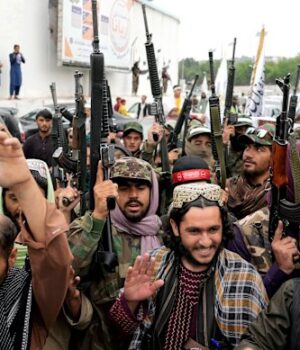
Source : the age
The failure to protect Afghans who worked with Australia and face Taliban persecution has been so egregious the nation does not deserve to win a prized seat on the United Nations Security Council, military and police veterans have argued.
Prime Minister Anthony Albanese will promote Australia’s bid to become a temporary member of the Security Council for the 2029-30 term during a visit to New York next week for the United Nations General Assembly.
A group of exasperated military and police veterans wrote to Albanese and Foreign Minister Penny Wong this week warning they plan to advise all UN members that Australia has let down vulnerable Afghans and should not be rewarded with a Security Council seat.
The veterans said they were alarmed the government recently rejected three visa applications by former UN staff who were employed in humanitarian programs partly funded by the Australian Department of Foreign Affairs and Trade (DFAT).
“Given the Australian government’s abrogation of responsibility for these three former UN staff and its more general negligence in managing and administering [at-risk Afghan] visa applicants, we are strongly of the view that these shortcomings undermine the Australian government’s standing as an honest and proper participant in Security Council nomination process,” the veterans wrote.
“Writing to all UN permanent representatives to discourage support for a government bid to occupy a non-permanent seat on the UN Security Council is an action none of us ever thought we would have to take, but we see no alternative after five years of frustrating encounters with an impenetrable bureaucracy.”
Supporters say all three have been targeted for retaliation, including one who has been captured and tortured by the Taliban after the fall of Kabul in 2021.
Sources familiar with the matter, but not able to speak publicly, said they believed the three visas were rejected because the connection between the applicants’ work and Australia was judged to be insufficient.
The veterans are led by former senior federal police officer Tony Murney, who served three tours in Afghanistan and worked as the UN’s chief technical advisor on police professionalisation in Kabul.
Australian forces evacuated 4,100 people – Australians and some Afghans – in the nine days between when the Taliban first entered Kabul on August 15, 2021, and the terror attack outside the airport gates on August 26, before pulling out of the country.
The veterans said the Afghan Locally Engaged Employee program, established to protect Afghans who worked with Australia, has been marred by “outrageous processing delays, applicants at high risk being left in dangerous situations, claims of malpractice and corruption remaining unaddressed, and inexplicable differences in the treatment of applicants which defy comprehension”.
Afghan-born international relations expert Sami Omari, who fled to Australia following the return of the Taliban in 2021, told the National Press Club on Wednesday he believed hundreds of Afghans to whom Australia has a “moral obligation” could be at risk of Taliban reprisal.
“There are obstacles in the program and there are issues with delays,” said Omari, who worked for DFAT and the Australian Defence Force in Afghanistan.
“These are not ordinary administrative cases. Australia asked people to work with us during that difficult time. They trusted our word.”
Seven members of parliament wrote to the Australian National Audit Office in August calling for an audit of the visa programs for at-risk Afghans.
“The veterans who served alongside them have told us plainly that the system is too slow, that people are being left behind, and that the delay is costing lives,” said the MPs, including independent senators David Pocock, Jacqui Lambie and Fatima Payman.
“These are not just administrative delays. Every day these people are left waiting is another day in hiding, another day exposed to Taliban retribution, another day Australia fails the promise it made to protect them.”
A DFAT spokesperson said: “The government remains committed to assisting those who helped Australia’s mission in Afghanistan.“
The spokesperson said more than 2000 Afghan locally engaged employees have been certified by the Australian government and more than 5700 employees and family members have arrived in Australia.
Wong told the Senate in August that Labor confronted a “mess” on Afghan visas when it came to office, including a massive backlog of applications.
The government has certified more than 660 applications from locally engaged Afghan employees, more than the total approved under all previous foreign ministers combined since the program began, she said.
The scheme for local Afghan employees was shut down in 2024, but the government committed to finalise all remaining certifications and visa applications as a matter of priority.
Women’s rights activist Susan Hutchinson, who has helped hundreds of women escape Afghanistan, wrote earlier this month that Afghans seeking a new life in Australia were being forced into danger by being required to collect biometric data in Pakistan.
“Five years after Australian personnel left Afghanistan, too many veterans are experiencing ongoing moral injury because their colleagues have been left behind when they were promised they’d be brought to safety,” she wrote.
Cut through the noise of federal politics with news, views and expert analysis. Subscribers can sign up to our weekly Inside Politics newsletter.
 Matthew Knott is the foreign affairs and national security correspondent for The Sydney Morning Herald and The Age.Connect via X, Facebook or email.