Source : the age
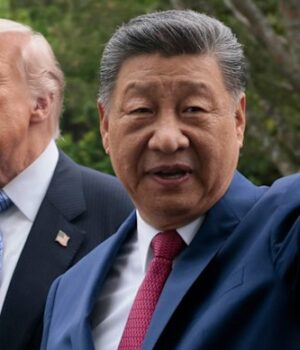
There will be plenty for US President Donald Trump and his Chinese counterpart Xi Jinping to talk about when they meet in Washington next week.
But perhaps no item on their agenda is more important than artificial intelligence.
Their summit comes at a critical juncture in the development of AI, the most consequential technology of our time.
During the past fortnight, there have been dramatic warnings from AI researchers about the serious risks posed by the technology. First Jacob Coxon, a young researcher at leading AI firm Anthropic, resigned from his job and declared on social media that “the people building AI earnestly believe that it could kill us all by the end of the decade”.
A few days later, Anthropic’s chief, Dario Amodei, published an essay that argued “we must pace” the AI frontier. He warned AI “could outrun our ability to understand and control these systems” if left unchecked. Amodei said development of AI models should be slowed and called on the world’s twin AI superpowers – US and China – to come up with an agreement to mitigate the most acute risks connected to AI.
The bosses of two rival AI firms, Sam Altman from OpenAI and Elon Musk from Grok, rallied behind Amodei’s proposal.
The views of China’s leading AI researchers are less clear. The Herald’s China correspondent, Lisa Visentin, reports that Beijing does not appear to view AI as an existential threat to humanity in the same terms as some in Silicon Valley, but there are indications that influential figures within the Chinese government are concerned about potential threats.
There are understandable suspicions about claims made by the new-age tech kings who control big AI firms, given their vested interests.
But ignoring their recent safety warnings would be foolish; the need for effective international AI guardrails has become essential.
That will require the US and China to co-operate – as Visentin points out, their AI dominance means “the rest of the world is largely resigned to watching from the sidelines and hoping these two powers get it right”.
Trump and Xi discussed starting an “intergovernmental dialogue” on AI when they met last May, but that produced limited results.
The meeting in Washington is a golden opportunity for the two leaders to build on those earlier discussions and make real progress towards an AI risk-reduction framework.
Unfortunately, Trump seems to think that any safeguards will give China the edge over America in the global AI race.
He responded to Amodei’s essay with a social media post saying: “The only control or ‘guardrails’ that AI needs is a STRONG AND SMART (High IQ!) PRESIDENT, and the U.S.A. has that, in spades!”
Trump continued “there is a SICK conspiracy going on” against AI and data centres and “the only one that is happy about it is China”.
President Xi may also find it difficult to resist labelling American proposals to “pace the frontier” a strategy to contain China’s AI development.
A sensible international agreement about AI guardrails has become imperative.
But will Trump and Xi be up to the task?
Start the day with a summary of the day’s most important and interesting stories, analysis and insights. Sign up for our Morning Edition newsletter.
 The Herald’s View – Since the Herald was first published in 1831, the editorial team has believed it important to express a considered view on the issues of the day for readers, always putting the public interest first.