Source : Perth Now news
King Charles has warned AI leaders of the “existential dangers” posed by the technology falling into the wrong hands, saying safeguards are needed before it is too late.
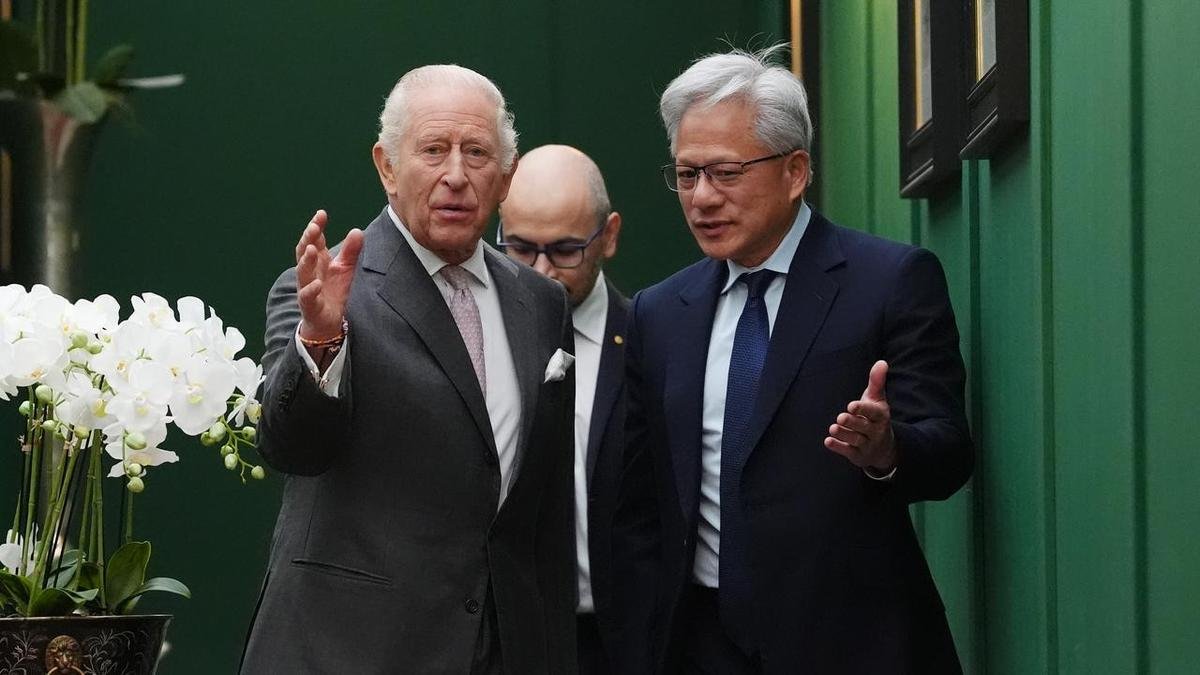
Charles was hosting the co-founders of chip maker Nvidia and the Google DeepMind AI research laboratory, along with leaders from the AI providers OpenAI and Anthropic, in Scotland as concern grows that safety efforts are lagging behind the development of increasingly powerful systems.
In recent weeks, the debate has centred on whether the industry can and should regulate itself, drawing interventions from figures including Pope Leo, Charles and US President Donald Trump.
Charles said artificial intelligence had the potential to improve and save lives, particularly in life sciences and medicine.
But its creators were increasingly warning that it could develop darker capacities “perhaps even to take life,” he said.
“There seems urgency in adequately considering the existential dangers of such technologies falling into the wrong hands, and being used in potentially catastrophic ways,” he told leaders at his Dumfries House estate.
“Surely we need sufficient means of control before it is all too late?”
The guests included Nvidia founder and chief executive Jensen Huang, Google DeepMind founder and chairman Demis Hassabis, OpenAI chief financial officer Sarah Friar, Anthropic’s chief global affairs officer Tino Cuéllar and UK Minister for Artificial Intelligence Kanishka Narayan.
Paolo Benanti, an adviser to the pope who has urged governments to slow AI development, also attended.
The debate over AI was rekindled when two Anthropic researchers warned that its rapid advances could lead to human extinction in the not-too-distant future.
AI firms have also reported their models escaping their testing constraints to hack into outside networks.
Huang said AI had to be built with “responsible optimism,” with the onus on the developers themselves.
He said companies had to become much more rigorous in making sure that their products were ready before releasing them.
“If it’s not ready, just hold it back,” he said to broadcasters on the sidelines of the meeting.
“You should go as fast as you can, but no faster than that.”
Anthropic chief executive Dario Amodei has also urged companies to slow the pace of AI development.
His call sparked an international debate over whether some executives have ulterior motives such as setting rules that preserve the lead of their firms, pre-empting a broader government backlash, or simply slowing breakneck spending.
While the meeting in Scotland is not expected to produce any binding agreements, it highlights how Charles, first as Prince of Wales and now as monarch, has used his position to convene discussions on a range of global issues.
Huang said Charles had brought up AI safety the first time they had met.
“If there’s anybody who spoke more profoundly and more deeply about responsible optimism, the King was one of the first to express it to me,” he said.