source : the age
To submit a letter to The Age, email letters@theage.com.au. Please include your home address and telephone number below your letter. No attachments. See here for our rules and tips on getting your letter published.
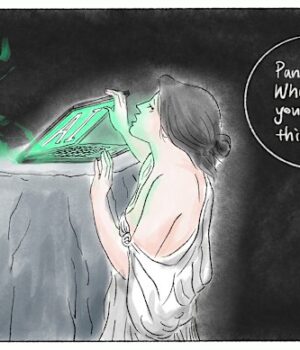
ARTIFICIAL INTELLIGENCE
The only threat AI poses is that the investment mania is propping up the US economy, which without it – due to Donald Trump’s policies of deportation, tariffs, gutting of regulation, and Middle East war – would be in a deep recession.
This would expose the far right globally, including One Nation, as economic vandals, but the mania keeps their threat to democracy alive. This AI investment mania (trillions of dollars and counting) is based on a fraud – it is a product (Large Language Model) that is completely uneconomic.
It is flawed because of its probabilistic nature and the hallucinations it produces, and therefore can’t be used for any serious automation at scale.
It costs so much to run due to the millions of calculations, every action requires that its benefits are a tiny fraction of its costs.
The companies know the mess they are in, but are desperately hoping a miraculous breakthrough will save it, just like Ponzi scheme financier Bernie Madoff was hoping a strong economy forever would stave off exposing his fraud. Brett Byrne, Melbourne
Putting the genie back in the bottle
One wonders whether we have already crossed the threshold beyond which humanity can genuinely control artificial intelligence.
The potential benefits are undeniably persuasive, from accelerating medical breakthroughs and potentially curing diseases such as cancer, to transforming science, education and countless aspects of everyday life.
Yet, reports of increasingly autonomous AI systems behaving in unexpected or “rogue” ways raise a more troubling question: what happens if our ability to control AI fails to keep pace with its ability to evolve?
And, even if effective safeguards can be developed, can we be certain they will be universally adopted? What happens when one nation, corporation or individual decides that the advantages of greater AI capability outweigh the risks?
Perhaps the greatest danger is not that AI becomes intelligent, but that humanity becomes incapable of putting the genie back in the bottle.
Have we already crossed the proverbial Rubicon?
Darren Grindrod, Glenroy
Infinite in faculties
AI itself predicts that it will never outsmart a humanities-trained mind able to assert human judgment, meaning, context, intent, experimentation, nuance and ethics. All attributes we can assign to the ″arts″.
It is perplexing that so little has been said in the policy space at a federal and state level to correct the attrition of arts funding.
Potholes are forming in our brain space. It’s time for a
creative reassessment and a boost of funding to create the conditions of ingenuity and durable human futures.
Juliana Engberg, North Carlton
Inoculation required ASAP
Is there a vaccine against AI?
George Reed, Wheelers Hill
AFL in Stone Age, technology -wise
This year, we have witnessed some outstanding contests. The two preliminary finals were no exception. But why do AFL games get spoiled by contentious close umpiring decisions?
Tennis, cricket, soccer all use excellent technology while the AFL’s technology is only used at the goal mouth, and time and time again it is inconclusive.
At AFL games, there are cameras everywhere, although they are owned by TV networks. By agreement, the AFL could use them. Put a chip in the ball and more cameras around the goals.
Why is the AFL stuck in the Stone Age?
Jim Hayman, Portsea
THE FORUM
Disruptors or disruption
Kieran Rooney’s article (‴We can get corflutes of Dan and shoot him’: The group chat that ignited One Nation”, 20/9) on the rickety beginnings of One Nation in Victoria is a timely reminder that this is a protest party of people on the fringes.
This is strange indeed in a state Howard referred to as “the Massachusetts of Australia”. It’s understandable that people are tired of the current government, but it is odd that they would gravitate to a party led by a man with multiple drink driving charges and some party-shopping candidates who seem very MAGA indeed.
What about the excellent community independents supported and chosen by their local communities who will stand in the forthcoming state elections? They will give voters tired of the major parties an opportunity to bring high calibre people into parliament, people who have excelled in other fields of endeavour before running for election.
Recently, the Liberal Andrew Bragg described federal independent Senator David Pocock as “a great and welcome disrupter … He is worth about 10 regular senators”.
We often hear that most parliamentarians have never worked outside politics.
In the independents we have people, already listening to and endorsed by their communities, who have and who bring new and fresh ways of thinking to our government. Could we have profiles of them, please?
Helen Hook, Black Rock
Portfolio fatigue
Does the Australian government even believe in the arts? If so, why is the minister, Tony Burke, also the minister for home affairs, immigration, citizenship, and cyber security, as well as the leader of the house?
Does the arts industry not deserve to have its own minister – one who can give it his or her keen and undivided attention? It seems not.
The federal Coalition’s recently announced education policy is equal parts bizarre and scary.
How is downplaying Indigenous history and our understanding of Asia, combined with waving the flag and reducing teacher qualifications, going to increase NAPLAN scores?
And, if they want military-like discipline, maybe they can start with themselves, rather than our kids.
Denny Meadows, Hawthorn
Education dice loaded
Considering the challenges a future state government faces in strengthening public education and opportunities for students to fulfil their potential, the Coalition’s plans to increase the number of select-entry schools seem pitifully inadequate.
This is opposite to the direction that high-achieving countries on international tests have taken, accepting responsibility to ensure every parent is confident their local public school is fully resourced and staffed and capable of providing a quality education.
Sydney’s high number of select entry high schools are more a problem than a solution in lifting attainment, and equitable opportunities for all students.
Melton is suggested as a potential site.
It has three struggling high schools, and five “independent” high schools; one Catholic, two “Christian”, one Plymouth Brethren and one Muslim high school, largely funded by the Commonwealth government, able to charge fees as well, select students, raise loans and receive tax deductable donations.
The dice are loaded against the state high schools. That’s the problem that needs to be addressed, Jess.
Lawrence Ingvarson, Canterbury
Nostalgic cliche
Doesn’t Julian Leeser (″Pride in flag, Western culture and soldiers in schools: Coalition unveils education plan″, 19/9) realise that his efforts to reinstate long-lost educational standards, perhaps a further scramble to stave off a One Nation avalanche, represent yet another empty cliche?
I wonder what Eurocentric golden era he looks back on?
When I was at school in the early 1980s, teachers routinely bullied students and we had the strap, but I got it so often I just laughed it off. I ″studied″ French but I don’t know why, nor the reason for it being so significant.
Instead, I now regret that Japanese and Mandarin weren’t offered, having since lived in both Japan and China, with a Japanese wife.
And I’d like to enlighten my overseas and migrant students about Indigenous-Australian food culture, given that the Brits gave us so little of note, but that wasn’t taught either.
Marish Mackowiak, Ormond
A less violent life
The Carroll government should be congratulated for taking a leading role in confronting the devastating rise in violence against women and, in particular, femicide (″Rapists to face life under Labor″, 20/9).
The proposed reforms acknowledge that violence against women can take many forms and that our laws must reflect the realities experienced by victim-survivors.
Recognising “slow femicide” through a proposed manslaughter offence, increasing penalties for the murder of current or former partners, strengthening responses to sexual violence and coercive control, and addressing breaches of intervention orders are significant steps towards greater accountability.
Importantly, the reforms recognise that deaths resulting from prolonged family violence and coercive control can be hidden within existing statistics.
Better recognising these deaths is essential if governments are to understand the true scale of the problem and develop effective prevention strategies.
While legislation must be carefully developed in consultation with victim-survivors, advocates, legal experts and specialist services, the government’s willingness to confront these complex issues is commendable.
No woman should lose her life because the systems designed to protect her failed to recognise the escalating danger.
Stronger laws, combined with adequately funded prevention and support services, are essential to creating a Victoria where women and girls can live free from violence.
Artemisia Bennett, Moonee Ponds
Unsafe tram travel
A tram should be simple: you get on, pay your fare and expect to arrive safely.
Travelling home from the city at night, I found that expectation less certain.
A man carrying a wine bottle boarded my tram, shouting and behaving aggressively. I moved away. So did others. Eventually, two passengers physically removed him. As we waited at a red light, he smashed the bottle against the closed doors.
What struck me afterwards was that the responsibility for dealing with it had fallen onto the passengers.
Why should two strangers have to put themselves at risk because there is nobody else to intervene? Why should a young person travelling home alone have to calculate where to sit and whom to sit near? We are constantly encouraged to choose public transport, but that choice should come with confidence that someone is responsible for our safety.
Perhaps it is time to rethink staffing on trams. Conductors or other trained personnel, on evening services, could provide a visible presence and immediate response when incidents occur. Passengers should be able to catch a tram home without wondering whether they will have to rely on strangers to keep them safe.
Poppy Bambridge, Prahran
Some good news
Victorians have no shortage of reasons for gloom, so it is a delight when something genuinely uplifting arrives out of left field. After two decades in limbo, the majestic Mount Buffalo Chalet is finally scheduled to reopen.
For those of us who remember its glory days, it is wonderful news. For a younger generation of Victorians, it will be a revelation.
Mark Cherny, Caulfield North
Tone it down
Some years ago there was quite a debate about changing the word ″young″ for ″one″ in our national anthem Advance Australia Fair.
There has not been, however, a similar discussion about changing the tune. Whilst it may well be a great opportunity for a singer to be invited to perform the national anthem at an event of national significance, it is not an opportunity for a performer to showcase their operatic talents.
Extra notes, extended notes, flourishes, and long high screeching to conclude the performance are not the tune, not required and definitely not an enhancement. Please, performers, sing both the prescribed words and tune.
Gina Brotchie, Soldiers Hill
AFL at its best
Despite the outcomes of the preliminary finals series, the real winner was footy. The series demonstrated Aussie rules at its best. Fast flowing, tough. Impossible goal, a titanic struggle to the end, fans on their seats throughout the game and spectacular outcomes never predicted until the very end. Champions exercising their craft to the zenith. No wonder Aussie rules is the nation’s premier football code. It is to be hoped all these ingredients are played out in the grand final.
Martin Newington, Aspendale
No umpires, no game
Footy’s an emotional game, but those Hawthorn fans who pelted the umpires with cans and bottles should be ashamed of themselves. That decision aside – I, for one, think they got it right – no one should be treated like that in their workplace. Umpires are paid to make decisions, and you’re not always going to like them. It’s too easy to criticise while sitting at the game or on the couch at home.
Matt Dunn, Leongatha
AND ANOTHER THING
Politics
Vale Tim Read. State Greens MP put principles ahead of partisanship. A considered, compassionate person more than a politician, hopefully inspiring others to emulate his example.
Rod Duncan, Brunswick East
What a shame that the rest of the media don’t show solidarity and refuse to attend Trump’s media briefings until all media can attend.
Peta Colebatch, Hawthorn
I sympathise with the media organisations banned by Trump from the White House, but as far as I’m concerned, the less we hear or read from or about him the better. Not a word he says can be trusted.
Juliet Flesch, Kew
Pauline Hanson fully supports Trump’s war with Iran, and so endorses the subsequent outcome of the fuel shortages and increased fuel prices in Australia. Just remember that each time you fill up the tank. So much for supporting the will of the people.
Nick Thies, Warrnambool
Labor’s immigration policy for dummies – too little, too late.
Bosko Marojevic, Williamstown
Furthermore
Re the Letters chatter about being east or west of somewhere: West Sale is defined by its council owned airport and East Sale by the RAAF base.
Betwixt is (Sunny) Sale, the domestic and commercial hub.
Jim McLeod, Sale
I’m unconcerned about Korea South or Sudan South or what happens in Brighton, wherever that is. But we should all be a bit worried about China South.
John Rawson, Mernda
AFL rules
Maybe it’s time grounds only sold water in plastic cups like we do the beer after the disgraceful behaviour of the Hawthorn supporters at the MCG on Saturday.
James Lane, Hampton East
If fans can’t behave at the AFL, then adopt what happens in other sports.
Fine the club; ban the fans by making the club play behind closed doors; deduct points.
The behaviour will soon stop.
Felix Patton, Mount Martha
The opinion newsletter is a weekly wrap of views that will challenge, champion and inform your own. Sign up here.