Source : the age
The Coalition has locked in a three-way election battle with One Nation and Labor over superannuation, floating a plan to use retirement savings to make securing a home loan easier.
The opposition was split this month when Pauline Hanson announced a policy to allow people to pocket a quarter of their super contributions as a wage top-up, which Labor said had set up an effective referendum on the multitrillion-dollar scheme.
Some shadow ministers wanted to avoid a fight on superannuation after the Coalition lost two elections in a row advocating to use retirement savings for housing. Since then, however, senior MPs have largely united around the idea of making a splash with a fresh policy to give people more choice over how their funds can be used.
Opposition housing spokesman Andrew Bragg will use a speech on Tuesday to float a proposal, which is under consideration but not yet adopted, to use superannuation as collateral for a mortgage or to increase the size of a loan.
The Coalition’s policy at the last election allowed first home buyers to take up to $50,000 out of superannuation for a home purchase. The idea to use superannuation funds as collateral is seen as less radical because people would not draw the funds from of the super account.
The Coalition will also explore an expansion of the $50,000 proposal, though this is seen as less likely.
“Policy must factor in the big changes since 1992, when superannuation started, such as the fact that it was assumed that most people would own a home in retirement. That is not assured today. It is even less assured in the future,” he will say, according to a copy of his speech.
“The idea that we are stuck with the exact design features of the current system and there is no possible way to improve it is incredibly lazy thinking and exemplifies the frustration Australians have about their leaders.”
Labor will probably use Bragg’s speech to portray the opposition as willing to risk a world-leading pension scheme whose power to invest trillions has attracted the interest of the Trump administration.
But there are growing calls to consider whether the $4.8 trillion retirement savings pool can help address contemporary economic problems.
Emily Millane, author of an upcoming history of the private pension system, said a fortnight ago that the political debate on super had become “hysterical” and proposals to use the money for housing should be debated.
Nicholas Gruen, a prominent economist who worked for Labor treasurer John Dawkins when Paul Keating established compulsory super, conjured World War I battlelines as he said Labor was defending “the Maginot Line they’ve spent the last generation building”.
“It’s a neat trick for finance to pull off requiring people to pay them for mortgages which are necessary because they’re … forced to invest their savings in securities when they need to fund a home,” Gruen said on LinkedIn last week.
A Morrison-era review and the Grattan Institute have argued that the superannuation guarantee rate of 12 per cent is too high and probably depresses wages.
Like Gruen, Bragg raised the issue of superannuation’s cost to the federal budget. Treasurer Jim Chalmers has argued that the Intergenerational Report, released on Monday, demonstrates that Australia is one of very few nations where spending on the pension is on track to decline. However, Bragg argued the concessional tax treatment of superannuation was projected to overtake age pension spending in the 2040s.
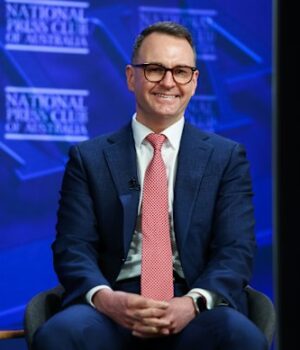
Before entering politics, the Liberal senator worked for the Financial Services Council, which competes with industry super funds. He has been a frequent critic of the pension scheme. The MP was chastised by some colleagues for freewheeling on a range of policies in a press club speech in August. He is not in charge of superannuation policy for the Coalition, but leads ideas on housing.
Bragg argues Labor was ideologically tied to super because many MPs, unionists and staffers moved onto the boards of industry super funds.
“Housing was always part of this discussion. Back in 1993, Paul Keating himself proposed a policy where $10,000 could be taken from superannuation for a first home deposit. His policy said ‘for most people, a debt-free home is as important a part of retirement security as superannuation income’,” Bragg will say.
“The architect of compulsory superannuation was right that home ownership should be part of the system. In later years, Mr Keating has lost his imagination. He now subscribes to the groupthink position that super preservation until 60 years of age is a sacred cow which can never be discussed, reviewed or reformed.”
Keating’s policy was eventually dumped because of fears about stoking house prices. Bragg said his looming policy on super-for-housing must be coupled with a radical unleashing of home building, which he argued was the main game in housing. But he said the super policy was also key because there was a growing group of renter retirees and nearly a third of lump sum payouts of super were used to pay mortgages.
“If it is good enough for Singapore, New Zealand and Canada with these similar super schemes to allow for housing, surely it’s a debate we can have without scare campaigns,” Bragg will say.
“The psychological benefits of a home that belongs to an individual are equally immense. We must be clear that housing sits at the heart of retirement policy alongside private savings, superannuation and the pension. Each element should work together.”
Cut through the noise of federal politics with news, views and expert analysis. Subscribers can sign up to our weekly Inside Politics newsletter.
 Paul Sakkal is Chief Political Correspondent. He previously covered Victorian politics and won a Walkley award and the 2025 Press Gallery Journalist of the Year. Contact him securely on Signal @paulsakkal.14.Connect via X or email.