Source : THE AGE NEWS
The Trump White House is under mounting pressure to “do something” about the price of diesel in the US. That something would have dire consequences for much of the world, including the US – and Australia, the world’s biggest per-capita user of the fuel.
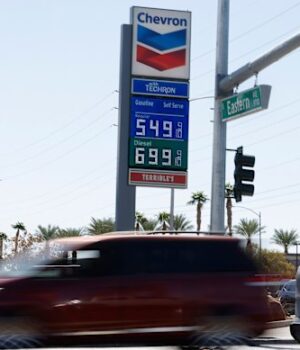
A lengthening queue of Republicans, including Senate majority leader John Thune, have called for the US to consider banning or restricting exports of diesel after its average domestic price hit another record of $US6.51 ($9.14) a gallon on Monday. That’s about 75 per cent higher than the average US price a year ago.
With farmers, who are about to start their autumn harvest season, the heartland constituency for Republicans, it isn’t surprising that their political representatives, mainly Republicans, are becoming anxious in the lead-up to November’s midterm elections.
Where the White House initially waved off suggestions of limiting diesel exports, arguing – rightly – that it could be counter-productive, there have been signs recently that the attitude is thawing as the elections loom.
Donald Trump appears to be very aware of the political implications, but is misdiagnosing the cause of the big spike in prices.
At the weekend, he repeated his call for Ukraine to stop its drone attacks on Russian refineries, almost all of which – with the exception of a handful of hard-to-reach plants in Siberia – have been damaged by Ukrainian bombing.
“Russia has unfortunately lost control of its Diesel Oil Industry due to its War with Ukraine,” Trump posted on Truth Social.
“A large number of their Diesel refineries have been blown up and are, at least temporarily, out of commission. This ridiculous and never-ending war with Ukraine must be ended.”
As a result of the Ukrainian attacks, Russia – a major exporter of diesel before its invasion of the country – has halted all exports and is now importing diesel, mainly from India.
While that is contributing to the surge in diesel prices globally, it isn’t the primary cause.
Last year, Russia exported about 800,000 barrels a day of diesel and gas oil, making it the world’s second-largest exporter behind the US. The Middle East, as a region, however, exported about 1.5 million barrels a day.
With those Middle Eastern exports now reduced by more than 50 per cent, it is Trump’s war on Iran that’s the major influence on the diesel shortages that are driving up prices.
It is Trump’s war on Iran that’s the major influence on the diesel shortages that are driving up prices.
It hasn’t helped that China, a major processor of crude oil into distillates including diesel, halted exports earlier this year after the attacks on Iran. It subsequently resumed them but, with its inventories at their lowest level for more than a year, is expected to reintroduce export curbs.
Moreover, unlike crude supply, where the end of hostilities in the Middle East would see a rapid rebound in supply, elevated diesel prices are likely to be a feature of the global markets for months after the war’s conclusion, if not years, because of the extensive damage to the region’s refineries. The same timelines would apply to Russia’s infrastructure if that war were to end.
What US Republicans are urging the White House to do to “stop the bleeding” ranges from a complete ban on diesel exports to restrictions that link permitted exports to domestic diesel prices. There are also calls for the scrapping of fuel excises and financial subsidies for farmers and truckers.
An export ban would keep the diesel that the US currently exports within the US, but would have devastating consequences for those countries that have become increasingly reliant on America’s record exports since the war in the Middle East erupted.
In Europe, where record prices are the equivalent of a $US190 a barrel oil price and inventories are at record lows for this time of the year, there are already supply shortages even before the region heads into the northern winter. Diesel-dependent Asia is just as vulnerable, if not more so.
But any restrictions in exports could have adverse consequences for the US itself, too.
While it is the world’s largest diesel exporter, it does import about 165,000 barrels a day. That’s because much of its refining capacity is on the US Gulf Coast, with limited pipeline infrastructure to the north-east and west coasts. In any event, most of the pipelines linking refineries to their end markets are operating at or near capacity.
An export ban would see prices surge further in those regions which the infrastructure doesn’t reach, and lead to a build-up of inventories within the refineries.
The US accounts for about 1.5 million barrels a day of the daily 8 million barrels or so of the global seaborne trade in diesel. A US export ban would see global prices soar further, with flow-on consequences for those US regions dependent on imported product.
More broadly, with an export ban or restrictions, there’d be more diesel held within the US. But the refineries, which have been operating at close to full capacity, would reduce their crude oil purchases because they’d be physically incapable of delivering much more than they do today, let alone the 30 per cent or so increase in diesel supply required to absorb the diverted export volumes.
Even a brief relief from high prices might save a few seats and help protect Trump from the inevitability of a lame-duck second half to his presidency
Areas close to the refineries might get lower prices, but the rest of the country would probably experience even higher prices.
There’s also the problem that, unless crude oil prices fell sharply, refinery margins would be squeezed if diesel prices fell, likely leading to reduced, rather than increased, production.
Refinery profits and export revenues would be lost and the refiners’ relationships with their offshore customers would be damaged, without any lasting benefit in the form of lower domestic prices.
So, if both a total or partial ban on diesel exports are likely to be counter-productive, why would senior Republicans be forcing it onto the White House agenda?
It’s the elections, of course, where control of the House, and perhaps even the Senate, is likely to be determined by cost-of-living issues, with gasoline and diesel prices front-of-mind with voters.
Diesel, because of the role it plays in transport, shipping and agriculture, is also a meaningful influence on the inflation rate.
The longer prices remain at record levels, the more those prices are likely to feed into the elevated prices of food and consumer goods generally, forcing the inflation rate to remain high and increasing the likelihood of further rate hikes by the Federal Reserve, perhaps as early as next month – just weeks ahead of the midterms.
It is apparent that there are some in the White House who are aware that, while a ban might cause an initial drop in the price of diesel, the reprieve would be temporary and the longer-term consequences would probably be damaging to the economy, businesses and consumers.
Yet given the proximity of the elections, even a brief relief from high prices might save a few seats and help protect Trump from the inevitability of a lame-duck second half to his presidency, and the investigations and impeachments that would flow from a Democrat majority in the House.
In those circumstances, with political pressures intensifying to do something about diesel and gasoline prices, would Trump be concerned about the longer-term consequences?
The Market Recap newsletter is a wrap of the day’s trading. Get it each weekday afternoon.