
source : the age
Trucks and cars speed past the intersection of Eastfield and Bayswater roads in Croydon South. A sprawling car park on the corner services a strip of shops with slightly faded signs for a laundrette, fish and chip shop, cafe and pharmacy.
There’s not much to indicate that eight years ago the Eastfield shopping strip in Croydon South was designated as a pilot site for a 15-minute-city.
“That’s news to me,” says Ebony Talbot as she sits down to her coffee and breakfast at her mother’s cafe, the Eastfield Coffee Co, at a table on the footpath beside the car park.
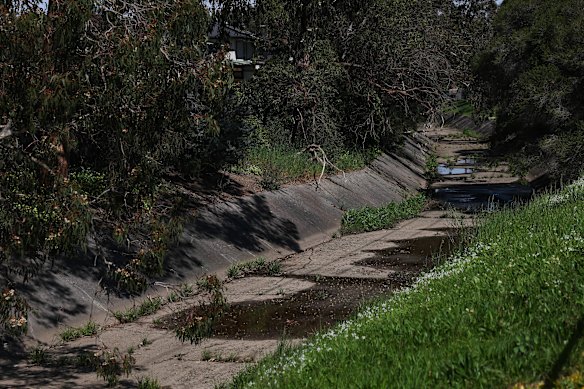
Across the road is the green expanse of the Cheong Park oval, home of the South Croydon Football Club, and behind the shops is the concrete-lined basin of the Tarralla Creek.
Talbot has lived in the area for several years, and this is the first she’s heard of the shopping strip’s link to the 15-minute city concept, a principle that everything you need should be within a 15-minutes walk of your home – schools, shops, libraries, parks, transport, job opportunities and healthcare.
“It’s a nice area,” she says of Croydon South. “It’s a little bit sleepy. It’s very much a family vibe.”
French academic Carlos Moreno pioneered the concept of a 15-minute city in 2016. Nearly 100 mayors worldwide later embraced the concept as a way to help their cities recover from the COVID pandemic.
The timeframe is slightly fluid: 15-minute cities are also referred to in urban planning-speak as 20-minute neighbourhoods. In 2018, the Andrews government launched the 20-minute neighbourhood pilot program in Melbourne, selecting three neighbourhoods as pilots: Sunshine West in Brimbank City Council, Strathmore in Moonee Valley City Council, and Croydon South in the City of Maroondah.
Moreno will be one of the keynote speakers of The Age’s Melbourne Assembly conference in October, presented in partnership with the University of Melbourne.
The conference will be Moreno’s first visit to Australia, but he devoted a chapter of his book, The 15-Minute City: A Solution to Saving Our Time and Our Planet, to Australia, by identifying Croydon South’s shopping strip as “a local hub of activity”. The book flags the Victorian government’s pilot project launched in 2018 and student-led proposals for a pedestrian plaza at the shopping strip, the redesign of the Yvonne Avenue residential area behind the shops, and the restoration of Tarralla Creek.
The government’s plan for the neighbourhood published on the Plan Victoria website includes creating greater diversity of housing, improving cycling and pedestrian crossings, enhancing the connectivity and amenity of Tarralla Creek by upgrades to paths along the creek, and reorienting the Eastfield shopping strip.
The plan classifies the area as low density, with housing characterised by single detached dwellings with about 17 dwellings per hectare, while a minimum housing density of 25 dwellings per hectare is needed to deliver inclusive, vibrant and healthy neighbourhoods.
In partnership with the Maroondah council, the government in 2018 held a community day at the Eastfield shops, converting part of the car park into a market, with activities including children’s rides, tractors, balloon art, seed potting, science experiments and music performances.
It surveyed residents and conducted assessments on walkability, housing development, vegetation and heat vulnerability.
However, eight years on, there is little to show for Croydon South’s moment in the global 15-minute-city spotlight.
On a weekday afternoon, the shopping strip is busy with people picking up prescriptions at the pharmacy and ordering an afternoon flat white at the cafe.
Nikeesha Justice, who works at the Eastfield homewares and children’s store, Common Culture, is also unaware of the plans to turn the area into a 20-minute neighbourhood.
Justice says many residents rely on cars as the only public transport option is one bus route, although most things are within close walking or cycling distance.
“A lot of people that we have coming past, especially mums, walk the trail [along the creek] to get here,” she says.
There are plenty of schools close by. Tinternvale Primary School is a 15- minute walk away, and Maroondah Hospital is a 28-minute walk or 12-minute bike ride away, which fits in to the aims of a 15-minute-city.
However, besides residents working in retail, or working from home, many in the area have to commute to the CBD for work.
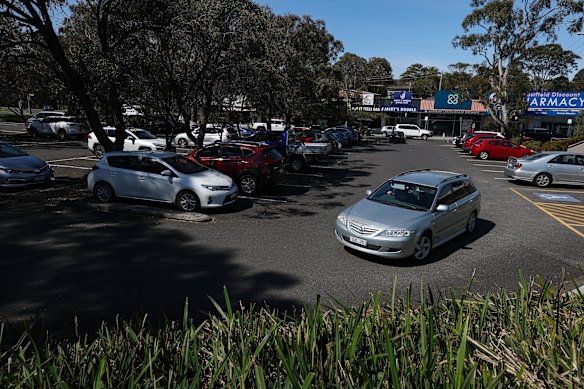
Justice is less keen on the idea for rehabilitating Tarralla Creek or turning Eastfield’s car park into a pedestrian plaza.
“People mostly come here, and they’ll go to the bakery and then grab a coffee, and then they get going,” she says. “It’s not a spend-the-afternoon type of place.”
The lack of progress in Croydon South is disappointing, but not surprising to James Mant, the former director of places and precincts for the state government, who led Victoria’s 20-minute neighbourhood program.
Mant says Melbourne helped shape the global discussion around walkable neighbourhoods, but has struggled to translate that vision into implementation at scale.
“But the problem we had was – one, there was no real investment from government, and two, there was no leadership,” he says. “Where it’s been successful, like Paris, where Carlos [Moreno] has led the work, where there’s a really strong leader in mayor Anne Hidalgo, who has really pushed it through as a key part of the agenda, whereas in Melbourne, it really was seen as a little bit of a tack-on planning thing.”
Mant says there was little impact in the pilot areas, including Croydon South, from the government’s 20-minute neighbourhood plans.
The government trialled a pop-up-park in part of the Eastfield shopping strip car park, but Mant says the removal of the green space shows it wasn’t a success.
“Places like Croydon South are still very car dependent,” he says. “There’s not a lot of housing in and around. There’s not much density, and I think that’s probably where the biggest challenge is, in actually delivering that growth in places like that.”
Mant says more intervention from government is needed for change to occur.
A spokesman for the government says its vision for how Victoria would grow over the coming decades is set out in Plan for Victoria, released last year, with housing targets for every municipality and clear guidance for delivering homes near transport, jobs and essential services.
“Victoria continues to build and approve more homes than any other state – but we know there is more to do,” the spokesman says. “We’ve passed the biggest overhaul of Victoria’s planning laws in decades to give more people the opportunity to live close to what matters to them.”
Jane Keddie, the Victorian vice president of the Planning Institute of Australia, says planners are very concerned the government is so focused on the number of homes approved rather than the quality of the places in which those homes are being delivered.
“It’s fair to say 20-minute neighbourhoods still exist as [government] planning policy, but the government has shifted focus a bit,” she says. “Because of the nature of how Melbourne has developed, which is quite an American, car-based type of city, it’s a little bit harder to retrofit because we’re so low-density, and we don’t have good density of jobs right near where people live.”
Infrastructure Victoria chief executive Jonathan Spear also sees the divide between where people live and where they work as a major barrier to achieving the aims of a 15-minute-city or 20-minute neighbourhood in Melbourne’s suburbs.
“That is a really difficult thing to shift the dial on in Melbourne, because of the realities of where a lot of the higher-value jobs are located versus the reality of where at least currently a lot of housing is located,” he says.
Spear says 15-minute-cities are aspirational, but “a bit tricky” to implement.
That’s the reality for residents of Croydon South, where the transformation of Paris into a 15-minute-city, with boulevards devoted to bicycles and streets outside schools given over to pedestrians and greenery seems a long way away.
At the Eastfield shops, the car park is still full of cars rather than pedestrians, and weeds grow through the concrete basin of Tarralla Creek.
Melbourne Assembly will be held from October 19 to October 21. More information is available on the Melbourne Assembly website.