SOURCE :- THE AGE NEWS
The most impossible job on earth. That’s how the United Nations’ first secretary general, Norway’s Trygve Lie, described the role as he handed over to his Swedish successor in 1953. But according to one of his aides, British politician Brian Urquhart, Lie was especially ill-suited to the position. Urquhart would later describe Lie as “a suspicious and insecure man with a hair-trigger temper”, someone who “seemed to be out of his depth in a complex and very public job”.
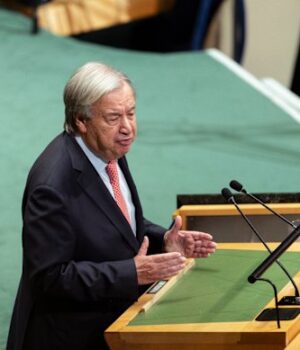
Seven decades later, the UN is again preparing to elect a new leader as António Guterres steps down from the role he has held since 2017. When the former Portuguese prime minister was appointed to a second term in 2021, Mark Cogan, an associate professor of peace and conflict studies at Kansai Gaidai University in Japan, labelled him the worst secretary-general in history in a scathing opinion piece.
Guterres had been “morbidly ineffectual, and worse, utterly silent on some of the most consequential human rights crises of our time” argued Cogan, who worked in several UN agencies as a technical adviser and communications specialist.
Five years later, has he changed his mind? “Absolutely not,” Cogan tells this masthead. “The second term has been even worse.”
To be sure, Guterres has faced immense challenges. His tenure has seen the highest number of conflicts since the end of World War II, including a major return of interstate conflicts such as Russia’s war against Ukraine, the US and Israel’s war against Iran and clashes between Thailand and Cambodia.
While expansionist leaders such as Donald Trump, Xi Jinping and Vladimir Putin have trampled over the rules-based international order, Guterres has also had to respond to threats including climate change, the COVID-19 pandemic and, now, artificial intelligence. And he’s had to do it with slashed resources thanks largely to Trump’s antipathy to the UN and the “globalist” philosophy it embodies. At the start of his second term, Trump froze almost all US funding for UN humanitarian work and refused to pay into the organisation’s core budget. As a result, the UN has had to lay off 2900 staff, nearly a fifth of its workforce, and embark on a radical reform program, even as it tries to plug gaps left by Trump’s devastating cuts to American aid programs. Staff at key agencies have been shifted en masse from Geneva to Nairobi to save money.
Even so, Cogan says Guterres bears responsibility for “a crisis of morale and of confidence” that he says has beset the UN during his tenure. He accuses Guterres of practising “church mouse diplomacy” with a lack of focus on universal human rights. Like many, he accuses him of soft-pedalling criticism of China’s treatment of ethnic minorities such as the Uyghurs. “Most people I speak to use the word placeholder,” he says. “I don’t see a legacy. I know that’s damning, but it’s the truth.”
Susan Harris Rimmer, an expert in international law at Griffith University, is more complimentary. “He’s had a rough trot, but he’s been exemplary,” she says. “I think he has cut through and been a voice of reason. He’s been an excellent orator.” But Guterres’ critics are legion. In a piece this month in Foreign Affairs, Richard Gowan, the International Crisis Group’s program director of global issues and institutions, argues the UN has fallen into a state of “decrepitude” over the past decade. Voicing a common complaint, he accuses Guterres of shrinking away from the UN’s peacekeeping role – an area where the organisation can make a practical difference to resolving conflicts.
Stephen Schlesinger, a historian of the UN, says Guterres has “done his best to keep the organisation alive” but faults him for often appearing more of a commentator decrying the world’s woes than a leader trying to solve them. “When it comes to crises, he has been something of a passive observer. He wasn’t a hands-on guy,” says the author of Act of Creation: The Founding of The United Nations.
Schlesinger notes that, even accounting for the COVID-19 pandemic, Guterres has travelled far less than his predecessors, faulting him for not jetting into Eastern Europe in 2022 as Putin readied troops near the Ukraine border. “A predecessor like Kofi Annan would have been more proactive and tried to ward it off,” he says.
Daniel Safran-Hon, a former senior UN staffer, noted in a piece in June that Guterres has not visited South Sudan, Sudan, Kosovo, Cyprus, or Western Sahara during his tenure. Nor did he travel to East Africa when Sudan collapsed into chaos, to Syria following the fall of Bashar al-Assad or to South-East Asia in during the Thailand–Cambodia conflict.
Under the UN’s rotational system, the next secretary-general is supposed to come from Latin America or the Carribean. There is also a strong view it is time for the organisation to appoint its first female leader. Cogan says he wants the next secretary general to be a “norm enforcer” imbued with toughness. “This quiet diplomacy, this appeasement has to end.”
Schlesinger argues: “They need someone who can spread the gospel of the organisation and try to solve crises before they become conflicts. There needs to be a sense of urgency, energy, creativity.”
One of the leading candidates for the position, Ecuadorian diplomat María Fernanda Espinosa, has argued the UN is in dire trouble and will drift further into paralysis without major change.
“What is now in question is not the relevance of the United Nations, but its credibility,” she said in her vision statement for the role. “Often, the organisation is slow when it should be decisive, fragmented when it should be aligned, and procedural when it should act with purpose. The result is a crisis of confidence that affects everything else: political space, operational effectiveness, staff morale, and ultimately financial support.”
At a time of such difficulty, nations could be forgiven for moving away from the UN and focusing on other forums. Canadian President Mark Carney’s vision for a coalition of middle powers, for example, has left little role for the UN. Yet, as the organisations grasps for legitimacy, Australia wants to deepen its involvement in the body by winning a non-permanent seat on the Security Council for the 2029-2030 term. In crisis, so the thinking goes, can come opportunity.
Sitting inside the residence of Australia’s UN ambassador, overlooking the East River in Manhattan, this week Foreign Minister Penny Wong spells out the rationale for Australia’s bid. “None of us are naive,” she says. “We understand this is a time where the world is changing and the UN will need to change.” On the bookshelves surrounding her are books by Bob Carr and Paul Keating, biographies of Bob Hawke and Margaret Simons’ biography of Wong herself (a book she wishes had never been written.)
Wong says Australia’s campaign for a seat on the UN Security Council is ultimately about ensuring a middle power has a voice in a system that, despite its shortcomings, continues to shape Australia’s security and prosperity.
“A world that is ruled by power alone is not going to be in accordance with Australia’s interests,” Wong says. “We do best in a world where there are rules that govern how we deal with each other.”
Australian officials have noted that, as the US has been gutting the UN’s resources, China has been working relentlessly to extend its influence within the organisation. A US congressional report examining China’s role in the UN released in March argued that Beijing has spent years building influence across the organisation through a combination of financial contributions, the placement of Chinese nationals in senior positions, peacekeeping deployments and a network of organisations with links to the Chinese Communist Party.
The report, produced by the US House Select Committee on Strategic Competition between the United States and the Chinese Communist Party, describes the approach as a systematic effort to use the UN to advance China’s national interests.
China’s financial contributions to the UN have risen sharply over the past two decades, with its share of the organisation’s regular budget increasing from about 2 per cent in 2006 to 20 per cent in 2026, second only to the US.
Between 2005 and 2023, the number of Chinese nationals employed by the UN and its agencies increased from 579 to 1664, an increase of about 187 per cent, according to UN personnel data cited by the report.
The strategic contest is playing out within specialised agencies that rarely make headlines but are hugely influential in shaping global rules. These include the International Telecommunication Union, which coordinates the global allocation of radio spectrum and satellite orbits and develops international telecommunications standards.
China has significantly increased its participation in the ITU, with the number of Chinese entities involved in the organisation rose from 16 in 2012 to 106 in 2022, according to the US-China Economic and Security Review Commission. Chinese companies and officials have also sought to influence international standards, including those governing 5G networks.
Meanwhile, the World Meteorological Organisation’s decisions over radio frequencies have implications for weather forecasting and early warning systems. For Australia and its Pacific neighbours, reliable access to the organisation’s satellite, radar and other observation systems provides crucial warnings of cyclones and other severe weather events. Yet the organisation is on the brink of bankruptcy.
Deepening Australia’s role at the UN will give it more influence over the global rules of the road at a time of superpower rivalry. While the Security Council bid was initiated by former foreign minister Julie Bishop in 2015, Wong says the case is even more persuasive today. Wong says her foreign policy approach can be summed up with “four Rs”: region, relationships, rules, resilience. “Well, this is the rules, right?” she says of the UN bid.
Other nations, it must be noted, are hardly clamouring for a non-permanent spot on the Security Council. When Australia last ran for a position in 2013, it was a competitive race; this time only Australia and Finland have nominated for the two available spots. But that could change, and Australia will still have to secure the support of two-thirds of UN member states to join the council.
Rimmer is an enthusiastic supporter of Australia’s bid. “This is a great investment and something we should embrace wholeheartedly,” she says. “This is exactly the time we should be diversifying our networks, being more creative, putting ourselves at the centre of international affairs.”
Gary Quinlan served as Australia’s UN representative when it sat on the Security Council in 2014 and 2015. He says the role allowed Australia to play an outsized role in global affairs, including forcing open the borders of Syria to humanitarian aid against the wishes of its dictatorial government. More famously, Australia used the position to convince the Security Council to pass a resolution backing an independent international investigation and safe access to the crash site of Malaysia Airlines Flight MH17.
Ironically, the Abbott government benefited from the position even though the Coalition initially opposed Australia’s bid as a waste of money. This time around, Australia’s bid has bipartisan support, despite the rise of Pauline Hanson’s One Nation and its opposition to the UN.
Quinlan says it is the right time for Australia to again take a seat at the most important table in global affairs. While the nation will not have a veto power like the Security Council’s five permanent members – the US, France, Russia, China and the United Kingdom – it would allow Australia to expand its influence. “As Mark Carney says: if you’re not at the table, you are on the menu. You have got to be a shaper otherwise you are hostage to others’ desires,” Quinlan argues. “Of course there are limitations to what you can achieve, but what do you do? Not try?”
Cut through the noise of federal politics with news, views and expert analysis. Subscribers can sign up to our weekly Inside Politics newsletter.
 Matthew Knott is the foreign affairs and national security correspondent for The Sydney Morning Herald and The Age.Connect via X, Facebook or email.
 Rob Harris is the national correspondent for The Sydney Morning Herald and The Age based in Canberra. He is a former Europe correspondent.Connect via email.