Source : Perth Now news
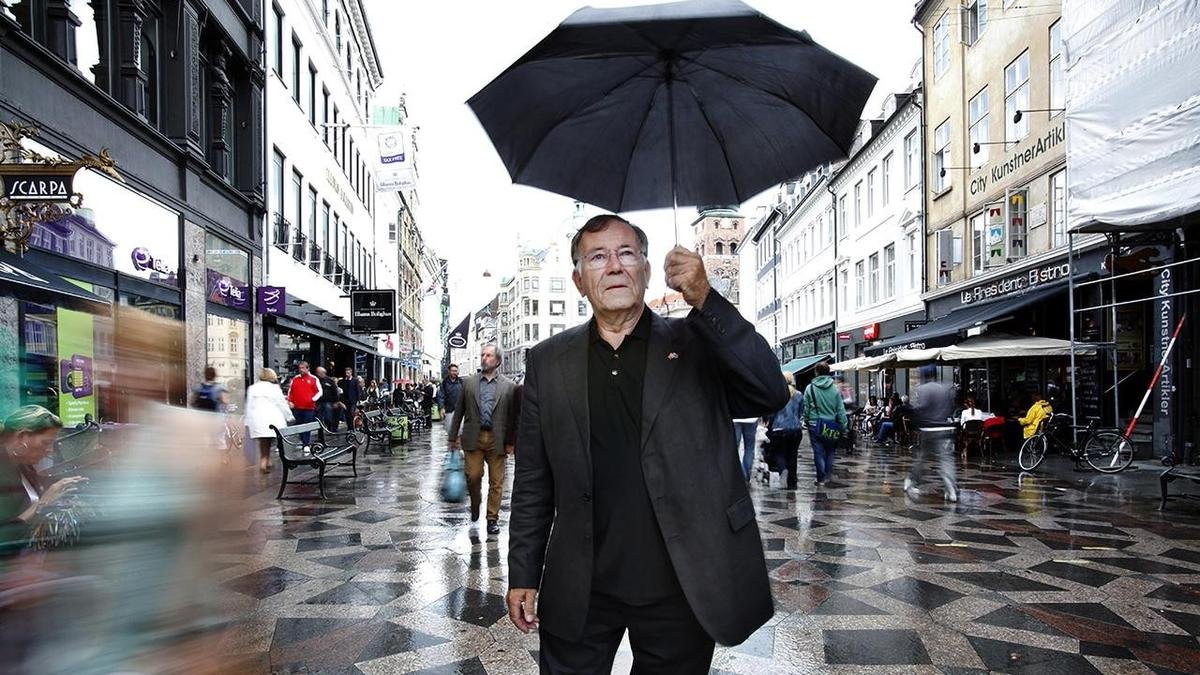
A household name in Australia he’s not, but Jan Gehl is a big reason Sydney, Melbourne and Perth found their razzle dazzle.
Thanks largely to the 90-year-old’s knack for transforming ghost towns into thriving central precincts, the three cities have surged in global livability rankings.
A major exhibition spanning Gehl’s 66-year career opens at the Danish Architecture Centre in Copenhagen in October.
He’s devised makeovers for more than 50 major international cities, among them Stockholm, London, Moscow and New York.
Yet his consulting work in Australia has a special place in his heart. Four boomerangs hang by the door of his home office.
“I have fixed every city in Australia and New Zealand except two,” Gehl says, laughing.
Canberra he is happy he was never asked to, as he considers it “a tough potato”, and the other is Brisbane.
Otherwise, he says: “I feel in my life I have accomplished more in Australia and New Zealand than in the rest of the world.”
A professional people watcher, Gehl pioneered special surveys in 1960s Copenhagen that observed foot traffic in different weather and times of day.
His other main task has been to chase cars out of cities to make room for pedestrians and bikes.
Like famous American urban planning duo Marion Mahony and Walter Burley Griffin, who won the competition to design Canberra, Gehl’s psychologist wife Ingrid was instrumental in shaping his conceptualisation of “people-centric” cities.
As a visiting professor from the Royal Danish Academy of Fine Arts in the 1970s, he was struck by the sense Australians were embarrassed by their cities.
“Everyone was always saying how backwards Australia was,” he says.
“Every time three Australians were talking to each other, they were telling where they were on their last overseas trip or where they were going next.
“They always talked about how to get out of Australia.”
Now Australians are proud of their cities, Gehl says.
His book Life Between Buildings was published in English in 1987 and became a bible for architects and urban planners.
Perth was the first Australian city to hire him in 1992.
He recalls lonely nights standing in a deserted Forrest Place.
“All the bars and restaurants were in Northbridge and the whole city centre was completely dead from 5pm on Friday until Monday morning,” he says.
“I said to the mayor: ‘It’s maybe not so smart to have all the nice places and water holes in one place; in all the other good cities they are scattered’.
“She said, ‘No, no, no, you haven’t understood it. It is so smart because two police cars can control it all’.”
Gehl reminded Perth it had turned its back on the Swan River, ultimately leading to the Elizabeth Quay development.
Perth has five universities but none until recently with city facilities, which he argued robbed the CBD of young people’s energy and vibrancy.
Edith Cowan University came to the party in February with a swanky, award-winning 11-storey campus and performing arts centre.
Such is the respect and adoration for Gehl in Perth, city planners made a two-metre cardboard cut-out of him.
Academics Annie Matan and Peter Newman also penned a book titled People Cities: The Life and Legacy of Jan Gehl.
“Gehl helped Perth shift from thinking primarily about moving cars and people through the CBD to … how people actually experience a city,” Lord Mayor Bruce Reynolds says.
“Where they walk, where they stop, where they meet and what makes them want to stay.
“Growth isn’t just about how big a city becomes; it’s about making sure it remains a place where people feel they belong.”
Next it was Melbourne’s turn and Gehl took to the streets with a clipboard and tally clicker, releasing his landmark study in 1994.
The city had long been trying to shake off a “doughnut” vibe – a place that hollowed out after 6pm when people left the office to return to the suburbs.
“My mum had a job as a secretary at one of the big banks,” Lord Mayor Nick Reece recalls.
“I remember coming to Bourke St, Melbourne’s busiest street, and throwing a ball against a wall because there was nobody in the city.
“On weekends that is how Melbourne used to be.”
Postcode 3000 is now virtually unrecognisable, a culture and sports hub with vibrant laneway bars and cafes.
“You design a good city for eight-year-olds and 80-year-olds,” says Rob Adams, who worked in urban planning in Melbourne for 40 years and counts Gehl as a dear friend and mentor.
“That’s the secret … if you can walk around the city and get everything you want.”
On Mr Adams’ watch, 80 hectares of asphalt were ripped up and replaced with parks, widened footpaths and bike lanes.
Underpinning the transformation has been an inner-city population increase – converting unused office space into 65,000 apartments – which helped boost hospitality and retail.
Higher CBD population density saves billions of dollars on infrastructure and delivers happier and healthier citizens, Mr Adams explains during Gehl’s 90th birthday party in Copenhagen.
They have more leisure time and walk and cycle more instead of sitting in traffic.
He notes cheap house-and-land packages on city fringes come at a heavy unspoken cost: diabetes, traffic pollution, financial stress related to households running two cars and subsequent family violence.
It took Sydney a little longer to jump on the Gehl bandwagon. He was commissioned basically to “Melbournise” the Harbour City in 2007.
“Sydney had so many high-rises you could hardly find a ray of sunshine,” he says.
He found wind tunnel streets had pushed people to hang out “like moles” in subterranean food courts, no doubt a product of “a poorly designed city”.
To counteract this, he advocated for George St to become a 2.5km pedestrian strip with light rail.
Gehl acquired the nickname the “Danish Icebreaker”, skilfully navigating spats between the NSW government and Sydney City Council.
“Delivering the light rail took years of lobbying, negotiating and fighting hard,” says Lord Mayor Clover Moore, who has a selfie with him on her office wall of fame alongside snaps with Bill Clinton, Barack Obama and the Dalai Lama.
“Jan was a great asset. He had gravitas and was so well regarded by politicians and business leaders.
“A street once clogged with noisy, polluting buses and souvenir shops has transformed into a tree-lined boulevard with new paving, lighting, street furniture and interesting laneways.
“There are people everywhere: on our seats having conversations or just enjoying watching the madding crowd.”
In 2013, Gehl quit as an advisor on the Barangaroo project over concerns the development wasn’t people-friendly.
Sydney presented him with a key to the city in 2017 and, for a 90th birthday present last week, sent him an original George St sign.
His work is part of a growing tradition of Danish architects influencing Australia’s cityscapes – from the Sydney Opera House designed by Jørn Utzon to Danish architecture firm 3XN working on the Sydney Fish Market and upcycling its old AMP building.