Source : INDIA TODAY NEWS
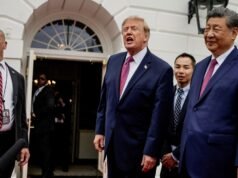
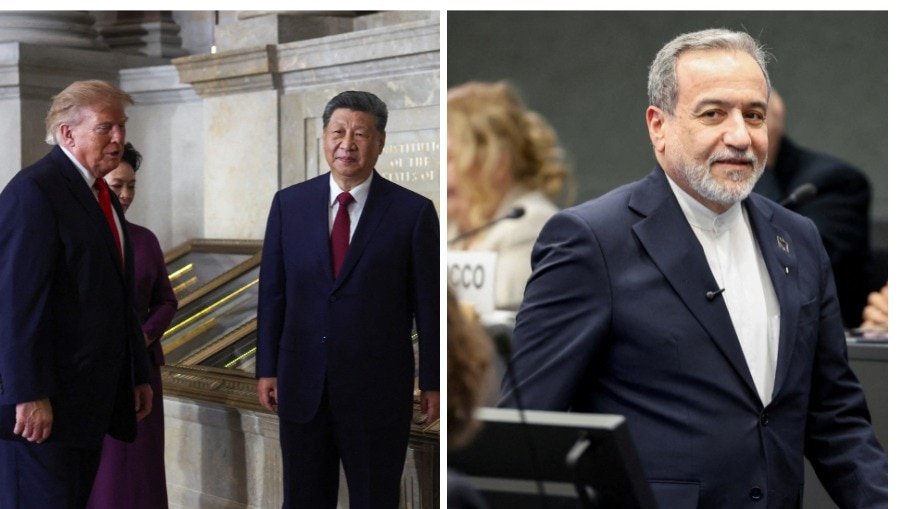
Iran pressed Washington on Friday to accept a seven-day plan to reopen the Strait of Hormuz and halt hostilities across the region, as US President Donald Trump and Chinese President Xi Jinping discussed the Middle East war at their summit.
The diplomatic push came as the conflict continued to disrupt oil shipments through the strategically vital waterway, raising concerns over its impact on global energy supplies. China, heavily dependent on Middle Eastern oil, has a major interest in restoring the flow of energy through the strait.
advertisement
Xi urged the United States and Iran to return to a June framework agreement that had resulted in a brief ceasefire and resume negotiations toward a broader settlement, China’s state news agency Xinhua reported.
Trump, meanwhile, warned Xi against providing support to Iran, according to US Ambassador to China David Perdue. Perdue said China had assured the US that it would not support Tehran.
The exchanges came as Iran and the US pursued indirect diplomacy at the United Nations General Assembly through Qatari mediators.
IRAN’S SEVEN-DAY HORMUZ PROPOSAL
Iranian Foreign Minister Abbas Araghchi said Tehran had conveyed a “concrete seven-day plan” to Washington through Qatar.
“If the necessary conditions are met, the strait can be reopened, a normal maritime passage restored within seven days. The choice now rests with the United States,” Araghchi told reporters at the UN on Friday.
He said the seven-day period would begin once Washington accepted the proposal.
Under the plan, Iran would reopen the Strait of Hormuz and halt hostilities across the region, including in Lebanon. In return, Tehran is seeking the lifting of the US blockade on Iranian ports, the release of frozen Iranian funds and the waiver of oil sanctions.
A US official, speaking on condition of anonymity, said Washington was engaged in “positive and constructive discussions” through mediators and that nuclear issues remained part of the talks.
However, a senior Iranian official separately told Reuters that Tehran would not compromise on its nuclear programme even if Washington accepted the peace proposal. The official said Iran would retain what it considers its rights, including uranium enrichment, and would not agree to ship its highly enriched uranium out of the country.
Trump has repeatedly said Iran must not be allowed to develop nuclear weapons.
CONFLICT HAS SPREAD ACROSS REGION
The seven-day proposal follows earlier diplomatic efforts that failed to produce a lasting end to the war, which began on February 28 with US and Israeli strikes.
The conflict has since seen periods of fighting followed by temporary pauses. Thousands have been killed, while Iran’s conventional military capabilities and already fragile economy have suffered significant damage.
Iran and allied groups have also expanded attacks across the region. Iranian missiles and drones have targeted US allies in the Gulf, while the Iran-aligned Houthis in Yemen have attacked Saudi interests. Iranian-aligned militias in Iraq have also been blamed for a pipeline attack that temporarily disrupted additional Saudi oil supplies.
In Lebanon, Iran-backed Hezbollah has continued fighting Israeli forces.
US WARNS CHINA OVER IRAN SUPPORT
Washington’s warning to Beijing came amid reports that China had supplied Iran with shoulder-fired air-defence missile launchers and helped Tehran evade sanctions on its oil exports.
Perdue said Trump had made clear to Xi that any direct or indirect support for Iran was “totally unacceptable”.
Asked whether China had agreed to stop assisting Iran, Perdue told Fox News, “They assured us yesterday they’re not doing that.”
SAUDI ALLIES STRENGTHEN DEFENCE COOPERATION
As the conflict widened, Saudi Arabia’s partners moved to strengthen the kingdom’s defence posture.
Defence officials from Turkey and Pakistan met in Riyadh on Friday to assess the regional security situation and discuss intelligence sharing, military coordination and greater integration of capabilities, Saudi Arabia’s Defence Ministry said.
Turkish Chief of General Staff General Selcuk Bayraktaroglu met with Saudi Arabia’s Chief of General Staff General Fayyadh bin Hamed Al-Ruwaili and Pakistan’s Chief of Defence Forces and Chief of Army Staff Field Marshal Asim Munir in Riyadh, Saudi Arabia.
The meeting followed talks between the Saudi, Pakistani and Turkish foreign ministers a day earlier under the framework of the Mecca Joint Defence Agreement.
Meanwhile, the fighting in Yemen has triggered a worsening humanitarian situation. The UN children’s agency UNICEF said on Friday that acute malnutrition among children was rising amid the continuing violence.
– Ends
SOURCE :- TIMES OF INDIA