Source : INDIA TODAY NEWS
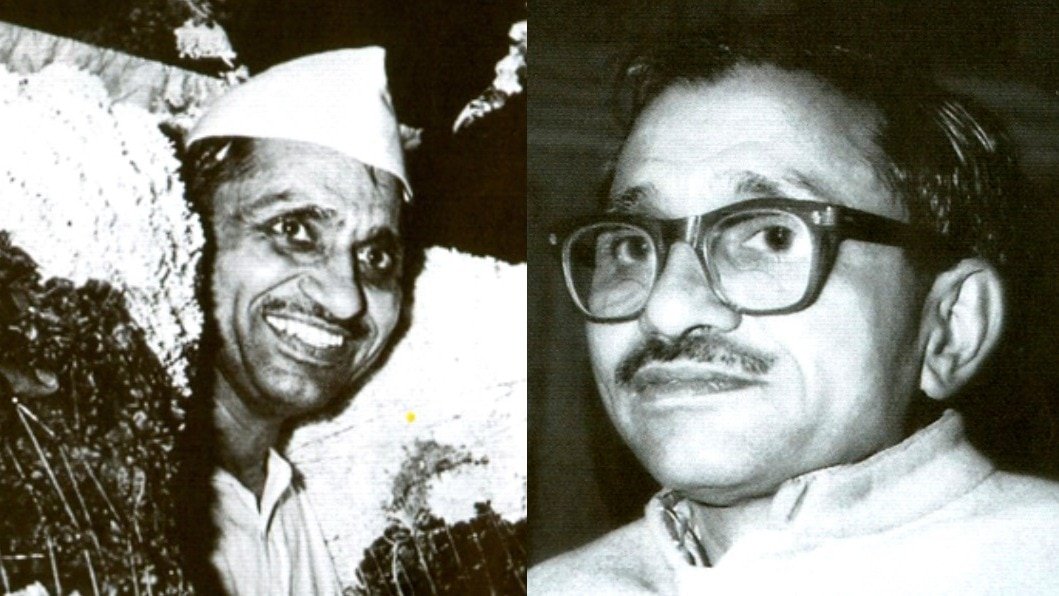
From surviving a childhood marked by repeated personal losses to turning down a government job and becoming a lifelong RSS pracharak, Pandit Deendayal Upadhyaya’s life was shaped by sacrifice, organisational work and political thought.
Born on September 25, 1916, Upadhyaya later propounded ‘Integral Humanism’, which he presented as an Indian alternative to Western capitalism and Marxist socialism. As his 110th birth anniversary is observed, here is a look at his life, ideas and the events that shaped his journey.
advertisement
September 25, 1916 marked the birth of Pandit Deendayal Upadhyaya, who went on to lose his entire family one by one and turn down a government job. He later gave the philosophy of ‘Integral Humanism’, which is described as an Indian alternative to Western capitalism and Marxist socialism.
DIFFICULT CHILDHOOD
His father was an assistant station master. Deendayal lost his father when he was just two-and-a-half years old. At the age of seven, he lost his mother to tuberculosis, and by the time he was ten, his maternal grandfather had also passed away. In 1934, his younger brother Shivdayal died of smallpox.
The following year, his grandmother died, and in 1940, his maternal cousin Ramadevi passed away.
By the age of 25, he had lived in at least 11 different places.
In the book ‘Pandit Deendayal Upadhyaya’, part of the Publications Division’s ‘Builders of Modern India’ series, biographer Mahesh Chandra Sharma writes: “Deendayal was, in the truest sense, a nomad.”
Despite these hardships, he did not fall behind in his studies. He stood first in the board examinations in Sikar and Pilani. Maharaja Kalyan Singh and Ghanshyamdas Birla awarded him gold medals. He also cleared the provincial services examination but chose not to accept the post.
TWO EPISODES FROM DEENDAYAL UPADHYAYA’S EARLY LIFE
When the robbers returned empty-handed: When Deendayal was seven or eight years old, robbers raided his house. One of them knocked him down and placed his foot on his chest.
Lying pinned to the ground, the child calmly said that he had heard robbers looted the rich and protected the poor, “but you are troubling a poor creature like me.”
The child’s fearlessness reportedly impressed the gang leader so much that he and his men left without taking anything.
The counterfeit coin: During his student years, Deendayal once went to buy vegetables with Nanaji Deshmukh.
While returning home, he suddenly stopped because he remembered that he had unknowingly given a counterfeit coin to an elderly vegetable seller.
He went back and searched through her pile of coins until he found the counterfeit one. He then replaced it with a genuine coin. Moved by his honesty, the vegetable seller blessed him.
BETWEEN AFFECTION AND DUTY: A LETTER HOME
His decision to follow his chosen path disappointed his family. His maternal uncle was already upset with him for turning down a government job. The family hoped that he would at least become a teacher.
But Deendayal remained a lifelong Sangh pracharak and decided to remain unmarried. His first posting was in Uttar Pradesh’s Lakhimpur district, and he did not return to his uncle’s home.
When his maternal uncle fell ill, his cousin Banwarilal wrote to him asking him to return home. Deendayal replied that ever since receiving the letter, he had been “torn between affection and duty”.
He explained that he could not stay in one place for more than a few days and could not take up a permanent job either. He wrote: “For a Sangh worker, society and the nation come first; personal duties come later.”
While reassuring his family, he wrote that the Sangh was not a political organisation. At the same time, he identified what he saw as the country’s weakness: “The cause of our decline is the lack of organisation.”
He also wrote that slaves should not aspire for name or fame. He drew inspiration from history and recalled the exile of Ram, the hardships endured by Krishna, Rana Pratap’s years of wandering in the forests, and the sacrifice of Guru Gobind Singh’s sons.
He then asked: “Can we not sacrifice our personal ambitions for such a society and such a dharma?”
His dedication was also reflected in his work. After spending three years as a pracharak in Lakhimpur (1942–45), he became the co-provincial pracharak for the entire Uttar Pradesh.
Bhau Rao Deoras, the provincial pracharak at the time, later recalled that when the path of Sangh work was full of thorns, Deendayal took up the difficult task.
PRACHARAK, NOVELIST AND EDITOR
He joined the Rashtriya Swayamsevak Sangh in 1937 and remained a pracharak throughout his life. In 1946, he wrote the novel ‘Samrat Chandragupta’ in a single night. His second novel, ‘Jagadguru Shankaracharya’, was published in 1947 and contained his central idea: “Cultural unity is the basis of political unity.”
He also ran ‘Rashtra Dharma’, ‘Panchjanya’ and ‘Swadesh’. At times, he single-handedly worked as the editor, compositor and machine operator.
THE THIRD WAY: INTEGRAL HUMANISM
As the general secretary of the Bharatiya Jana Sangh, he presented the philosophy of ‘Integral Humanism’ in 1965. His argument was that both capitalism and Marxist socialism primarily view human beings as economic entities.
According to him, capitalism gives rise to unchecked individualism, while socialism turns the individual into a cog in the machinery of the state. He viewed human beings as an integrated whole comprising the body, mind, intellect and soul.
His philosophy emphasised the balanced development of all four and sought to establish harmony between the individual and society. It connected material progress with moral and spiritual values. Its goal was to create an egalitarian, self-reliant social order rooted in its own culture.
AN UNFINISHED JOURNEY
In December 1967, he was elected president of the Jana Sangh. Just weeks later, on February 11, 1968, he was found dead near Mughalsarai railway station. The mystery surrounding his death has never been completely resolved. Sharma describes his life as “the embodiment of an entire political thought process”.
– Ends
SOURCE :- TIMES OF INDIA