
source : the age
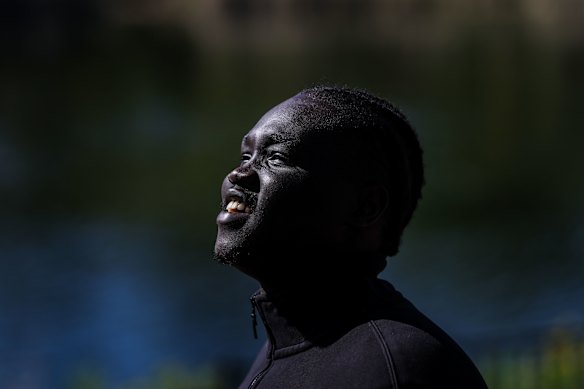
Huddled under a thin blanket, Moses Riek spent his first night in jail haunted by flashes of his mother pleading with him to be a good boy. At 18, he was now locked in an adult prison.
In the silence of a shared courthouse cell, three adult men sleeping beside him, his mind began to map the steady escalation of his teenage crimes. For perhaps the first time, he says now, he was trying to piece together how it had all gone wrong.
Over a few years, what started with low-level offending, like shoplifting from major shopping centres, had spiralled into violence, and in 2020 he was handed a four-year prison sentence for other serious crimes.
“I remember thinking, ‘oh, this is jail. I’m actually in prison’,” Riek says.
That first night in prison, he was haunted by more than his mother’s anguish. He was haunted by his own. What had happened to the kid who dreamed of becoming a pro basketballer? It was, he says, difficult to pinpoint the exact time in his life when things began to unravel.
In 2004, Riek, then just three years old, moved to Australia after fleeing with his family from South Sudan. First Egypt, then to Sydney, and finally settling in the south-east Melbourne suburb of Pakenham.
Growing up as the eldest sibling took a toll when his father left home. Riek felt the burden of being more than a brother to his siblings. Basketball, he says, became his outlet.
“I actually reached a very high level in basketball, but I lost it overnight because I suffered a pretty bad injury,” he says. “From there, I fell into the wrong crowd.”
That, he says, was when things started to go wrong.
‘If you change the beginning of the story, you change the whole story.’Karyn McCluskey, Scottish Violence Reduction Unit founder
While trying to piece together his own downfall, Riek started noticing others.
A shopkeeper in Sunshine West died in hospital after an alleged attack by a group of young people. A 13-year-old girl was allegedly murdered by a teenage boy in rural Victoria. A good Samaritan was allegedly murdered at a suburban train station as he tried to stop a fight between children.
In the year to March 2026, children were over-represented in the state’s violent crime statistics, carrying out more than 60 per cent of robberies and about half of all carjackings and home invasions.
While the most recent statistics released this week by the Crime Statistics Agency show a reduction of crime across the state – with a 2.1 per cent decrease in offences in the year to June – a report by the Victorian Auditor-General’s Office (VAGO) found the state’s current approach to youth crime prevention was not working.
Over the three years between 2022 and 2025, youth crime in Victoria increased by 40 per cent.
The report also found that the Department of Justice had overstated the effectiveness of the current Youth Crime Prevention Program when describing it as a “proven, evidence-based” intervention, and that it was reaching just 2 per cent of the state’s young offenders.
As Riek found, falling in with the wrong crowd at the wrong time can alter the course of a life. To stem that tide, and grapple with the rise in youth crime, the Victorian government late last year adopted a Scottish initiative called the Violence Reduction Unit.
Founded by former head of Strathclyde Police intelligence analysis, Karyn McCluskey, in the mid-2000s to combat rising violent youth crime in Glasgow, the unit treats youth violence like a health crisis.
As in Scotland, the Victorian unit probes how a child turns into a youth offender; their upbringing, family unit and living situation, their health, financial situation, school engagement and community involvement, and the support they receive along the way.
“Violence is a language. It tells you that something’s wrong,” McCluskey told this masthead after delivering a seminar on the program to youth workers in Melbourne.
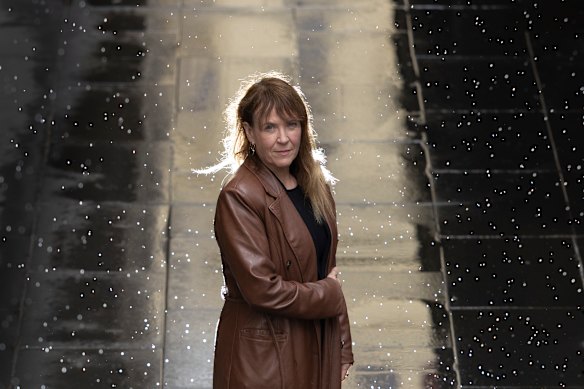
“If you change the beginning of the story, you change the whole story.”
The over-$20 million Victorian unit includes putting youth workers in hospitals, where they can support young offenders at vulnerable moments. Former youth offenders are sharing their stories of crime and redemption with teens in custody, while new school programs are helping children spot the warning signs of grooming.
The VAGO report only touched briefly on the new VRU, saying the $27.5 million investment – which includes $7.7m for youth mentoring and $5.6 million for early intervention officers across 23 schools – was ultimately too new to judge.
“Victoria’s Violence Reduction Unit is not within the scope of this review, as it is too early to assess its effectiveness,” the report stated.
“However, applying learnings from the program could make the Violence Reduction Unit more effective.”
But while the state government continues to invest in early intervention and rehabilitation, it is also cracking down on youth crime. Labor’s Adult Time for Violent Crime initiative is backed by the state opposition, with the Liberals vowing to add to the list of offences that result in custodial sentences if elected in November.
Andrew Bruun co-founded Youth Support and Advocacy Services (YSAS) during the “heroin epidemic” of the ’90s. He understands that Victorians are growing increasingly frustrated with the rate of violent youth offending.
“These are horrible things, right? They’re all unjustifiable. But they’re explainable,” he says.
“That ends up happening when you don’t address the kind of problems that the young people have early, that escalate and manifest in those type of really horrible incidents.”
The warning signs start early, Bruun says, with the current cost-of-living crisis a major influence on why more young people are turning to crime – whether it’s for financial gain or simply a sense of belonging.
“It’s essentially one thing leads to another, and it snowballs from there,” he says. “But the kids aren’t thinking about the punishment. Sure, locking them up might make you feel good, and it keeps a certain number of people off the street. But one thing I’ve learned about kids is they’re not scared about being locked up. They’re not thinking about it when they’re doing a crime. They think they get away with it.”
Hanad Hersi, co-founder of Think Village, takes his programs straight to the kids in their classrooms. He says that youth offending is a confronting subject, but speaking to children and their families about the signs of grooming and exploitation is crucial to winning the war against organised crime.
“We know from the conversations we’re having with young people, kids as young as 12 are being recruited into organised crime,” Hersi says.
“These crime groups are tasking these kids to do firebombings, home invasions, carjackings. We’ve actually done a number of targeted sessions for parents about this, and this is the first time any organisation, any service or group has ever spoken to them about grooming and exploitation.”
Hersi says parents need help to understand when their child is a target. Being taught about the warning signs gives them the tools to intervene.
“We’ve been working with VRU to support some of those families,” he says. “These things are happening, so how do we equip the sector to be able to adapt and mobilise and get to young people before it’s too late? Most importantly, how do we support parents and young people themselves, so their kids don’t get coerced and groomed and exploited?”
Several years after his own release from jail, Riek is now trying to help at-risk teens avoid the same fate. Prison, he says, was a wake-up call, and he doesn’t want to see any more members of his community end up in a life of violence.
“I was in and around that that sort of gang culture, and I knew everything that was going on. I could see some very easy solutions to some very big problems,” he says.
Now, an average week for Riek involves regular trips to youth facilities in Little River and Parkville, as well as speaking at conferences and at schools. He tells them what his life looks like now, giving them the perspective and knowledge he wishes he had as a teenager.
“Every week I come up and talk to them about something new, and that’s where I get the most contact with all the boys in the system,” he says. “They just want that guidance, and someone that cares for them.”
While prevention is an important part of fixing the state’s youth crime problem, victims say there also needs to be real consequences for violent actions, especially where children are old enough to know what they’re doing.
Warning: Distressing content and images
On July 19 last year, Saurabh Anand picked up medication from a chemist in an Altona Meadows shopping centre just moments before a group of teens he’d never met launched an unprovoked, vicious attack.
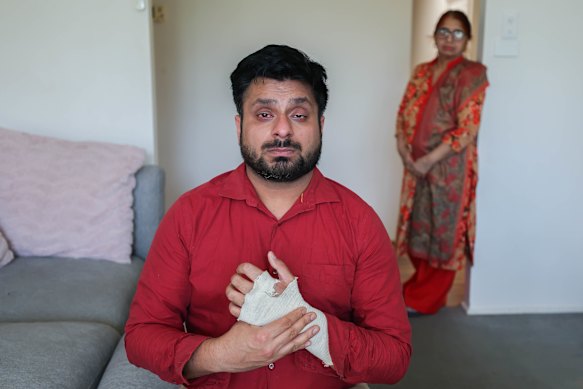
“I had never seen them ever in my life,” Anand tells this masthead. “They just jumped on me from behind. I told them I didn’t want any trouble, and that I had nothing on me. They surrounded me completely and started looking through my pockets. That’s when one pushed me from behind, and they started bashing me.”
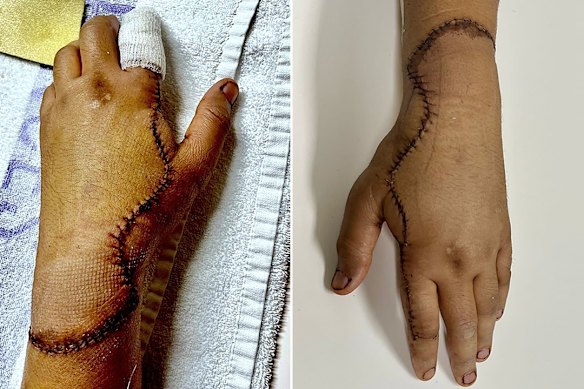
Anand tried to protect his head and body as the teens thrashed at him. Then, one pulled out a machete. Within minutes, one of the boys had gone for Anand’s throat, and instead sliced through his left hand, between his thumb and first finger, cutting all the way up his forearm.
Nobody intervened in the attack and it took nearly an hour for emergency services to arrive, Anand says. Another teenage boy found Anand covered in blood after the attack and ran to get help. Paramedics would later tell Anand that his hand was barely attached, hanging by a small amount of skin.
He spent hours in surgery as neurosurgeons and plastic surgeons worked desperately to save his hand. Fifteen months later, he is still unable to move two fingers, and expects a lifetime of pain.
The teenagers responsible for the attack were all arrested in the days that followed. Four were immediately released on bail. Anand said that when the case went to court, all five were released without jail and the court noted they were remorseful for their actions.
“It is a huge setback to rely on a judicial system that feels broken because there are gaps in it. It isn’t able to hold accountable these people who are actually wielding weapons and attacking people,” he says.
“And I’ll be honest with you, no matter what the age is for a teenager, everyone does have that psyche that if you jump off a wall, you might just get hurt by falling down. How is it that there isn’t then enough understanding that if you’re holding a weapon and if you use that on someone, that person may die. I think it’s that simple.”
The answer to youth violence, Anand says, doesn’t sit solely with prevention. In his experience, the kids responsible for his attack “knew” what they were doing, and mid-teen years is too far gone to rehabilitate.
“To sit someone like that in a rehab program doesn’t fix the problem,” he says. “If you’re telling me that a 14-year-old kid is going to get therapy when he has already had an experience of attacking someone, and he knows that he gets away with it every time he does that, what good will an hour a week do?
“If you are saying that you’re going to rectify that with just a rehab program, I doubt that you have enough support workers to actually fund an entire community, or entire state. Setting them free in the community is not the answer because what it is doing is giving them the licence to kill, licence to steal, licence to do anything they want without any consequences.”
Riek agrees that there needs to be accountability, but emphasises that’s what makes lived experience work so important.
“I think there are kids that think they know what they can get away with,” he said. “But they don’t actually know the real risks.”
He thinks back to the kid in the cell on his first night in custody.
“At the start, no one really jumps into the serious offending. You find yourself getting deeper entrenched in negative circles, and the people who are in the gang culture.
“I haven’t really seen any evidence that shows locking up kids is going to be the answer. But when you mix both accountability and prevention, that’s the sweet spot, really.”
Start the day with a summary of the day’s most important and interesting stories, analysis and insights. Sign up for our Morning Edition newsletter.