Source : the age
Australian shares have ended the day slightly higher after the Reserve Bank of Australia took interest rates to a 15-year-high and flagged the possibility of further hikes, without signalling they were imminent.
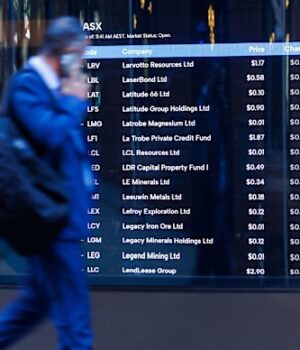
The S&P/ASX200 edged 29.6 points higher on Tuesday, up 0.34 per cent, to 8709.3, as the broader All Ordinaries gained 35.9 points, or 0.41 per cent, to 8886.6.
A modest, late afternoon advance came despite a widely anticipated interest rate hike, after Reserve Bank governor Michele Bullock said the central bank was in no rush to lift the official cash rate again at its next meeting, coinciding with the Melbourne Cup, on November 3.
“The point I want to make is that we’ve got to see how these four interest rate rises feed through,” Bullock told reporters.
“What we’re observing at the moment, what we’ll observe tomorrow, is a [consumer price index] number that happened a month ago.”
Five of 11 local sectors ended the session higher, with many losing segments narrowing their losses into the close as the governor’s press conference unfolded.
Raw materials extended an early rebound to push more than 1 per cent higher, tracking with solid leads from BHP and Rio Tinto as copper prices recovered from a recent dip and as China’s government signalled more economic stimulus.
Gold stocks broadly improved as the precious metal clawed higher to $US4143 ($5931) an ounce, after selling off in recent weeks amid spiking global bond yields and a stronger greenback.
Energy stocks narrowed earlier losses but the sector ended the session 0.7 per cent lower, with Brent crude trading just below $US107 a barrel as Qatari mediators prepare for separate peace talks with US and Iranian officials.
Financials crept lower as CommBank slipped 0.8 per cent to $150.27 and its remaining big four competitors traded roughly flat.
Consumer discretionary stocks doubled their morning gains to end the session 0.8 per cent higher, as traders tempered their worst-case scenarios on interest rates and the spending outlook.
The RBA was likely at the end of its rate hiking cycle but the risk of further increases remained, AMP chief economist Shane Oliver said.
“However, by the time the next RBA meeting comes around in November there is likely to be more evidence of a cooling economy, sharply falling home prices, a softer jobs market and rising recession risks,” Oliver said.
“So we don’t think a second hike, let alone a third, will be necessary.”
In company news, shareholders launched a class action against Cochlear over allegations of misleading profit guidance, which it has declared it will fight.
Goodman Group scrapped a planned $1.2 billion data centre in Sydney following community backlash.
The Australian dollar is buying 69.93 US cents, down from 70.18 US cents on Monday at 5pm as November rate hike fears eased.
The RBA had stood pat at 4.35 per cent at its past two meetings, trying to gauge the impact of its rapid-fire moves on the economy. Tuesday’s hike now takes cumulative tightening this year to 1 percentage point. The risk of a follow-up rate rise in November has also been widely discussed by economists due to the spectre of price pressures becoming entrenched.
The OECD has projected that inflation in wealthy nations will linger in 2027, warning central banks including Australia’s to “remain very vigilant” and intervene more than they did during the post-pandemic period. The International Monetary Fund sent a similar warning to the RBA directly this month, urging it to stand ready to hike.
Australia will release monthly inflation data for August on Wednesday, which is likely to be an important input for policymakers, though the RBA’s favoured quarterly report will be available before the next meeting in November.
The statement “delivers a consistent message of inflation concern, despite the three prior rate hikes, the slowdown in housing, and the slight easing in labour market strength,” said Sean Keane, chief strategist for Asia Pacific at JB Drax Honore. “This is a central bank that is clearly prepared to hike again this year, not because they want to, but quite simply because they may have to.”
Tuesday’s tightening is set to weigh further on Australia’s housing market, already in a downturn and with linkages across the economy. It may push unemployment higher after the jobless rate rose to 4.6 per cent last month.
“In Australia, weak productivity growth continues to constrain potential growth and there are uncertainties about the economic effects of the downturn in the housing market,” the Reserve Bank board said.
AAP, Bloomberg.
The Business Briefing newsletter delivers major stories, exclusive coverage and expert opinion. Sign up to get it every weekday morning.