Source : INDIA TODAY NEWS
Human Mobile Devices aka HMD expects the AI supply chain disruptions currently choking the tech world to stretch to 2027, impacting smartphone availability and pricing. The Finnish mobile phone manufacturer which currently makes smartphones under its own branding—HMD—and feature phones under Nokia believes consumers are simultaneously pushing back against overconsumption choosing factors such as longevity and trust over specs to make a purchase.
advertisement
“Every technology goes through this curve,” Ravi Kunwar, Vice-President and Chief Executive Officer, India and APAC at HMD, tells India Today Tech. “Fifteen or twenty years back, when smartphones were coming in, it was a race where everyone wanted to be ahead. That led to a spec war—’my megapixel is better than yours.’ As industries move over a period of time, they go through phases where they plateau down, and that could be because of a lack of innovation on the technology side, or the fatigue itself which the consumer might feel.”
Today, that fatigue is more visible with more and more users in search of a balance. “What I observe today, there is a digital fatigue, and people need a digital detox,” Kunwar says. “Can you live without your smartphone today? The answer is no. Your life revolves around that. But is there an overdose of it? The answer is also yes. So, what’s the right balance?”
To find this so-called balance, buyers are becoming more conscious of what they actually need versus what brands are trying to upsell them. “Can I live with a 50-megapixel camera, and my phone lasts me two years, three years, and is a secure phone, versus somebody throws a 200-megapixel at me, I pay a bomb, and I have no use for it? And then I’m consumed by the technology because I have it. That’s a conscious choice which a lot of consumers these days are making,” Kunwar explains.
While consumers appear to be pulling back, the industry itself is facing unprecedented churn. The race to build and run AI data centres powering ChatGPT and Claude, is taking toll on resources such as memory leaving companies like HMD with short supply and jacked-up prices of crucial components that make up any and every smartphone. The Indian smartphone market is projected to drop by 5- to 10 per cent this year to around 130 million units.
“AI is disrupting the whole world, not only just one device,” Kunwar says. “That (market drop) is caused by all the disruptions, because of AI, where the parts availability starting with memory… Whether it’s the chipset, and now it’s the LCD display, the geopolitical situation leading to logistics challenges across the world is causing all this.”
For those hoping the market will stabilise in time for the next fiscal year, there is bad news. When asked if the situation would be resolved in the coming months, he says, “Answer is no, in this cycle. My own estimate is it’s going to be there in 2027.”
The challenge for companies now is deciding how to adapt. Software-side AI remains the future of mobile interactions. Google has Gemini. Apple has Siri AI and Samsung Bixby. HMD has taken a slightly different approach to integrating AI inside its phones. It has partnered with Sarvam AI, an Indian startup building native generative AI models. For Kunwar, this partnership is about acknowledging the vast cultural and linguistic differences between urban and rural India.
“You have a Digital India, and you have a digital economy. That will never gain traction unless Digital India becomes a Digital Bharat,” Kunwar stresses. “There’s a marked difference in both, because the moment you step out of Delhi and go to a Tier 3 town, what’s the relevance of ChatGPT and Claude?”
To drive true AI adoption across India, the technology must be invisible, intuitive, and culturally fluent. “Unless AI becomes a habit, change will not come. And for that habit to come, you need to remove the barriers,” he notes. “The answer to that is something which is locally relevant. And the answer to that was Sarvam… It’s not just the language. The fact that the local dialect, the cultural context, it’ll be able to understand and then react to. That’s when the consumer gets that value. Nobody has done this; we will do it.”
Despite the grim macroeconomic outlook, HMD is aggressively targeting India’s value-conscious consumers right in time for the festive season. The company has launched the Vibe 2 Pro 5G with a 6,000mAh battery, a 120Hz Full HD display, 33W fast charging, and MediaTek Dimensity 6300 chipset at a starting price of Rs 15,999 for a version with 6GB of RAM and 128GB storage. A version with 8GB RAM costs Rs 17,999. The pricing, given the specs especially RAM and storage, is aggressive compared to what we’re seeing from other brands.
How does a company absorb costs and offer such aggressive pricing amidst severe component shortages? Kunwar credits this to HMD’s lean operational structure and agility. Legacy brands often carry heavy financial baggage tied to massive investments in specific, high-fixed-cost retail channels. HMD, on the other hand, can pivot.
“In the short term, the agility is what I would say, because we do not have baggage, per se, in terms of having a very high fixed cost,” Kunwar says. While it maintains a sizeable offline presence with 1,000 distributors reaching 100,000 retailers monthly, it is also focusing on quick commerce—famously becoming the first brand to sell a feature phone (the Nokia 105) on Blinkit.
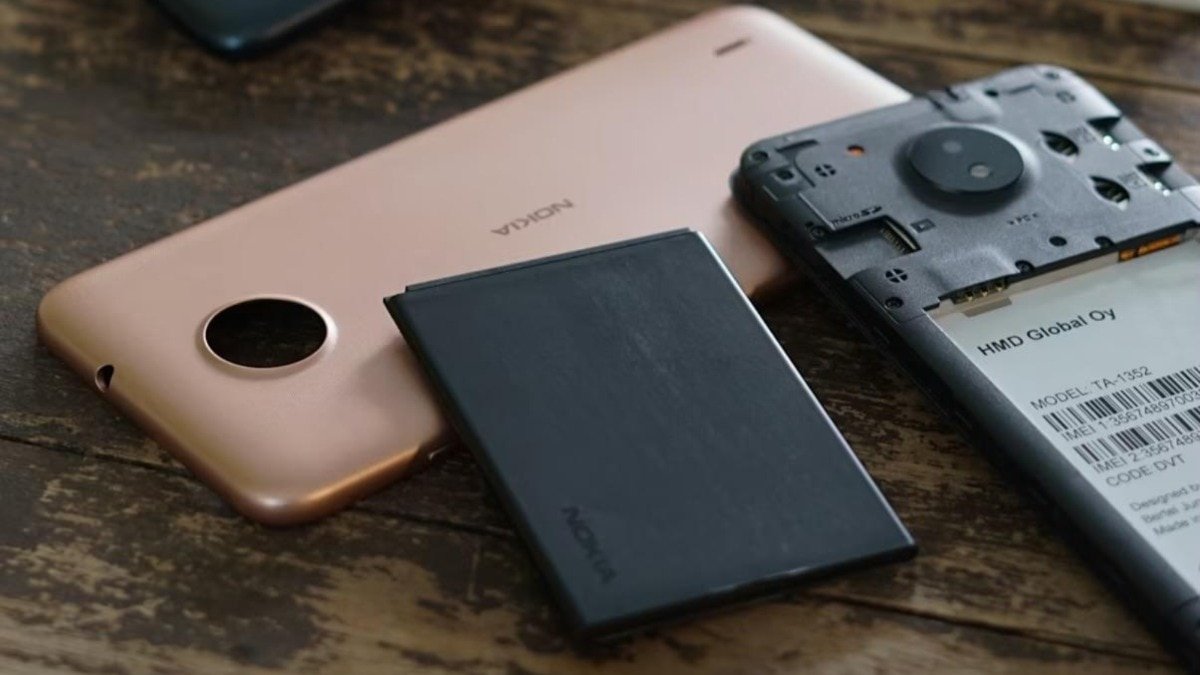
As HMD prepares to celebrate its 10-year anniversary on December 1, the conversation inevitably circles back to its roots: Nokia. Kunwar’s personal journey with the Nokia brand spans nearly 25 years having closely seen the Nokia-Microsoft and Microsoft-HMD phase changes.
“Nokia legacy is still loved. It still draws emotion. It helps you open the door,” Kunwar says. “The challenge comes the moment you change the name at the back, and then people say, ‘Okay, we know this, but what about this?’”
For that to happen, HMD is sticking to old-school basics much in the same way like Nokia, which in other words mean that the more things change, the more they stay the same. “We don’t want to be the loudest brand on this planet. We want to be the most trusted one, which is what Nokia stood for,” he reiterates. “It can’t be about coming up with phones with 2 megapixels added every day. It has to be a real use case which helps the consumers.”
– Ends
SOURCE :- TIMES OF INDIA