Source : INDIA TODAY NEWS
As Houthi missiles and drones put fresh pressure on Saudi Arabia, Riyadh is turning to a different weapon: money. Saudi Arabia has handed Yemen’s internationally recognised government more than 224 million riyals ($59.66 million) in budget support as the conflict threatens to spill further across the border.
Saudi Ambassador to Yemen Mohamed Al Jabir announced the latest funding in a post on X on Thursday, saying it had been provided at the direction of the Saudi leadership and following a request from the Yemeni government.
advertisement
According to news agency Reuters, the money is being channelled through the Saudi Development and Reconstruction Program for Yemen and is intended to help the government manage its cash flows, support fiscal policy and protect the purchasing power of Yemenis.
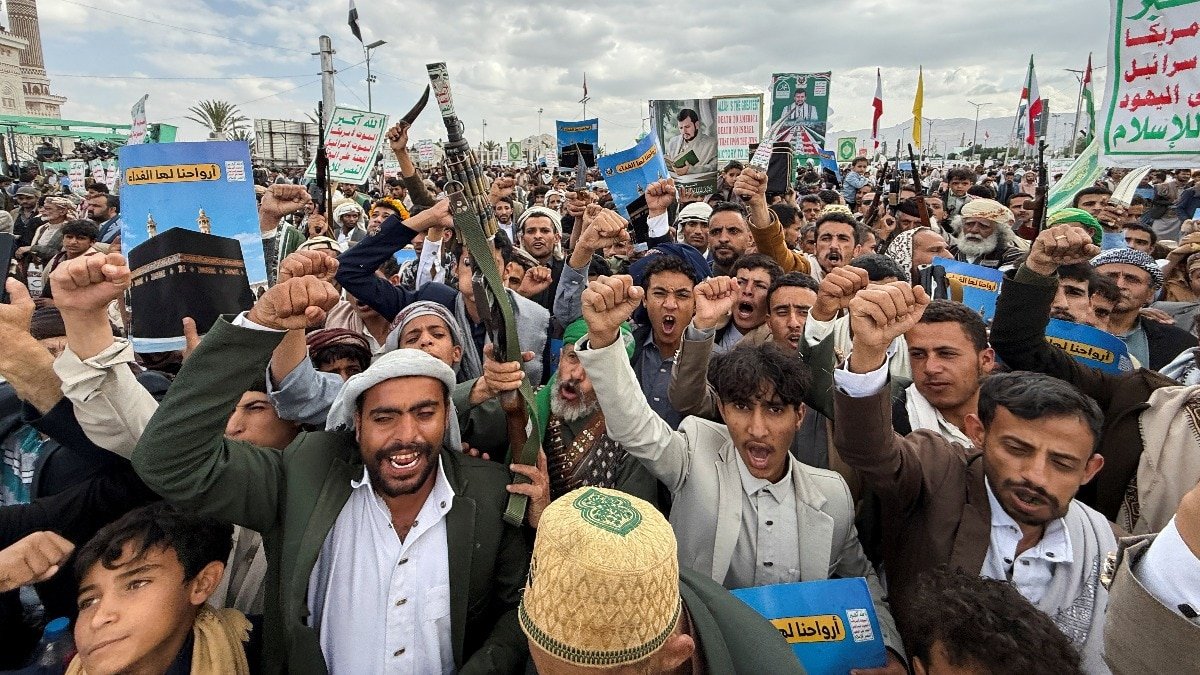
The financial assistance comes at a particularly tense moment in the long-running Saudi-Houthi conflict. After a period of relative calm, the Houthis have stepped up missile and drone attacks on Saudi territory, while fighting has also intensified inside Yemen.
HOUTHI ATTACKS INTENSIFY
Al Jabir said the funding was provided in response to what he described as “terrorist attacks by the Houthi militia” targeting the resources, property and interests of the Yemeni people.
The latest aid therefore has a significance beyond simply helping Yemen’s struggling government meet its financial obligations. Riyadh is backing the administration it supports at a time when the Houthis are putting increasing military pressure on government-held areas and threatening Saudi interests.
The confrontation has also begun to affect daily life inside Saudi Arabia.
In late September, several schools in Riyadh shifted to remote learning for a week after Saudi air defences intercepted Houthi drones heading towards the capital. The move came amid a series of attacks and warnings linked to the escalating conflict.
Saudi-led coalition forces have also reported intercepting ballistic missiles fired towards areas including Taif and the Red Sea port region around Yanbu.
On September 24, Saudi Arabia said it had intercepted six ballistic missiles aimed at Taif and Yanbu. The Houthis later claimed they had attacked a “sensitive target” in Riyadh as well as Saudi Aramco facilities in Yanbu, although Saudi authorities did not immediately confirm those claims or report damage or casualties.
WHY THE RED SEA MATTERS
The conflict is not limited to missiles and drones crossing the Saudi-Yemeni border. The Houthis have also threatened Saudi maritime traffic, raising concerns over one of the region’s most important shipping routes — the Bab el-Mandeb Strait.
In July, the Houthi movement announced a naval blockade targeting Saudi-linked shipping. The group warned vessels carrying Saudi exports through the Bab el-Mandeb, the narrow waterway connecting the Red Sea with the Gulf of Aden.
The waterway is strategically important because it forms part of the route linking the Indian Ocean with the Red Sea and the Suez Canal. Any prolonged disruption could affect the movement of oil, commercial goods and other cargo between Asia, the Middle East and Europe.
The group has also been fighting government forces inside Yemen as both sides compete for control of territory and strategically important routes.
HOUTHIS PUT SAUDI SECURITY UNDER PRESSURE
For Riyadh, the escalation is particularly sensitive as Saudi Arabia seeks to transform its economy and reduce its dependence on oil under Crown Prince Mohammed bin Salman’s Vision 2030 programme.
That economic transformation depends heavily on stability, investment and major infrastructure and tourism projects. Continued missile and drone attacks, as well as threats to maritime routes, add another security risk for the kingdom.
The latest tensions have also prompted Saudi Arabia to strengthen its regional security partnerships. Crown Prince Mohammed bin Salman said in a speech delivered on behalf of King Salman that Saudi Arabia would not compromise on its security and would respond firmly to threats against the kingdom.
He accused the Houthis of choosing “chaos and destruction” and said Riyadh was simultaneously pursuing diplomatic efforts to reduce tensions.
“We will not hesitate to respond firmly to any threat or attack aimed at undermining” the kingdom’s security, he said. At the same time, MBS said Saudi Arabia was making “every possible effort to de-escalate tensions and support diplomatic solutions without the slightest compromise on preserving our security”.
The crown prince also addressed attacks on vessels in the Red Sea and the threat posed around the Bab el-Mandeb Strait. He rejected the use of international waterways as a means of applying political or economic pressure and said a “multinational defensive maritime coalition” had been established to protect common interests in international waters.
PAKISTAN ALSO OFFERS SUPPORT
Saudi Arabia is also receiving stronger political and security backing from its regional partners.
In August, Saudi Arabia, Pakistan and Turkey formalised a Mecca Defence Agreement. The arrangement has gained significance amid Houthis attacks. Pakistan’s Defence Minister Khawaja Muhammad Asif said this week that Islamabad would make “whatever means” available to Saudi Arabia under the mutual defence pact if Houthis attacks continued.
The three countries have been discussing how to respond to threats facing Saudi Arabia, although the precise operational framework of the new defence arrangement remains under development.
WHAT THE $60 MILLION IS MEANT TO DO
Against this backdrop, the latest Saudi financial package is aimed at keeping Yemen’s government functioning while the conflict puts further pressure on the country’s economy.
The USD 59.66 million grant is intended to support government cash flows, fiscal policy and the purchasing power of Yemenis, according to Al Jabir. For Yemen’s internationally recognised government, which has struggled with the economic consequences of years of conflict, such support provides additional financial breathing room.
– Ends
With inputs from agencies
SOURCE :- TIMES OF INDIA