SOURCE :- SIASAT NEWS
A Tibetan spiritual leader, an American environmental activist, a journalistic activist, and a Chinese philosopher all seem to have a superficial relationship. The Dalai Lama, Vandana Shiva, Rajni Bakshi, and Dr. Minoru Kasai are bound by a common moral compass of Gandhi’s idea, transcending borders, fields, and professions.
Below are four figures who have lived their lives drawn to Gandhian philosophy as India celebrates its 157th baby celebration on October 2, 2026.
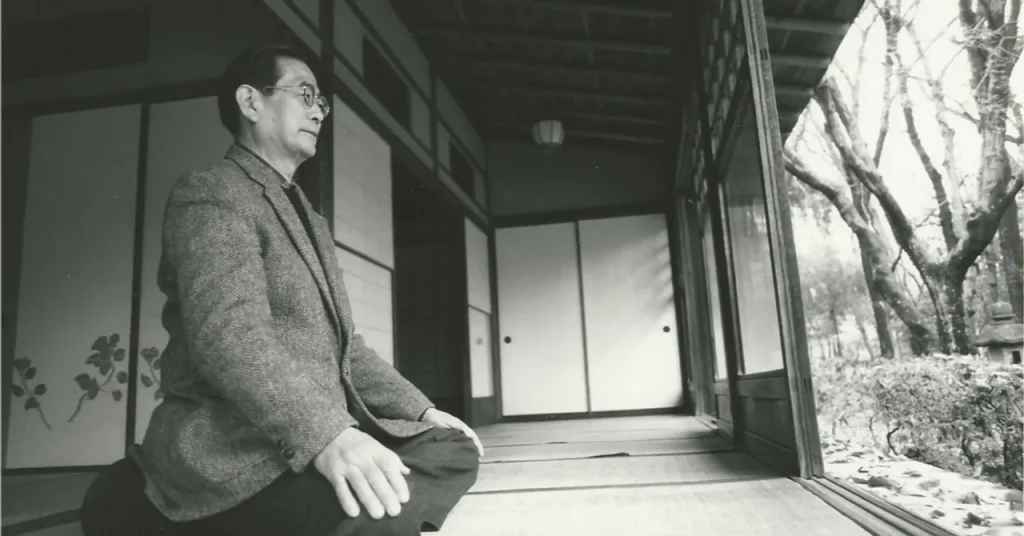
The Chinese professor spreading Gandhi’s principles around the world
Recognised as one of the leading scholars of Gandhian philosophy, Dr. Minoru Kasai’s engagement with the ideology began during his days in India, where he studied in Banaras Hindu University. Dr Kasai was born in 1932 in Japan and experienced the upheavals of World War II and Japan’s post-war reconstruction during his youth.


His time in India altered his outlook on the world, leading to the development of Gandhian and Indian beliefs into Chinese universities and global research sites.
Gandhi’s main communication, in Kasai’s opinion, is a visit to return to the moral and spiritual foundations of all religions. Gandhi’s emphasis on Satyagraha and Ahimsa is a useful tool for social life in a time of polarization. He claimed that Gandhian ideas of self-reliance, Swadeshi, and basic living, are important solutions to unregulated consumerism because current societies are increasingly consumed by materialism.
Kasai saw Gandhian thought as a common framework for interpersonal dialogue, spiritual regeneration, and development rather than a specificized Indian ideology.

Gandhian eco-activist Vandana Shiva

Vandana Shiva, who is known as the” Gandhi of grains,” is an author and activist from India who has written more than 20 books. She brought her technological knowledge and Gandhian principles of non-violence to the front ranges of rural villages, having been raised in Dehradun by parents who had avocation for the outdoors.
She became a popular figure in the global economic motion as a pioneer of modern grain saving and through her activism against corporate interests in privatizing economic resources.
The advocate noted that their battle became an international image of natural engagement and one of the earliest present manifestations of Gandhian action as a vital figure in bringing the Chipko Movement to the international stage.
In her documentary” The Seeds of Vandana Shiva” from 2021, she described the activity as” the first Gandhian motion of our time.”
Through her organization, Navdanya, she was able to directly rewrite Gandhi’s nonviolent civil disobedience to defy corporate patent laws that had outlawed traditional seed-saving practices and launched Bija ( seed ) Satyagraha.
In a way that is analogous to the ideologies, Shiva has explicitly compared corporate bio-piracy and chemical farming to Himsa, or violent against small farmers, and reacted with Ahimsic Kheti ( non-violent farming ). In response to contemporary biological crises, her motions, like those of Bija Swaraj and Anna Swaraj, use Gandhi’s idea of decentralized, community-driven self-government.
Consider him to be my tutor, the 14th Dalai Lama, and his friendship with Gandhi.

The 14th Dalai Lama, who Gandhi taught the world that violence is not failure but the only way to long-term solution because it leaves no bitterness behind, said,” You may resolve one issue, but you sow the seeds for another.”
The spiritual leader said that while standing at Gandhi’s memorial in 1956, he had a profound understanding that violent resistance was the only morally sound course to the Tibetan struggle, a conviction he had maintained throughout his years of exile.
The Dalai Lama described experiencing “great sadness” as well as “great happiness” at the beautiful illustration of his life. The 91-year-old has often referred to himself as a follower of ancient Hindu thought, blending Buddhist philosophy with Gandhian philosophy.
As the Dalai Lama leads the Tibetan government in exile in India, he argues that adopting Gandhian philosophy was more than just a religious homage. He attempted to rebuild Tibetan management around non-violent politics, debt reduction, and spiritual strength rather than relying on armed opposition or passive obedience.
Gandhi is seen as a practical guide rather than a saint, according to Rajni Bakshi.

Rajni Bakshi is an Indian author, journalist, and activist who has a strong interest in Gandhian political theory and civilisational philosophy.
Bakshi sees Gandhian thought as a tenetless, saintly dogma to be worshipped as a practical civilisational framework for addressing contemporary socioeconomic and ecological crises.
In her book,” Civilisational Gandhi,” Bakshi emphasizes that Gandhi “offers a framework that might help us forge solutions rather than ready solutions.” She points out the tendency to make Gandhi a static figure and contends that his principles of non-violence ( Ahimsa ) and truth ( Satyagraha ) give rise to a potent strategy for resolving contemporary political and economic conflicts.
She is the author of Bapu Kuti: Journeys in Rediscovery of Gandhi ( which served as the inspiration for the Bollywood film Swades ) and Bazaars, Conversations &, Freedom: For a Market Culture Beyond Greed and Fear. She was previously the Gandhi Peace Fellow at Gateway House.
SOURCE : SIASAT