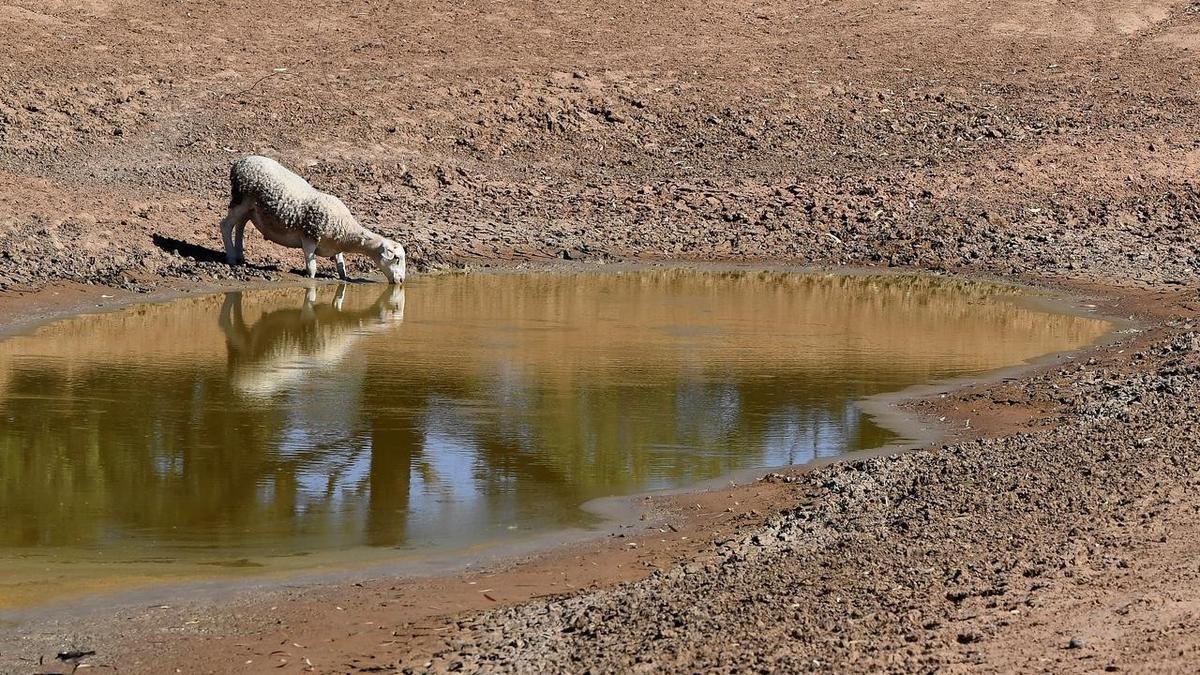
Source : Perth Now news
Higher prices and lower economic growth lie in store as farmers prepare for drier conditions from a strengthening El Nino.
Australia’s economy could suffer a hit of about $13.4 billion over the next two years – leaving gross domestic product about 0.45 percentage points lower than it otherwise would be – according to Commonwealth Bank analysis.
Alongside forecasts for elevated oil and fertiliser prices, rising interest rates and worker shortages, it’s another setback to the agricultural sector.
East coast farmers had so far been spared the worst impacts of the strengthening El Nino, CBA agricultural economist Dennis Voznesenski said.
The crucial winter cropping period started before the climate phenomenon set in, meaning most regions have not been exposed to particularly dry conditions, with the exception of northern NSW and Queensland.
The Australian Bureau of Agricultural and Resource Economics and Sciences forecasts farmers would reap a 61 million tonne crop this harvest, which would place 2026 as the fourth-best season on record, Mr Voznesenski said.
But if the El Nino strengthened over the coming summer and into spring, as the Bureau of Meteorology had forecast, and moisture reserves dry up, the impact on the 2027 crop could be far more severe, he said.
Farmers were reducing their planting area and changing their cropping mix to less water-intensive grains such as wheat and barley, in place of more lucrative crops such as canola and chickpeas, Rabobank senior grains analyst Vitor Pistoia said.
“That limits their upside (income) potential because … in a blue-sky scenario, usually chickpeas and canola deliver better financial results than wheat and barley,” he told AAP.
“And by consequence, they are more reliant on the wheat market instead of having more diversified income streams.”
It’s the same for beef and sheep farmers, who increase their exposure to wheat as they thin their herds.
Drier conditions lead to more livestock sent to slaughter, pushing down livestock prices.
But for consumers, meat prices – particularly beef – were likely to remain elevated because of record export demand from the US, Mr Voznesenski said.
Like many pastoralists across Australia, National Farmers Federation president Hamish McIntyre has been selling off older animals on his southwest Queensland-based operation and building up stores of livestock feed in preparation.
As irrigation costs rose in drier times, production of water-intensive fruits and cotton crops also fell, alongside meat and grains, he said.
“Which drives up the costs in our metropolitan areas, which is inflationary, which is a worry,” Mr McIntyre said.
Using the 2002/03 Millennial drought as a guide, Mr Voznesenski and CBA colleague Harry Ottley estimated a similar production shortfall in 2026/27 would add 0.25 percentage points to inflation.
Reserve Bank of Australia chief economist Sarah Hunter has previously voiced concerns El Nino could further hamper the central bank’s mission to get inflation – which was four per cent in August – back to 2.5 per cent.
If the recent outbreak of H5 bird flu spread to commercial producers, egg prices could jump 60 per cent and poultry by 20 per cent, adding another 0.12 percentage points to inflation in the first year, they predicted.
But that was only in the case of a severe scenario, and the base case forecast for both El Nino and bird flu were more modest.
After two solid seasons, most east coast farmers had built up buffers to protect from a bad harvest, Mr Pistoia said.
And improvements in technology and agricultural science meant the sector was better prepared than previous El Ninos, such as the Millennial drought, Mr McIntyre said.
“As Australian farmers, we’re always hoping for the best, but preparing for the worst,” Mr McIntyre said.