Source : INDIA TODAY NEWS
We are seeing more and more hybrids coming into the mid-size SUV segment. Renault will launch the Duster hybrid in October, while the new Kia Seltos and next-generation Hyundai Creta are also expected to get hybrid powertrains in the future. As more manufacturers turn to hybrid technology, an interesting trend is emerging in the segment: hybrid SUVs can now cost as much as, or even more than, their electric counterparts.
advertisement
For buyers, that throws up an obvious question. If an EV is available at a similar price, what exactly are we paying for when we buy a hybrid?
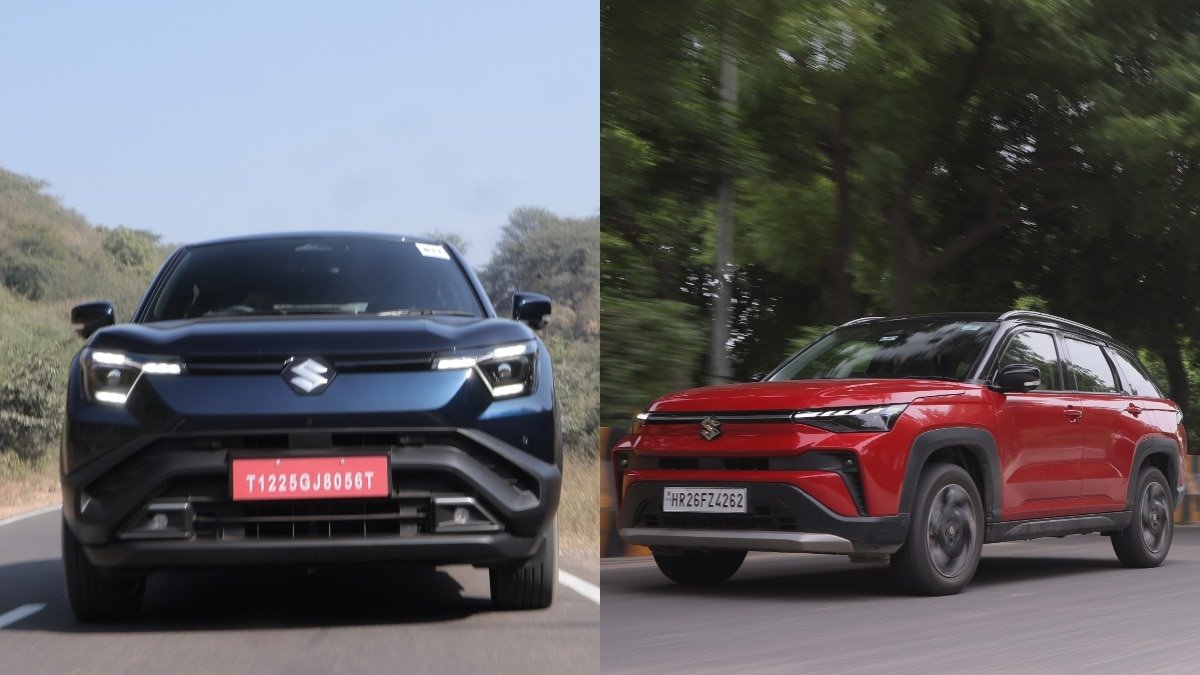
Maruti Suzuki’s line-up offers one of the clearest examples. The e Vitara starts at Rs 16.19 lakh for the Delta variant with a 49kWh battery, while the Victoris hybrid starts at Rs 16.43 lakh for the VXi 2WD Hybrid. The Grand Vitara hybrid is even more expensive at Rs 16.68 lakh for the Delta Plus 2WD Hybrid.
At the upper end, the differences become even more interesting. The e Vitara Alpha with a 61kWh battery is priced at Rs 19.99 lakh, exactly the same as the Victoris ZXi Plus (O) hybrid. The Grand Vitara Alpha Plus (O) hybrid costs Rs 19.62 lakh.
But the on-road prices tell a slightly different story.
The e Vitara Alpha, priced at Rs 19.99 lakh ex-showroom, costs around Rs 21.44 lakh on road. The Victoris ZXi Plus (O) hybrid, despite having the same Rs 19.99 lakh ex-showroom price, comes to around Rs 23.23 lakh on road. That is a difference of approximately Rs 1.79 lakh in the final price paid by the buyer.
The Grand Vitara Alpha Plus (O) hybrid, meanwhile, is priced at Rs 19.62 lakh ex-showroom and around Rs 22.80 lakh on road. That makes it about Rs 1.36 lakh more expensive on road than the e Vitara Alpha, despite the e Vitara being Rs 37,000 more expensive ex-showroom.
The price comparison
| Model | Variant | Ex-showroom | On-road* |
|---|---|---|---|
| Maruti Suzuki e Vitara | Alpha 61kWh | Rs 19.99 lakh | Rs 21.44 lakh |
| Maruti Suzuki Victoris Hybrid | ZXi Plus (O) Hybrid | Rs 19.99 lakh | Rs 23.23 lakh |
| Maruti Suzuki Grand Vitara Hybrid | Alpha Plus (O) Hybrid | Rs 19.62 lakh | Rs 22.80 lakh |
| Honda City Hybrid | Hybrid | Rs 21.36 lakh | Rs 24.80 lakh |
| Hyundai Creta EV | Executive 42kWh | Rs 18.03 lakh | Rs 19.44 lakh |
| Hyundai Creta EV | Excellence LR 51.4kWh | Rs 23.67 lakh | Rs 25.42 lakh |
| Tata Sierra EV | Pure 2WD 63kWh | Rs 18.79 lakh | Rs 19.92 lakh |
| Tata Sierra EV | Empowered A AWD 75kWh | Rs 26 lakh | Rs 27.65 |
On-road prices as provided; they can vary by location, insurance, registration and other charges.
The comparison becomes particularly interesting because the e Vitara, Victoris and Grand Vitara essentially occupy the same broad price territory but use completely different approaches to electrification.
The e Vitara is a pure EV, with 49kWh and 61kWh battery options. The Victoris and Grand Vitara use a strong-hybrid system combining a 1.5-litre petrol engine with an electric motor and e-CVT.
So, why would someone pay more for the hybrid?
You are paying for flexibility
The biggest advantage of a strong hybrid is that it does not require the owner to change the way they refuel their car.
A hybrid can use its electric motor during low-speed driving and other suitable conditions, while the petrol engine takes over when required. The battery is charged through regenerative braking and the hybrid system itself, so there is no need to plug the car into an external charger.
An EV works differently. The e Vitara, Creta EV and Sierra EV rely entirely on their batteries for propulsion. They therefore need to be charged, either at home, at work or at a public charging station.
For someone with a dedicated parking space and access to charging, that may not be a major concern. But for buyers living in apartments or those who regularly travel to places with limited charging infrastructure, the hybrid offers something an EV cannot: the ability to simply stop at a petrol pump and continue driving.
That convenience is a part of what the buyer is paying for.
But the EV gives you a much bigger battery
There is another important difference.
A strong hybrid does not need a large battery. Its battery is primarily there to support the electric motor, recover energy through regenerative braking and improve efficiency. The petrol engine remains an integral part of the powertrain.
An EV, meanwhile, needs a substantially larger battery because it is the sole source of propulsion.
The e Vitara is available with a 49kWh and 61kWh battery. The Creta EV gets 42kWh and 51.4kWh battery options, while the Sierra EV offers 63kWh and 75kWh batteries.
So when the prices of a hybrid and an EV overlap, the buyer is essentially choosing between two very different propositions.
With the hybrid, you are paying for an engine, an electric motor, a battery and the electronics needed to make the two power sources work together.
With an EV, a significant part of the price goes towards a much larger battery and an all-electric powertrain.
The Honda City shows how expensive hybrids can get
The Honda City Hybrid is an even more interesting example because it is not an SUV but sits in a similar broad price bracket.
The City Hybrid is priced at Rs 21.36 lakh, with an on-road price of around Rs 24.80 lakh. That means the buyer is crossing the Rs 24 lakh mark for a hybrid sedan.
At that price, the EV alternatives in the SUV space start becoming difficult to ignore. The Hyundai Creta EV’s higher-spec Excellence LR with a 51.4kWh battery is priced at Rs 23.67 lakh, while the Tata Sierra EV goes up to Rs 26 lakh for its Empowered A AWD version.
Again, these aren’t like-for-like variants, and equipment, battery size, drivetrain and body style differ. But the pricing overlap illustrates how quickly the gap between hybrids and EVs has narrowed.
The on-road equation matters more than the sticker price
For consumers, however, the ex-showroom price is only the beginning.
The e Vitara Alpha and Victoris ZXi Plus (O) hybrid both carry an ex-showroom price of Rs 19.99 lakh. But once the additional costs are added, the e Vitara works out to around Rs 21.44 lakh on road, while the Victoris hybrid reaches approximately Rs 23.23 lakh.
That nearly Rs 1.8 lakh difference is significant.
The same pattern can be seen with the Grand Vitara. Its Alpha Plus (O) hybrid costs Rs 19.62 lakh ex-showroom and around Rs 22.80 lakh on road, compared with the e Vitara Alpha at Rs 19.99 lakh ex-showroom and Rs 21.44 lakh on road.
In other words, a buyer looking purely at the showroom price could miss a meaningful difference in the amount eventually paid to own the car.
Of course, on-road prices vary depending on the state, registration costs, insurance and other charges. But they remain important when comparing the actual cost of buying an electrified vehicle.
So, what are we really paying for?
The answer is not simply “hybrid technology”.
A hybrid gives buyers the ability to use electric power without committing entirely to an electric vehicle. It combines the efficiency benefits of electrification with the convenience of a petrol engine and the country’s existing fuel infrastructure.
An EV, meanwhile, eliminates the petrol engine altogether and offers a fundamentally different ownership experience. It can be particularly attractive for buyers who have easy access to charging and mostly drive predictable daily routes.
This makes the choice less about which technology is inherently cheaper and more about what the buyer values.
A hybrid buyer is paying for flexibility, the freedom to drive electrically around town but still refuel at a petrol station for a long journey.
An EV buyer is paying for a fully electric powertrain and a much larger battery, while accepting the need to plan around charging.
And with the next wave of hybrid SUVs including the Renault Duster and expected hybrid versions of the Kia Seltos and Hyundai Creta, this comparison is only going to become more relevant.
For years, the argument was that buyers had to pay a premium to go electric. But with EV prices now overlapping with, and in some cases undercutting, hybrids, the question is changing.
Subscribe to Auto Today Magazine
– Ends
SOURCE :- TIMES OF INDIA