Source : INDIA TODAY NEWS
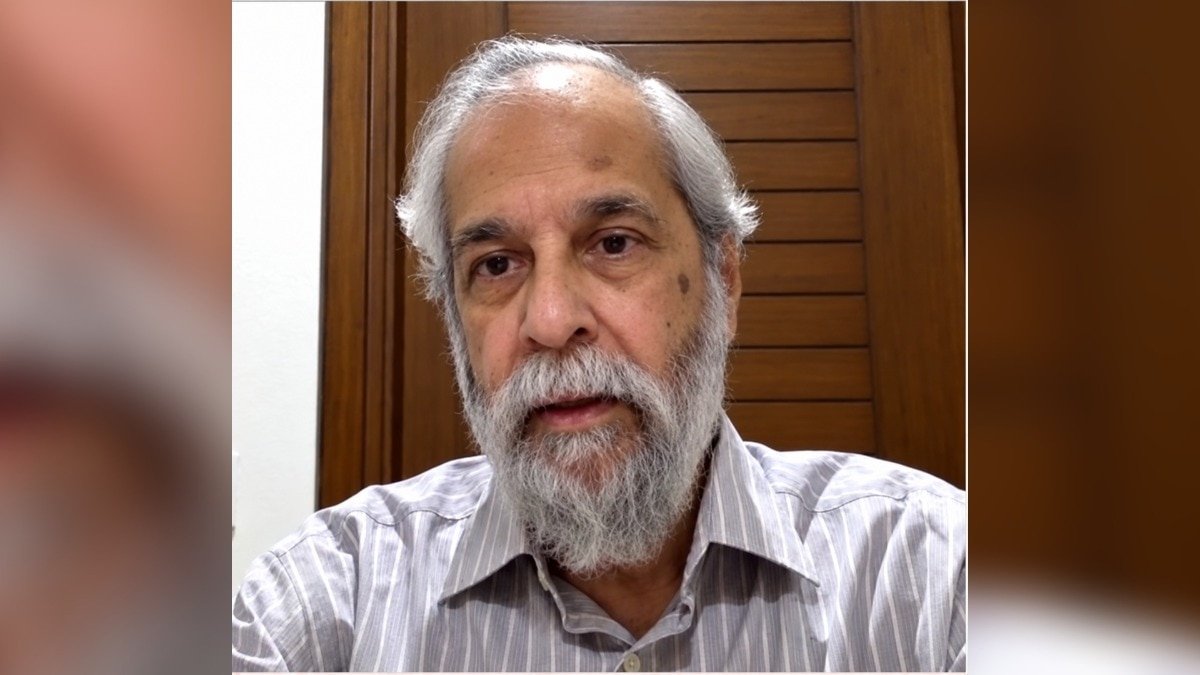
Former Supreme Court judge Justice Madan Lokur on Monday questioned the Election Commission’s reliance on its “residual powers” to justify changes made to Form 6 during the Special Intensive Revision (SIR) of electoral rolls, saying such powers could not be used to alter a statutory form at the Commission’s discretion.
Speaking to India Today TV, Justice Lokur said Form 6, the statutory application form used for registration as a new voter, could not be modified without following the prescribed legal procedure.
advertisement
“Residual powers doesn’t mean that you do whatever you feel like doing,” Justice Lokur said, while discussing the Supreme Court’s observations on the controversy surrounding the modified Form 6.
His remarks came after the Supreme Court questioned the Election Commission over the changes made to Form 6. Chief Justice of India Surya Kant said the court had not approved any modified Form 6 and asked the Election Commission to produce the record showing who had made the modifications.
The Election Commission, however, had maintained in its press note that the Supreme Court had made it clear that the poll body retained residual authority to seek additional documents and that the documents in question had been cleared by the court.
Justice Lokur rejected the argument that the changes could be treated as a minor addition rather than a modification of the statutory form.
“Form 6 is a statutory form, right? And it can’t be changed on the whims and fancies of somebody,” he said.
According to Justice Lokur, there is a prescribed procedure for changing something that has a statutory basis. He said that if the Form 6 changes were not approved by the full Election Commission, their legality would be questionable.
“If that is so, then the change in Form 6 is totally unjustified, and as one of the election commissioners has said, it is illegal and unauthorised,” he said.
The controversy centres on an additional declaration attached to Form 6 during the SIR exercise. The declaration required applicants to provide details that could help establish their linkage with earlier electoral rolls, including information concerning their parents and grandparents and their presence in the previous SIR-era rolls.
Responding to the argument that this was merely an additional declaration and did not amount to changing Form 6, Justice Lokur said the distinction did not alter the legal question.
The former SC judge was particularly critical of the interpretation of the ECI’s residual powers.
“Residual power doesn’t mean that you do whatever you feel like doing,” he stressed, further arguing that the existence of residual powers could not mean that the Election Commission could unilaterally rewrite statutory provisions.
“Supposing they said that we have the residual power and we’re going to abolish Form 6, and we’re going to come out with Form 6A. Can that be justified on the ground of residual power?” he asked.
He added that the same principle would apply if the Commission wanted to add several paragraphs to the form.
“You can’t say that, ‘I have the residual power, so therefore I’ll do whatever I feel like doing. If I want to change Form 6, if I want to change 10 paragraphs in Form 6, I’ll do that. If I want to add 20 paragraphs in Form 6, I’ll do that.’ That’s not residual power,” Justice Lokur said.
Asked whether the required approvals should have been obtained before making such changes, Justice Lokur agreed and said a statutory procedure had to be followed.
‘COURT SHOULD GO THE WHOLE HOG’
Justice Lokur was also asked how far the Supreme Court could go in petitions seeking action against Chief Election Commissioner Gyanesh Kumar, including calls for his suspension and prosecution. He said the court should investigate the circumstances surrounding the Form 6 modifications.
“I think it has to go the whole hog,” he said.
Explaining what he meant, Justice Lokur said the court would need to establish exactly what had happened, particularly given the potential consequences of the changes.
“Investigate what exactly has happened,” he said, adding that the impact of the changes also needed to be examined. He stressed that the Election Commission could not claim immunity from constitutional or legal scrutiny.
“If they have done something which is not permissible under the Constitution, which is not permissible under the law, well, the Supreme Court will have to do something about it,” he added.
Justice Lokur also rejected the framing of the controversy as merely a political dispute between the Election Commission and Opposition parties.
He described the Election Commission as an independent constitutional body and said it was required to respond to questions raised by the Supreme Court.
Justice Lokur’s comments came amid growing judicial scrutiny of the SIR exercise and the manner in which the Election Commission implemented additional requirements for voters seeking inclusion in electoral rolls.
– Ends
SOURCE :- TIMES OF INDIA