Source : the age
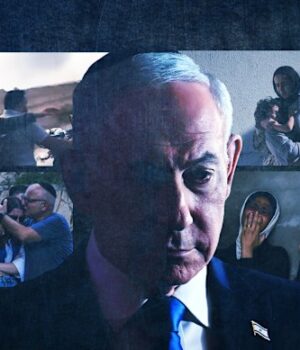
Three years after the Hamas gunshots rang out across southern Israel, the world is still living in the October 7 era.
In the lead-up to the attacks, Israelis were mostly consumed by their internal politics – specifically the Netanyahu government’s moves to strip power from the nation’s Supreme Court – rather than external threats. The Palestinian cause had faded from international attention. Just days before the assault, US President Joe Biden’s national security adviser Jake Sullivan described the Middle East region as quieter than it had been in two decades.
Then came the rampage. To help foreigners understand the scale of such an atrocity in a tiny country of around 10 million people, Israelis often point out that, in per capita terms, the casualty figure of 1200 people killed was 13 times greater than the fatalities of September 11. Two hundred and fifty people – including young children and grandmothers – were taken hostage into Gaza, sparking a mass protest movement to secure their release.
“October 7 was one of those cosmic moments when you realise the world has changed and will never be the same again,” Australian Council of Executive Jewry co-chief executive Alex Ryvchin says. “It brutally showed the world that the days of Jewish torment, of women dragged to captivity, of decapitation, pack rape and thrill killing, did not belong to history. They are with us now and probably forever. For those who hate Jews and long craved to see them get what was coming to them, October 7 was euphoric.”
The Israeli state’s failure to prevent, and adequately respond to, the worst terror attack in the nation’s history still rattles its citizens. “The main question we ask, and all of Israel asks all of the time, is: where was the army?” Danny Majzner, whose Australian-Israeli sister Galit Carbone was murdered in a kibbutz near the Gaza border, told this masthead ahead of the first anniversary of the attacks. Such questions remain unanswered two years later.
The void is largely because of Israeli Prime Minister Benjamin Netanyahu, who has vigorously blocked an independent commission of inquiry into the attacks, even as polls show three-quarters of Israelis back such a probe. The head of the Israeli military, plus the leaders of the nation’s internal and external security agencies (the Shin Bet and Mossad respectively), eventually lost their jobs following October 7, but Netanyahu remains in power despite overseeing the worst security failure in Israel’s history.
His reckoning will come on October 27, when Israelis go to the polls for the first time in four years. While Netanyahu’s popularity plummeted after October 7, he still has a shot of remaining prime minister if his ideologically diverse opponents cannot cobble together a winning coalition.
Among those running in the elections are at least nine Israelis drawn into politics through direct involvement with October 7, including relatives of loved ones taken hostage and those who risked their lives to save others.
The impending elections have heightened the blame game and the history wars. Israeli newspaper Haaretz last month published an explosive book extract claiming the leader of the United Arab Emirates had warned Netanyahu that Hamas was planning an operation just days before October 7. The Atlantic followed by reporting Egypt’s intelligence chief had visited Tel Aviv shortly before the attacks with a dire message about Gaza. Former security agency Shin Bet boss Ronen Bar last week said he would file a defamation lawsuit against Netanyahu, who accused Bar of failing to inform him about the attack.
The full story of what led to October 7, let alone its aftermath, is yet to be told. What is undeniable is that the assumption among Israeli political and military elites that Hamas had been contained and did not pose a major threat proved both hubristic and inaccurate.
Regardless of whether Netanyahu wins or loses at the end of the month, there is no going back to the before times. No Israeli prime minister will allow Hamas to control territory on the Israel-Gaza border, nor will they allow Lebanese militant group Hezbollah to menace Israelis living in the country’s north. There is no prospect of a two-state solution in the forseeable future, despite a surge of world leaders recognising Palestinian statehood last year.
While Israel was always going to respond forcefully to the deadliest day for Jews since the Holocaust, the ferocity and duration of the subsequent war in Gaza shocked the conscience of citizens around the world. Images of dying children, buildings blown to rubble, and emaciated toddlers sparked global protests. Despite Israeli denials, to many the military response to October 7 seemed motivated by vengeance rather than self-defence.
The film Naza, a damning account of Israeli targeting practices based on anonymised interviews with soldiers who fought in Gaza, received a 25-minute standing ovation last month at the Venice Film Festival. A senior Israeli minister said he wanted to revoke the citizenship of the Israeli filmmakers on the basis they had betrayed their country.
The war in Gaza crippled Hamas militarily and killed most of the group’s senior leaders (including October 7 mastermind Yahya Sinwar) but the group achieved strategic goals. The war raised the profile of the Palestinian cause, scuppered the prospect of an imminent peace deal between Israel and Saudi Arabia, and helped turn Israel into a pariah state across the world. By the end of 2023, Israel was facing genocide charges in the International Court of Justice. Soon after, the International Criminal Court indicted Netanyahu for alleged war crimes, curtailing his ability to travel internationally.
Before October 7, life was difficult and demoralising for ordinary Palestinians living in the occupied territories. Now it is even more dire. Almost a year into a ceasefire brokered by US President Donald Trump, Gaza remains a humanitarian disaster. Around 1500 Gazans have been killed by Israeli fire since the ceasefire began, according to local health authorities – on top of the 73,000 estimated Palestinians killed during the war. Trump’s peace plan for Gaza remains in limbo: an international stabilisation force has not entered the country and Hamas has not relinquished its weapons. In the West Bank, Israeli settler attacks on Palestinians have surged to horrifying levels.
Any global goodwill Israel garnered on October 7 quickly evaporated as the war in Gaza ground on — including in the United States, Israel’s most important security ally. A Gallup poll in February found Americans’ sympathy for Palestinians edging ahead of Israelis nationally for the first time. A Pew Research poll in March found 60 per cent of all US adults hold an unfavorable view of Israel, up from 42 before the October 7 attacks. Cutting off military aid to Israel and imposing sanctions have become mainstream positions in the Democratic Party. Meanwhile, the rapper Macklemore was last month removed as an opening act for pop star Ed Sheeran’s US tour after using a set to perform a pro-Palestinian protest song and chant “Free Palestine”.
In Australia, anger at the Netanyahu government’s actions quickly melded with prejudice against ordinary Jews with no control over events in the Middle East. Infamously, protesters chanted intimidating slogans and burned Israeli flags outside the Sydney Opera House on October 9, 2023. Within weeks, prominent Jewish Australians were warning that antisemitism had gone “off the charts” as Jewish sites were vandalised and Jewish creatives doxxed.
On December 14 last year, the Jewish community’s worst fears were realised when two gunmen unleashed a massacre at Bondi Beach, killing 15 people in the worst terror attack in Australian history. Royal commissioner Virginia Bell is preparing to release her final report before Christmas.
The third anniversary of October 7 will be marked not only by Jewish community commemorations in Australian capital cities but several pro-Palestinian vigils. “Don’t let Israel steal the date,” states the poster for an October 7 vigil for Gaza to be held at Sydney’s Town Hall.
Zionist Federation of Australia president Jeremy Leibler decried the vigils as “an attempt to erase what happened on October 7”, arguing Palestinian casualties could be mourned on any other day of the year. “Surely, even after everything that has happened over the past three years, some things should remain sacred,” he lamented. But there is no such unanimity. The anger, division and grief unleashed by October 7 may have peaked, but have far from disappeared.
Get a note directly from our foreign correspondents on what’s making headlines around the world. Sign up for our weekly What in the World newsletter.
 Matthew Knott is the foreign affairs and national security correspondent for The Sydney Morning Herald and The Age.Connect via X, Facebook or email.