Source : the age
The fury among French protesters reached a new peak when at least 250,000 people joined rallies that have confronted police and spread flames on the streets.
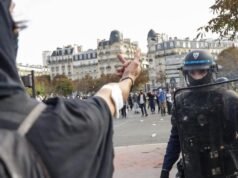
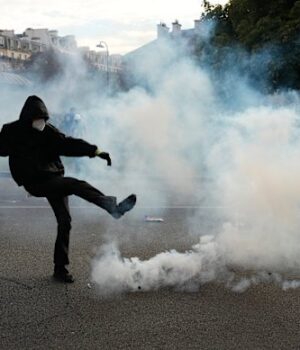
Clashes that began two weeks ago as a call for better classrooms surged to new levels of violence on Tuesday (France time) as some agitators sought to burn down schools, while police deployed tear gas and stun grenades to control the crowds.
French President Emmanuel Macron called an urgent meeting with ministers to try to answer the angry demands on the streets, setting up talks late in the day.
But there seems no easy way to satisfy school students, teachers and other protesters who are using dramatic action to try to force political leaders to spend more money on their classrooms.
The protest movement claimed about 450,000 joined their rallies across France on Tuesday, in a sign of support from some major unions who are siding with students and some teachers. The French Interior Ministry, however, put the estimate at 250,000.
While France is known for sweeping protests, French Prime Minister Sébastien Lecornu described Tuesday’s events as the “heaviest toll in decades” for the school system.
He said at least 215 teenagers and 85 school staff had so far been injured in clashes, and his office said more than 700 police officers were also hurt.
The Interior Ministry said 488 people had been arrested and 48 security personnel were injured on Tuesday alone.
Police have detained more than 6000 people over weeks of protests. On Monday, the Justice Ministry said 1800 people were being prosecuted and that this included 1483 minors.
False claims spread quickly about the nature of the protests.
Some influential figures on the right, including Alex Jones in the US and Tommy Robinson in the UK, have portrayed the protests as an uprising by migrants who threaten France.
Jones warned four days ago of the “total collapse” of France and Robinson posted on Tuesday that the events were an “act of jihad” rather than student protests. The British agitator, whose real name is Stephen Yaxley-Lennon, posted a video he said showed an “invader youth” trying to destroy a school.
US President Donald Trump echoed those warnings with a social media post that spread faster than the flames on the streets.
“What’s happening in France is nothing less than out of control mass migration,” he said. “This isn’t about schools, this is about Islam wanting to take over a once great Country!”
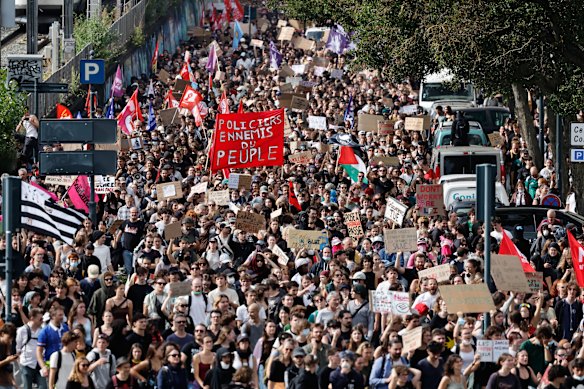
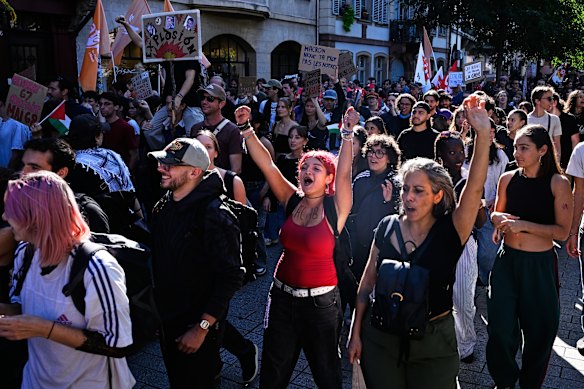
Those claims were countered by direct evidence from the streets when photographs on Tuesday highlighted the range of protesters.
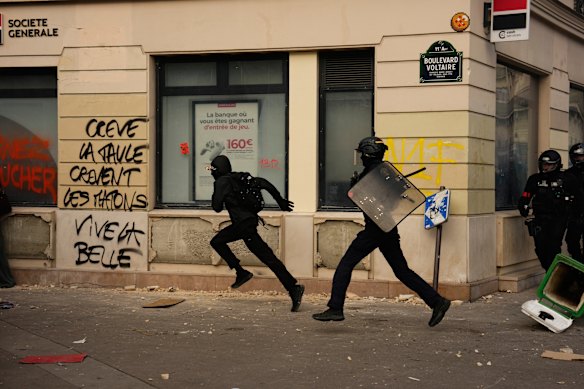
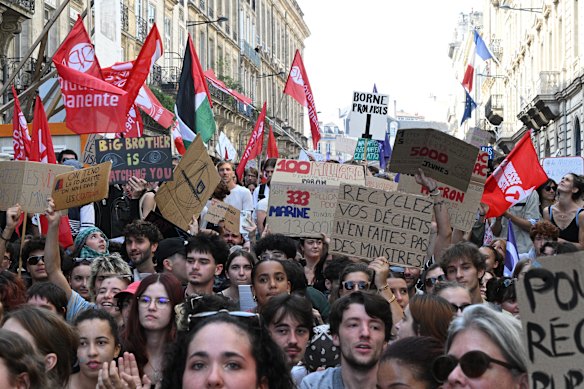
Some wore balaclavas as they sought to confront police and set off fireworks or light fires. In some cases, the images showed teenagers from migrant backgrounds. Older protesters carrying far-left political placards also joined the rallies.
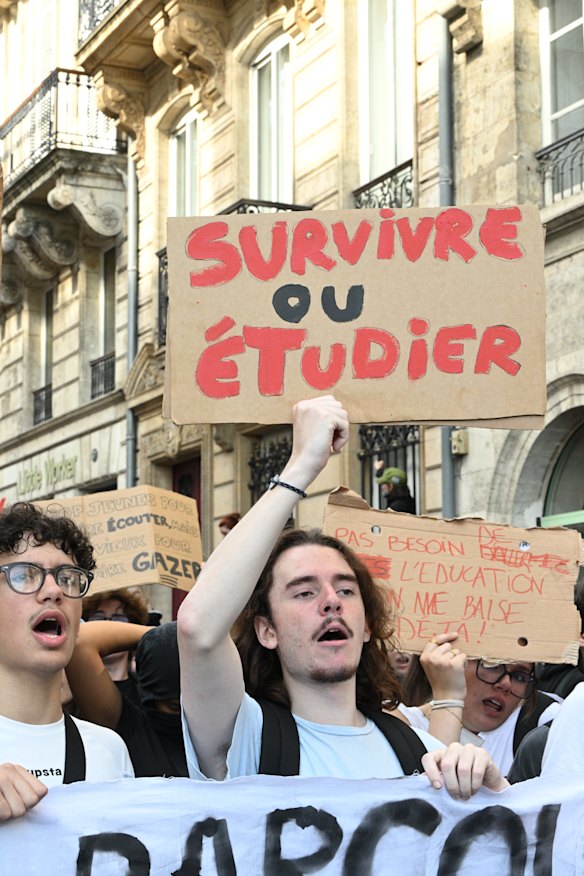
Many images, however, showed young, white students. Some smiled and laughed at gatherings that appeared largely peaceful and focused on the issue that sparked the first protest at Saint-Exupéry high school in suburban Paris: funding for classrooms.
Some were aware of the way their rallies were being used by others.
“We appreciate that left-wing politicians came to support us at the school,” said one student, Emma, 17, who spoke to news outlet France24 outside the Saint-Exupéry on Tuesday.
“But this is our fight; we don’t want to be co-opted by left-wing parties or used as tools by the right.”
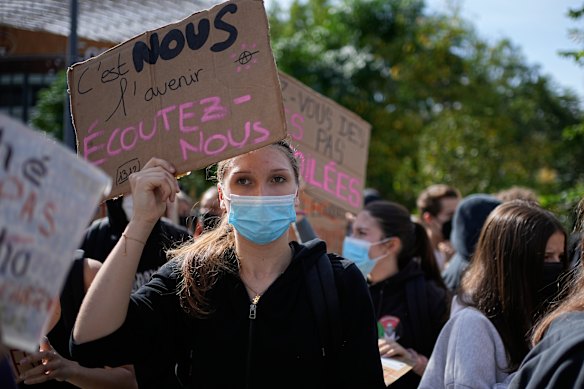
As she spoke, she held a cardboard placard with a handwritten message: “No resources. How can I succeed?
From the start, the students claimed that their cause was about the quality of their education because they believed their classes were too crowded, their schools were in disrepair and good teachers were in short supply.
Experts backed those concerns. In national newspaper Le Monde on Tuesday, sociologists from the University of Tours said their surveys of major schools showed that learning conditions were deteriorating.
“Students primarily reported ageing buildings, outdated computer equipment, heating problems, significant noise in common areas and a lack of cleanliness,” they wrote.
“Restrooms were a particular source of complaints, cited for poor hygiene, overcrowding, lack of toilet paper and lack of privacy. One in two students said they were reluctant to use the toilets, and more than one in 10 avoided them altogether.”
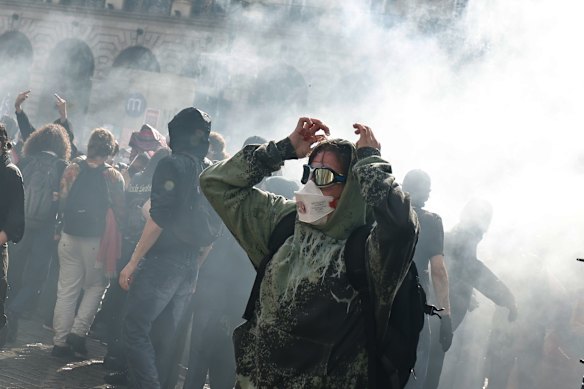
At the rallies, however, the crowds did not keep their protests to education. Some carried the Palestinian flag and others waved banners with Communist slogans.
In some of the most violent moments, protesters set bins on fire and spread flames on the streets.
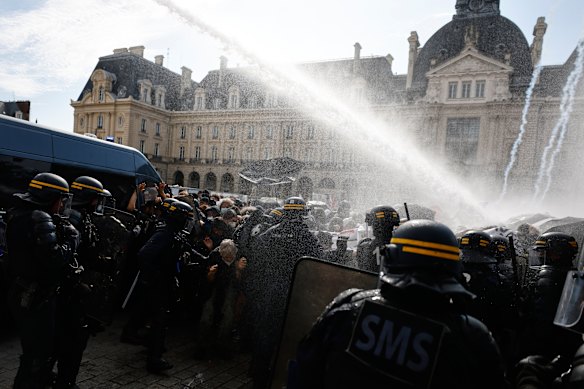
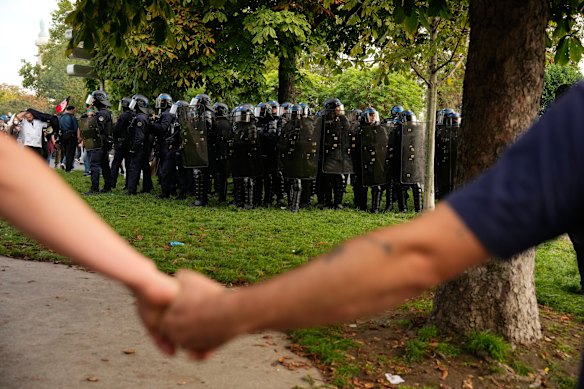
When the police responded, they sometimes used tear gas and stun grenades.
On Monday, one young man lost a hand in a confrontation with police involving a grenade at a school in the northern French town of Lens. In some accounts, he picked up the grenade when it landed near him. His family denied this claim.
On Tuesday, authorities placed a police officer under investigation for firing a grenade launcher last week in the Paris suburb of Saint-Ouen-l’Aumône. That incident left one student, named as Eden, 14, with face wounds, according to reports in the French media.
Some protesters have turned their violence on fellow citizens. Police arrested a boy, 15, after an assault in Marseille last Friday when he fired a home-made flamethrower at a woman near a bus stop, burning her face. The moment was captured on video and spread on social media.
Even if some teenagers wanted to keep politics out of the protests, it was far too late for that on Tuesday.
Some of the strongest support for the rallies comes from left-wing leader Jean-Luc Mélenchon, who is preparing a run for the presidency to replace Macron at national elections early next year.
“Thank you to the thousands of young people who will be demonstrating today,” he said on Tuesday. “Our country is fortunate to have a young generation involved in its destiny and ready to take it in hand.”
Mélenchon’s party, La France Insoumise, or LFI, translates as “France Unbowed”. There is no mistaking his mission in using the uprising from young people to expand a progressive movement that could sweep him into power.
On the right, however, National Rally leader Marine Le Pen has a political blueprint that counters the case for more government spending. On Tuesday, she issued a policy with cuts of about €140 billion ($226 billion) to government spending over five years if she wins power.
Le Pen accepts some of the student grievances. She promised to increase teacher salaries and restore security to schools, saying the shortage of teachers needed a solution.
Even so, there is a direct political confrontation over the clashes on the streets. Le Pen backed police while Mélenchon sided with the protesters.
“This is no longer about high school student protests,” Le Pen said last Thursday.
“It is about riots organised by professionals and overseen by deputies from La France Insoumise. We must pass a new anti-rioters law so that participation in a riot is a clearly identified offence.”
In the end, the verdict on these protests will be delivered when French voters go to the ballot boxes in April and May next year in two rounds of the presidential election.
So far, the right is on the rise. A poll by Toluna-Harris at the end of September found that Le Pen would gain more votes than others in the first round of voting. In the second round, it said, she would defeat Mélenchon with 69 per cent of the vote.
Get a note directly from our foreign correspondents on what’s making headlines around the world. Sign up for our weekly What in the World newsletter.