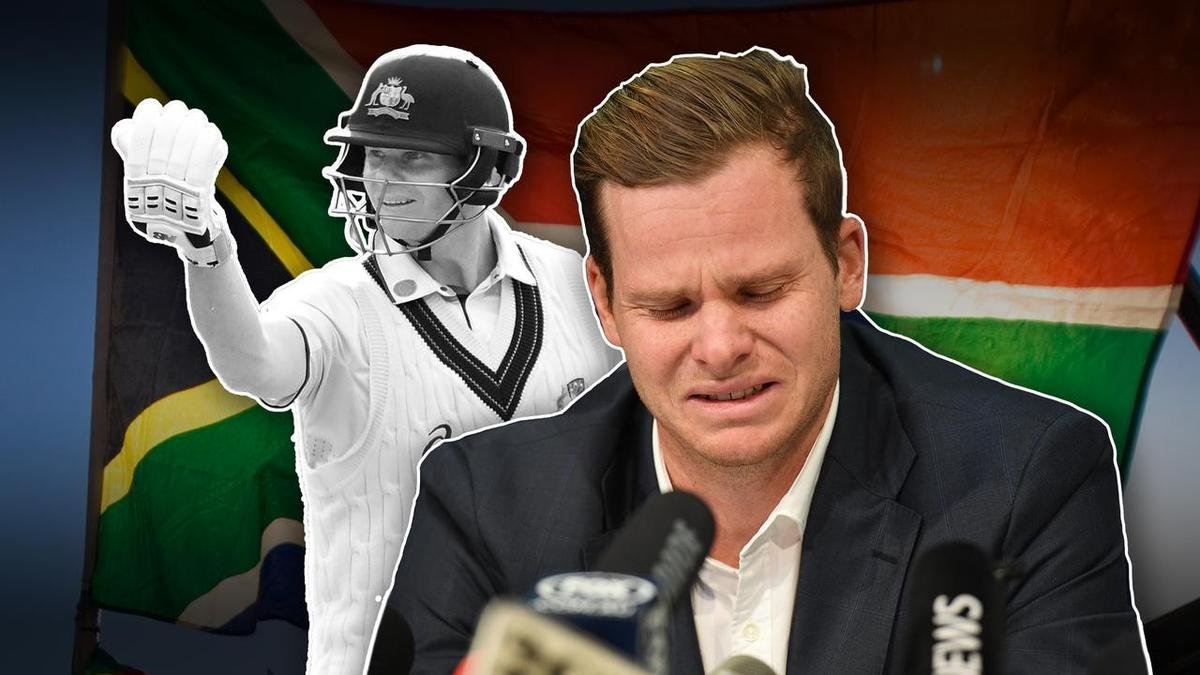
Source :- PERTH NOW NEWS
Unbridled rage and inconsolable sadness.
They were the two major emotions that enveloped Australia’s Test squad during their ill-fated trip to South Africa in 2018.
A sense of injustice fuelled the perfect storm that kicked off a life-changing series of events, with a small piece of yellow sandpaper invoking global shame and the most unedifying descriptor imaginable for anybody in sport – cheats.
I was fortunate to cover many cricket tours for Australian Associated Press (AAP). None were as eventful or spiteful as that four-Test contest.
Match referee Jeff Crowe observed in the post-mortem that “never in my 14 years of refereeing have I seen such animosity between two teams”.
That was reflected by various well-documented confrontations in Durban and Port Elizabeth that preceded the lancing of cricket’s ball-tampering boil at Newlands, and whispers that inflamed indignation in the shadows.
Australia had adopted a siege mentality on plenty of heated tours. A comical on-field showdown between Steve Smith and Ishant Sharma in 2017 rapidly escalated when Virat Kohli all but accused Australia of systematic DRS cheating in India.
This was different.
“Something has to be done. It’s f***ed.”
The pointed critique came from a frustrated member of Australia’s touring party in Cape Town ahead of the infamous Test, their private venting was illustrative of just how much things had escalated after the second Test.
In this instance, it referred to South Africa’s unplayable reverse-swing in Port Elizabeth and the alleged nefarious means in which Faf du Plessis’ side had generated it.
The topic of ‘ball maintenance’ had long been the source of a tit-for-tat between the rivals.
David Warner was fined for comments on a Sydney radio station during the corresponding tour in 2014. Du Plessis had been equally forthright, but not quite as frank as Warner, while querying the Australians’ reverse-swing in the ensuing Test at Newlands.
“I was really surprised to see the ball reverse from their side. I think it was 27 overs when the ball started reversing – especially (surprising) after rain and a wet outfield … really surprised,” du Plesis grinned mid-match in 2014.
Yet the impassioned suggestion that something “has to be done” could also easily have referenced the way in which Australian players’ partners and families were targeted with vile abuse in 2018.
Or Kagiso Rabada’s successful bid to overturn a suspension for his mid-pitch scrap with Smith.
The touring party bit their lip when asked on the record about these and other grievances, until Darren Lehmann called out “disgraceful” abuse from fans during the third Test as Cricket Australia (CA) lodged a formal complaint. The governing body soon had bigger things to worry about.
The verbals directed at partners were nasty. Contrary to popular opinion, it was not restricted to Warner’s young family.
The point was made at the time that Australian cricket crowds are far from perfect. And such a backdrop is obviously no excuse for brazen ball-tampering.
But, during an unusually long break between the second and third Tests when a gastro bug swept through the team hotel, it was clear that some members of the squad felt things were getting … f***ed.
And that Cricket South Africa and local broadcasters weren’t exactly helping.
The sentiment festered.
It emboldened an ‘us against the world’ mentality, which had been building within the team and at CA in preceding years. This would later form the crux of an independent 145-page review of the saga that lamented “winning without counting the costs”.
So with an unrestrained desire to win a series in the balance, locked at 1-1, calamity unfolded.
The footage was awful, damning and so viscerally triggering. It was, as then CA boss James Sutherland dubbed it, “a serious WTF moment”.
There was also needless ire invoked by Smith and Cameron Bancroft’s post-play press conference.
It was the team’s first chance to set the record straight, to ensure fans woke up to the full story.
Instead, the duo concocted a confession about a ploy to use fragments of the pitch on a piece of tape to illegally alter the ball. Smith’s declaration the “leadership group knew about it”, coupled with a refusal to name names, invited intrigue, division and speculation.
The wait for formalities in the press room had been far longer than usual, as team management and players mulled their next steps in the mess.
Bancroft and Smith tensely sat down, the latter asking for the lights to be turned down.
Arms crossed, Smith’s manner was the same you saw after a bad day in the field or a poor batting collapse, rather than a scandal that brought international embarrassment after Malcolm Turnbull termed it “a shocking affront to Australia”.
He had not read the room.
The lie was also plainly unfathomable and never going to fly.
It is telling that after CA’s rapid investigation and ruthless sanctions, a broader review of various cultural failings by The Ethics Centre, biographies from du Plessis and Tim Paine, pointed podcasts, cryptic quips and countless headlines that fans still crave a comprehensive summary of the nitty-gritty.
They will likely never get one.
Australian players returning to the scene of the shameful episode for their first Test series in South Africa since have focused on the task at hand.
Usman Khawaja’s autobiography is released next month and, eventually, Warner’s memoir will be published.
But how would you even corroborate a claim after eight years in the post-truth world? In this instance there is still debate over the depth and breadth of CA’s immediate interviews, let alone machinations and material facts.
Of the chaotic aftermath, I most vividly recall how the team hotel in Johannesburg – the next stop on the tour – was a weird juxtaposition.
There was the buzz of activity you might expect from CA officials and journalists, coupled with travellers bustling about the luxurious lobby in shiny Sandton (aka ‘Africa’s richest mile’).
Then a sea of sombre. Flat, sapped, sleep-deprived and slow-moving players were trying to wrap their heads around what happened, let alone a fourth Test.
It was no surprise Australia’s tour ended with a heavy loss, everyone’s mind was elsewhere. There was no escaping the crisis.
The touring media pack swelled with journalists from around the world. TV reporters camped outside the hotel; others tried to sneakily record smart-phone vision of ashen-faced stars in hushed conversations.
Smith’s police escort through OR Tambo airport, when he was hounded like a criminal being deported from the country, was the low point.
The enormity of what transpired – and an inkling about sanctions and the exacting road ahead when it came to restoring reputation – had hit players and support staff in waves.
By the time the ‘sandpaper trio’ prematurely checked out after being suspended and found by CA to be the only individuals aware of the illegal plot, there was a palpable sense of woe.
It was evident during Lehmann’s red-eyed resignation speech.
It was evident during hugs and handshakes at the hotel, particularly the hurried farewells to Smith.
Smith was Australia’s captain and talismanic batter but, more tellingly, someone whose hallmark since teenage years had been an unrestrained love of cricket.
It was now an unrequited love, the most public break-up imaginable.
Smith and Warner ultimately returned and were rewarded with redemption arcs and mountains of runs after their year in exile.
Bancroft, whose career highlight ironically remains his knock in the first innings of Australia’s Newlands nightmare, played two more Tests after serving a nine-month ban.
The West Australian would be forgiven for still harbouring a sense of injustice.