

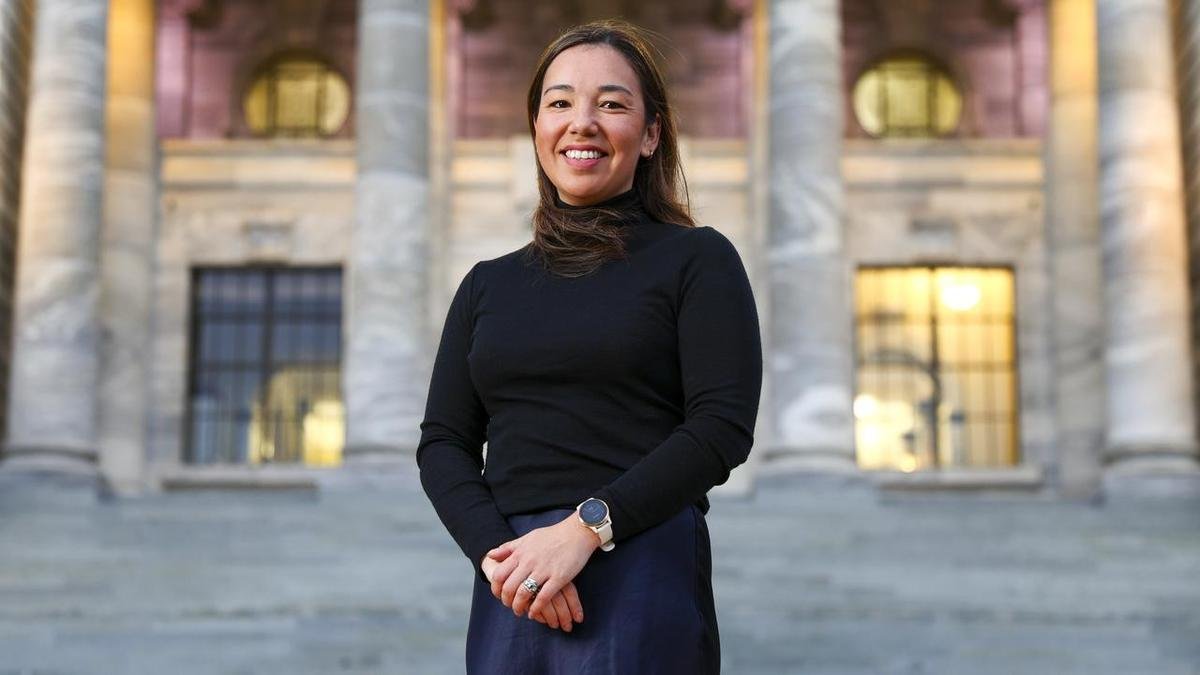
Source : Perth Now news
New Zealand is on the verge of its own teal moment, with upstart party Opportunity crashing the election campaign and on track to play kingmaker.
After four failed attempts to enter parliament, the climate-concerned centrists look set to win seats under new leader Qiulae Wong at the November 7 poll.
And if the polls hold, the party’s MPs will hold the key to the next government.
While the rest of New Zealand’s parties are calcified into left and right blocs, Opportunity is open-minded about which side to support.
The party could offer the National-led conservative coalition another term, or it could deal with the Labour-led opposition and put them back in the Beehive.
It’s high-stakes stuff that has elevated Ms Wong to a central figure in NZ politics less than a year after she became the party’s central candidate in an offbeat way.
The party placed a job advertisement for a new leader, and the 38-year-old applied and won.
“I’d voted for them in the past and was on the mailing list and that’s how I found out about the role,” she tells AAP.
Did she imagine herself on the cusp of a cabinet ministry, or deciding the next prime minister?
“I don’t know what I expected,” she says.
“It’s been a wild roller-coaster of a ride for the last 12 months.”
The party is enjoying “so much interest and so much momentum”, Ms Wong says, because many New Zealanders are “really frustrated”.
“Big parties are just not offering anything inspirational for our future, so people are certainly looking around at all the minor parties for what we have to offer,” she says.
“The timing is right for us but we’ve also worked really hard to make sure that we’re putting that positive message out there.
“So I can’t say I’m surprised, but I’m very grateful.”
The Auckland-based consultant and mother of two, who spent nine years in London after university, is a one-time Greens member, a keen jogger and a first-time candidate.
Ms Wong welcomes comparisons to Australia’s teals, using the same colour in advertising and describing Opportunity as a future-focused “pragmatic environmental” party.
Central policies include tax reform and a universal basic income, but the party has not pledged to race into radical changes if in power.
Instead, it will seek to hold the government to more modest aims, including political donation caps, a cross-party 10-year health plan and climate commitments.
Crucially, Ms Wong has not indicated who Opportunity might side with in post-election negotiations, saying it will depend on the policy alignment.
“We do genuinely believe we could work constructively with either Labour or National,” she says.
That’s at odds with what many on the right – including Prime Minister Chris Luxon – believe, seeing Opportunity as a progressive party.
Mr Luxon has warned National supporters against voting for Opportunity, saying he couldn’t form government with the party as it wants to raise taxes.
Ms Wong views the comments as a political manoeuvre, and deal-making is still possible.
“I think most people believe that he will pick up the phone and call if he needs to,” she says.
From statistically negligible results earlier in 2026, Opportunity now averages six per cent in the polls and consistently hits the five per cent threshold in all but one voter survey.
Curia polling director David Farrar says support for the party is stronger among “young urban progressives” and it is mostly drawing votes away from Labour and the Greens.
Whether Opportunity makes it in or not is almost the central question in this campaign, owing to New Zealand’s electoral system.
For six decades, until the 1990s, New Zealand was exclusively governed by either National or Labour parties that won majorities in a first-past-the-post system.
At a 1993 referendum, Kiwis decided to switch to a mixed-member proportional, or MMP, system that gives smaller parties an easier path to parliament.
Since then, every prime minister – Helen Clark, John Key, Bill English, Jacinda Ardern, Chris Hipkins and Mr Luxon – has led a coalition or minority government.
The system also makes post-election negotiations between parties as important as the election vote itself, with one person emerging as the arch-kingmaker: Winston Peters.
NZ First leader Mr Peters, now 81, has found himself in the role Opportunity wishes to play three times – holder of the crucial seats needed to form government.
As the joke goes, New Zealanders get to vote in elections but Winston Peters decides who wins.
This time around, Mr Peters has removed himself from the role, ruling out dealing with Labour and instead pursuing a firmly right-wing agenda.
Opportunity’s central pitch is to knock NZ First out of relevance, with Ms Wong the anti-Winston.
“Winston Peters has been in parliament longer than I’ve been alive,” Ms Wong says.
“In that time, New Zealand First has been responsible for the increased division and populism that we’re seeing.
“They’ve used their position as kingmaker to drive more of a wedge rather than bring people together and their policies and ideas are very much nostalgia.”
Ms Wong has criticised NZ First’s positions on immigration, increasing mining and oil and gas exploration and Maori as “backwards”, calling them “the antithesis of what we are about”.
She is also poles apart in tone from Mr Peters, known for his silver tongue and hot head.
The calmly but firmly spoken Ms Wong has benefited from being the only fresh face in an otherwise stale campaign.
The leaders of all six parliamentary parties remain unchanged from 2023, including Mr Luxon and Mr Hipkins, making the contest for prime minister a re-heated clash of the Chrises.
“This election is a curious, almost paradoxical creature because it is at once incredibly close, engrossingly close … and yet it’s not exciting,” The Spinoff’s editor-at-large Toby Manhire tells AAP.
“It’s a bit like a game of rugby union, where it’s a sort of penalty apiece, 20 reset scrums, lots of line-outs.
“It’s another cost-of-living collection (and) there’s a bit of a malaise about the place.
“That’s probably why people are looking at the institutional big parties and saying, ‘I don’t see what you can do for me; I want something different’.”
Beyond Opportunity, other minor parties are enjoying their time in the sun this election.
The combined National-Labour vote is polling at less than 60 per cent – well below historic norms of more than 80 per cent.
Libertarians ACT and the Greens are on track for their best-ever results, while NZ First could double its vote.
However, like the crisis-stricken Maori Party – expected to lose support – those parties are tied to their blocs, leaving Opportunity in the box seat to play kingmaker.
“I’d say it’s about 75 per cent likely,” Mr Manhire says.


