

Source : the age
Itsara
Thai$$
It’s a fine time to eat Thai street food in Perth.
It’s a fine time to be in the mood for som tum: the shredded green papaya and mango salad that is by turns crunchy, sour and hot. It’s a fine time to get your fingers messy devouring the herby barbecued chicken known as gai yang at Six Streets.
And it’s a fine time to be mildly addicted to grilled things on sticks fizzing with chilli and served in equally boisterous settings.
But what if nightclub-loud music isn’t your idea of fun? What if you don’t want to fetch your own water, cutlery and plates? What if you fondly remember the hey days of restaurants such as Saowanee’s Place, Thai Corner, Nahm Thai and other dining rooms that embodied the quiet poise of Perth’s Thai dining scene?
If you close your eyes and concentrate hard, you’ll be able to detect the spirit of these dearly departed dining rooms in Itsara: an 85-seat “contemporary Thai” restaurant in Nedlands opened by Itsara Pracharoenwattana and Cresswell Doherty in 2009.
Here, you’ll find a dimly lit dining room scattered with dark timber tables; a second garden area featuring more tables and hanging plants; plus a broadly “pleasant” ambience that’s welcoming and comforting. In short, visiting Itsara feels like dining inside a restaurant instead of a neon-lit party bus.
One detail, though, that distinguishes Itsara from its contemporaries is the five-hectare garden in the Swan Valley that supplies chef (and, notably, a molecular plant biologist) Pracharoenwattana and his kitchen team with the vegetables, fruits, herbs and other ingredients that are essential to Thai cuisine, but not commonly found down at the shops.
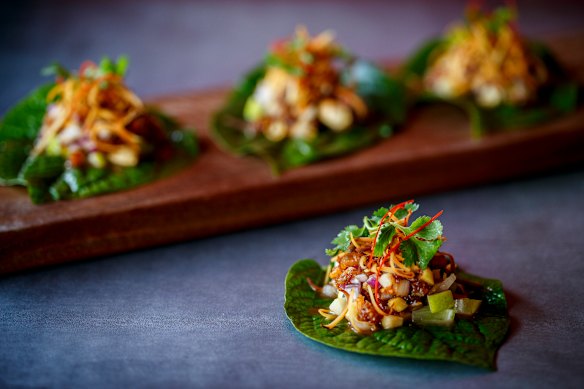
Ingredients such as betel leaves: a glossy, heart-shaped leaf and nature’s own plant-based tortilla. They’re perfect for freighting the chopped lime, dried prawns, crunchy peanuts and toasted coconut that make up the taco-esque miang boran.
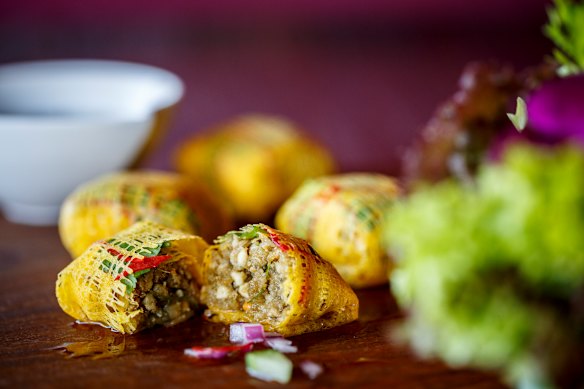
The garden also produces white turmeric – regular turmeric’s juicier, more mild-mannered and less clothes-staining cousin – that is presented with glorious hunks of house-made sai oua: Chiang Mai’s famous coarse-ground pork and herb sausage.
Those iridescent butterfly pea flowers that turn skeins of delicate rice noodle a faint shade of indigo? Yup, also grown in the Swan Valley.
You’ll find the miang, sausage and rice noodles – they’re hidden at the bottom of a tiny tumbler filled with coconut-pineapple curd plus a plump prawn – among the entrees.
Compared to the opening acts, main courses feature a few more familiar faces – a couple of duck curries, for instance, plus the ubiquitous pad Thai – but there are still moments that let the kitchen (and garden) show off their range.
Farm-fresh green peppercorns perfume chicken while squeaky, jangly snake beans stir-fried with prawns and a warming sambal-like chilli remind me of Han’s Cafe in the best, most nostalgic way possible.
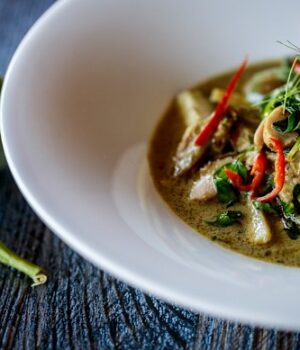
Consistency, however, can wane. On one visit, the chicken green curry was as bitter and rich as it should be, the chook sporting pleasing char-grill scorch. The second time around, the curry was muted while the bird tasted like it had decided char-grilling was optional.
Dishes generally lean sweet rather than sour: a concession, perhaps, to the tastes of a predominantly western suburbs clientele.
Some ingredients feel and taste like they’re there more for presentation than flavour. Tightly packed coils of blemish-free lemongrass and rosy-tipped galangal were among the contents of a glamorous looking albeit muddy-tasting tom yum soup that wanted for acidity. In January, the star of a mango sticky rice dessert wasn’t ripe or soft enough for purpose.
No complaints, though, with the rice’s accompanying jackfruit ice cream and the way it expressed the fruit’s heady tropical ripeness. A dishy construct of thin crepes sandwiched with coconut cream and finished with a final layer of Thai tea jelly cleverly honours the popular Siamese drink, only sans diabetic sugar quantities.
While the service also oscillates between sweet and dull, the staff are (mostly) well-meaning. They also, it seems, understand what guests want.
Although Itsara says no to the brash, street food joyride that many modern Asian eateries offer, it’s not quite posh and buttoned-up either. The result is an approachable, adult eatery whose polished cooking packs ’em in, even at the start of the week. Importantly, it’s also a pointed reminder that Thai food is about more than just frenzied, punch-the-air bedlam.
For anyone that appreciates the quiet sophistication that restaurants represent, Itsara is a fine time.
The low-down
Atmosphere: a quietly polished Thai restaurant designed for dining, not partying.
Go-to dishes: Chiang mai sausage ($19.50), snake beans and king prawn stir-fry ($36.50), Thai tea crepe layer cake ($16.50).
Drinks: a tidy selection of spicy-sympathetic wines and cocktails.
Cost: about $160 for two people, excluding drinks.
Good Food reviews are booked anonymously and paid independently. A restaurant can’t pay for a review or inclusion in the Good Food Guide.
 Max Veenhuyzen is a journalist and photographer who has been writing about food, drink and travel for national and international publications for more than 20 years. He reviews restaurants for the Good Food Guide.

