Source : Perth Now news
For millions of Australians, a simple turn in bed or even standing up can become a frightening battle to stay upright, as the world suddenly seems to spin without warning.
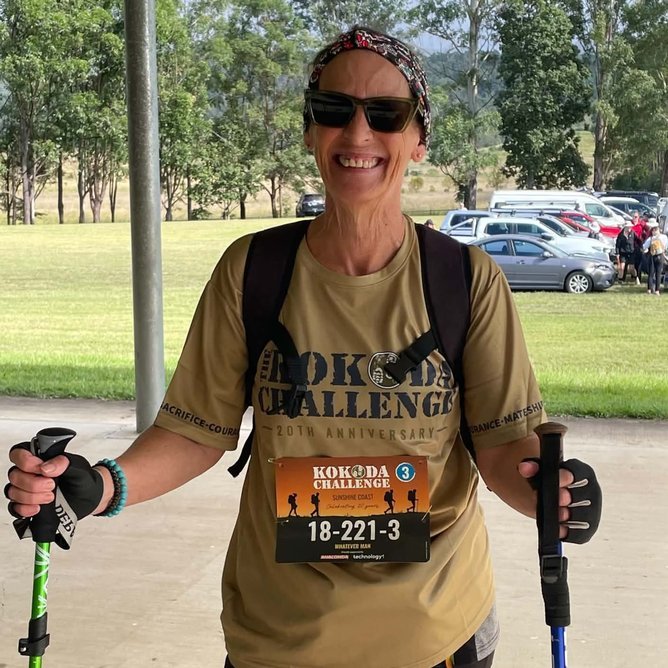
For Sunshine Coast grandmother Megan Bennett, that is the reality of living with vertigo — a disorder that can begin with one small movement and leave the whole room reeling.
Having lived with the disorder for more than 15 years, she said an attack was “instantly debilitating”.
“I go to sleep like any other night for months and months but can then be woken during the wee small hours when turning over, the world spinning uncontrollably,” Ms Bennett told NewsWire.
The 61-year-old first experienced vertigo in her mid-40s and recognised it immediately because her mother had also lived with it from time to time.
“I think my first attack may have been the worst. I tried to hang out my washing and I remember clinging onto the wires of my ‘hills hoist’, desperately trying not to throw up and then staggering and lurching inside to lie down,” she said.
Vertigo is often mistaken for a minor spell of dizziness, but it is far more disruptive than that.
It creates the false sensation that you, or the space around you, are moving when you are not, and it can bring on nausea, imbalance and a loss of confidence that lingers long after the spinning stops.
According to guidance published by the Royal Australian College of General Practitioners, one of the most common forms is benign paroxysmal positional vertigo, or BPPV.
It happens when tiny crystals in the inner ear become dislodged and move into the wrong part of the balance system, often triggering spinning sensations when a person rolls over in bed, looks up or bends down.

That description is familiar to Ms Bennett, who has learnt through experience that going back to bed and lying still can sometimes help an episode pass.
However, not every attack is over quickly. Ms Bennett recalled that some episodes have stretched on for days.
“I have had a couple of attacks that have lasted days, up to a week, but they have been manageable and I can still function, albeit slower and more deliberate in movement,” she said.
What makes vertigo especially unsettling, Ms Bennett explained, is that it arrives without any warning at all, and that unpredictability can shape decisions long before an episode begins.
She remembered worrying about vertigo when planning the Camino de Santiago with friends, a long-distance hike through Spain often undertaken as a multi-day physical and personal challenge.
“I do remember worrying about having an attack when I was planning the Camino as this would have been a great inconvenience and hold up.”

Her experience is far from rare. Australian research has shown dizziness and vertigo can affect people of any age, although they are more common in older Australians and can have a major impact on balance, confidence and independence.
A parliamentary research paper drawing on Australian health data found dizziness and balance disorders place a significant burden on the community and are linked with a higher risk of falls, especially among older people.
Hospitals and researchers around the country have been trying to improve the way vertigo is recognised and treated, particularly because it can be misunderstood even in clinical settings.
According to University of Melbourne research, having specially trained physiotherapists help assess people with vertigo and dizziness in emergency departments was safe, practical and helped doctors more quickly work out what was actually wrong, rather than sending patients home without a clear answer.
Other Australian studies have also found that when these physiotherapists are involved earlier, patients can be sorted into the right care sooner, spend less time waiting and get more appropriate treatment faster.
For many people, treatment can be surprisingly straightforward once the cause is identified.
Guidance from the RACGP notes that common inner-ear vertigo such as BPPV can often be treated with repositioning manoeuvres, rather than relying only on medication.
At the same time, not all vertigo has the same cause. Other forms may be linked to migraine, Meniere’s disease or less common neurological conditions, which is why proper assessment matters.
Health experts also warn that vertigo should never be brushed off if it appears with other serious symptoms.
The Stroke Foundation advises that sudden dizziness or loss of balance alongside facial drooping, arm weakness, slurred speech, severe headache, vision changes or difficulty walking could point to stroke and requires an immediate call to triple-0.
For Ms Bennett, though, one of the hardest parts is not only the attacks themselves but the way other people often respond to them.
“They look at you and think ‘hypochondriac’ or ‘lazy’. Or there’s the other ones that say, ‘Oh yeah, I get vertigo too, I hate heights’,” she said.
Vertigo may be invisible to everyone else, but for the people living with it, it can turn a quiet night, a load of washing or simply standing up into a moment of fear and disorientation, all from one movement most people never think twice about.