SOURCE :- THE AGE NEWS
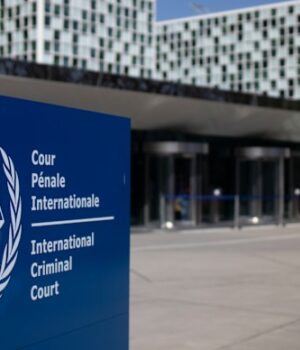
The Trump administration announced on Friday it was imposing severe financial sanctions on the International Criminal Court (ICC), its latest effort to cripple the global body that seeks to prosecute those accused of war crimes, genocide and other murderous criminal acts.
The new sanctions, unveiled by Secretary of State Marco Rubio and the US State Department, would prohibit transactions with the court after a grace period of six months. Any companies doing business with the court afterwards could be subject to punishment by the US government.
The threat of that could constrain the institution’s ability to carry out daily operations.
Although the State Department had been preparing the sanctions for months, Rubio’s announcement came just hours after a committee in Norway said it was awarding the Nobel Peace Prize to Navi Pillay, a South African lawyer who served for nine years as a judge on the ICC and worked as the top human rights official at the United Nations.
The sanctions are an intensification of the Trump administration’s push to undermine the court. In February 2025, just weeks after taking office, President Donald Trump issued an executive order directing agencies to come up with sanctions to impose on the court.
At the time, he said the court was trying to violate American sovereignty and undermine “the critical national security and foreign policy work of the United States government and our allies, including Israel”.
Rubio said in a statement on Friday that Trump would never allow the court to prosecute Americans. “We will ban transactions with this rogue court, cutting off their resources and crippling its ability to operate,” he said.
Rubio announced in July that the United States planned to “systematically disable” the court, which Trump has long described as a threat to Americans.
The administration has imposed financial sanctions and visa bans on court judges and prosecutors but the measures announced on Friday are broader.
The ICC said in a statement that the American move was “an assault on the rule of law and on the very foundations of the international legal order, which strikes at the simple principle that no one stands above the law”.
Many companies that have business ties with the court will be granted licences over the next 180 days to continue their work without financial punishments, the State Department said.
During that period the Trump administration will assess whether its concerns regarding the ICC have been addressed, the department said in a statement. The administration can then adjust the licences based on that.
The Treasury Department is helping to enact the sanctions and maintains a list of entities punished with financial restrictions.
Of nearly 200 nations in the world, 125 have signed the Rome Statute of the International Criminal Court and are subject to its rulings. The United States never ratified the treaty establishing the institution, and both it and Israel are among those that are not bound by the statute.
The court, officially established in 2002 and based at The Hague in the Netherlands, has a mission to investigate and prosecute genocide, war crimes and other serious offences. The Trump administration has in the past pushed back on the court’s ability to look into the conduct of US soldiers in Afghanistan and has also been highly critical of the court’s actions against Israel.
In November 2024 the court issued arrest warrants for Benjamin Netanyahu, the prime minister of Israel, and Yoav Gallant, the defence minister for much of Israel’s war in the Gaza Strip.
Prosecutors had investigated the officials for war crimes and crimes against humanity in operations in Gaza, where thousands of Palestinian civilians have been killed and some have starved to death. Israel carried out airstrikes and ground operations after the deadly Hamas attacks in Israel in October 2023.
The Trump administration has already sanctioned 17 of the court’s officials, including judges and prosecutors. Rubio has suggested that even more sweeping punishments were necessary because of the possibility that the court could prosecute US citizens, and US service members in particular.
Such actions would “mean the death of the US as a sovereign and independent nation”, Rubio wrote in an opinion essay published in The Wall Street Journal this past North American summer.
Defenders of the court often point out that it has no police force of its own and would be able to arrest and try US citizens only if member states carry out arrests.
The Trump administration is not the first to take on the ICC: under George W. Bush the United States also pushed back on the court’s ability to go after Americans. Yet the Trump administration’s effort to dismantle the institution – “brick by brick, if necessary”, according to Rubio – is an escalation, from scepticism and rhetoric to outright dismemberment.
“This is incredibly disturbing,” said James A. Goldston, executive director of the Open Society Justice Initiative legal organisation, calling the sanctions a “calculated attack” on international justice.
Whether the American attack on the ICC will cripple the institution will depend in part on how its member nations respond, he said, and whether they stand by the institution. “We know that the court has been preparing for this much-rumoured eventuality,” he said. “We’ll have to see.”
The European Union’s executive arm, whose 27 member countries are also members of the court, said in a statement that “the EU will work closely with the ICC to ensure it continues to operate effectively” and called the American move “deeply regrettable”.
In a recent interview with The New York Times that was conducted before the latest sanctions were announced, Tomoko Akane, president of the court, said that the institution has been taking “measures to strengthen its resilience” in the face of the Trump administration’s threats. “A permanent body like the ICC must never be shut down,” she said. “The stakes extend far beyond the court itself.”
Get a note directly from our foreign correspondents on what’s making headlines around the world. Sign up for our weekly What in the World newsletter.