Source : the age
Jim Pilmer
It’s interesting to see how far back we can go when tracing still familiar sayings, such as: “In this world nothing can be said to be certain, except death and taxes.”
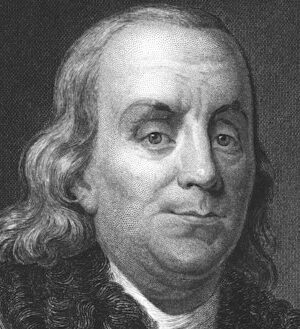
American statesman Benjamin Franklin popularised the saying in 1789, but is said to have quoted from a play written by Christopher Bullock in 1716. In 2026 I think I’m safe in adding a third certainty, namely “change”.
Not that change wasn’t causing concern back in Franklin’s day. Scottish Anglican cleric Henry Francis Lyte (1793-1847), who wrote the much-loved hymn Abide with Me, included the words “Change and decay in all around I see. Oh thou who changest not, abide with me.” Which raises the question: Are change and decay necessarily synonymous?
These days the word change is mostly preceded by “climate”. But there are many types of change surrounding us throughout our lives. Life stages themselves bring necessary and potentially rewarding changes. Growing up, seeking our vocation, discovering our sexuality, each generates and demands change. Loss of employment, relationship breakdown and the deaths of loved ones over the years can easily derail.
Change can bring both joy and heartache, hope and sorrow. Our senior years may bring a time of adapting to changes in health or moving into aged care. As in life generally, long-held beliefs can be challenged by what we experience as we age.
Coping with changed circumstances is at the heart of much spiritual support and pastoral care across all ages and stages. Change for the better is inevitably intermixed with the drawbacks. Societal, political, organisational and family changes are ideally aimed at improving life’s circumstances for the wider community or the individual.
Throughout its history the Christian church has been interacting with this world of change with varying degrees of insight and enthusiasm. We will always walk a somewhat wobbly line between change that renews and maintaining principles of faith and practice which we believe to be eternal or non-negotiable.
Change should not necessarily be equated with decay. Which changes are potentially destructive in the long term and which are not is the more precise question to ask. Obviously, it’s not only a question for people of faith. Change can be threatening for anyone, and the rate of change is a factor too.
As Christians it’s incongruous for us to pray to be led by the Holy Spirit on the one hand and refuse to budge on the other. What that may mean for the wider church, and for the various expressions of it, is a vexed question. A willingness to be led demands both faith and courage.
To misquote Henry Francis Lyte, May God abide with us in the process.
Jim Pilmer is an Anglican priest