Source : Perth Now news
Lawyers for a Ukrainian ex-military officer accused of leading the bombing of the Russian Nord Stream pipeline in September 2022 have argued at the start of his trial in Germany that “an aggressor’s infrastructure” may have been a lawful target.
Serhii Kuznetsov is accused of leading a group of Ukrainian agents including divers and an explosives expert that blew up Russia’s largest gas pipeline to Europe in one of the biggest infrastructure sabotage operations of modern times.
The case provides the first opportunity for a public hearing of evidence gathered during a years-long investigation, which has been diplomatically and politically awkward for a German government that remains staunchly supportive of Ukraine despite the investigative trail linking its authorities to the bombing.
Moving to have the case dismissed, Kuznetsov’s lawyer Nicola Canestrini argued that the pipeline – which provided half of Germany’s imports of natural gas before Russia’s 2022 invasion of Ukraine – was a “Russian weapon”.
“Is it unlawful to destroy an aggressor’s infrastructure without harming any human beings?” Canestrini asked.
Prosecutors have alleged that Kuznetsov, who was arrested under an international warrant in Italy last year, worked with members of the Ukrainian military to plan the clandestine operation on behalf of unidentified Ukrainian state entities.
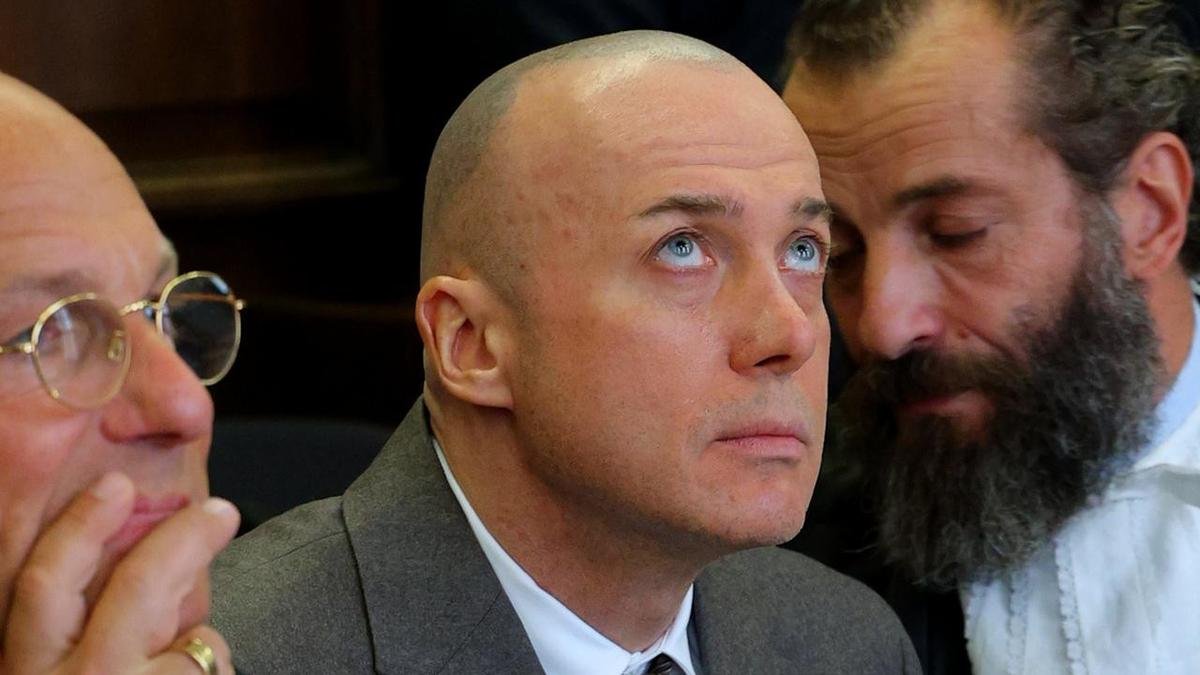
Kuznetsov, 50, who prior to Wednesday was referred to publicly only as Serhii K under German legal rules, has denied any involvement in the blasts that ruptured the 1200km-long Baltic Sea pipeline.
Wearing a grey suit and with a shaved head, he exercised his right to remain silent in court but did not cover his face.
His lawyers said he could not mount a proper defence because he was obliged to withhold Ukrainian state secrets.
The Ukrainian government has also denied any involvement, a sensitive point in its relations with Germany, Ukraine’s largest European supplier of military aid.
Russia said on Monday it expected a “just verdict” that would reveal the names of the perpetrators and those who ordered the operation.
Kuznetsov’s legal team had tried reaching out to Ukraine for information that might assist the defence but heard nothing, according to defence lawyer Jes Meyer-Lohkamp.
German prosecutors say the actions Kuznetsov is accused of – attacking civilian targets and causing explosions that destroyed infrastructure and damaged public services – would amount to a war crime.
Kuznetsov is the only person on trial but Croatian authorities have arrested another man, identified as Vladimir Z, who prosecutors believe was one of the divers.
The explosion of Nord Stream sealed the end of Germany’s longstanding dependence on Russian natural gas, although Russia had already cut supplies over German support for sanctions following Russia’s invasion of Ukraine.
Nord Stream’s supply had been due to double with the opening of a twin pipeline, Nord Stream 2, already built, but Germany cancelled approval to open it just prior to Russia’s invasion.
The Nord Stream system, lying at a depth of 80 to 110 metres under the Baltic and built by Russian gas concern Gazprom to supply up to 110 billion cubic metres of gas to Germany, was formerly at the core of economic ties between the two countries.
The September 26, 2022 blasts that ruptured three of the four concrete-coated steel pipelines created a giant whirlpool at sea as huge plumes of methane gas rose into the atmosphere.
Prosecutors allege that Kuznetsov travelled to Germany through Poland three weeks before the attack, using a forged Ukrainian passport.
He and his group then used a sailboat hired in the northern German city of Rostock to reach an area close to the Danish island of Bornholm, where they rigged specialised military-grade explosives to the sea floor.