Source : the age
Populist political movements will pull apart the nation’s mainstream parties if they fail to turn around the Australian economy by adopting major tax, housing and migration reforms, the country’s longest-serving finance minister has warned.
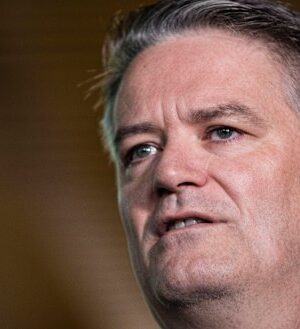
Mathias Cormann, who served as finance minister in the Abbott, Turnbull and Morrison governments and is now the head of the OECD, will use a speech in Brisbane on Saturday to urge both sides of politics to embrace a reform agenda stretching from the GST to planning regulations to lift living standards and quell left and right populists like One Nation.
Cormann will concede many of the problems facing the country developed while he was in office as the appetite for reform was suppressed by a mining boom that filled budget coffers and boosted incomes.
His intervention, in an address to the right-leaning Centre for Independent Studies think tank, follows the release of a biography by former treasurer Josh Frydenberg, who has in the past week warned the Liberal Party must reconnect with the political centre if it is to remain relevant to voters.
Frydenberg also called for an increase in the GST, and the scrapping of some exemptions, with the revenue used to fund substantial income tax cuts.
But Cormann will use the speech to outline a broader policy agenda, arguing that the increased support for populist political movements was being driven in part by the failure of major parties to improve living standards through difficult but necessary economic reforms.
In a clear warning to the Coalition, Cormann will say that simply aping populist policies will drive voters further into the hands of extreme parties.
“Mainstream parties that respond to a populist surge by adopting its economics do not recover their voters. They lose twice: once to the original, which the electorate will always prefer to the copy, and once to the centre, which has nowhere else to go,” he will argue.
“The evidence for that is now extensive, from Britain to France to Germany, where mainstream parties that borrowed the insurgents’ agenda shrank while the insurgents grew.
“The parties that have held their ground did so by out-performing the populists, not by imitating them.”
Cormann will date the decline in appetite in this country for reform from 2005, when John Howard was prime minister, arguing the revenue unleashed by the then-mining boom made it easier for all political parties to shun difficult policy decisions.
“This was not one side’s failure. The appetite for reform faded across the political divide, in business and in the union movement as much as in parliament,” he will say.
“When times feel good, because a boom is hiding a slow drift, the public sees no reason to accept that bargain. Politicians who propose it are punished for solving a problem nobody can yet see or feel.”
Cormann will use the speech to outline areas for reform. These include the tax system, with the former minister arguing the GST needs to be increased and broadened, income tax rates sliced and indexed to inflation, while state stamp duties should be replaced with “more efficient” land and property taxes.
He will also say the company tax rate is no long internationally competitive and should be reduced.
In what would be a challenge to his own party, particularly at the state level, Cormann will argue the only way to bring down rents on homes is to sharply boost supply.
This should include the right to build medium-density housing near every rail and major bus line in capital cities with approval against a code completed within 30 days.
The Coalition has promised to reduce net overseas migration down to 100,000 for two years before gradually increasing it to 160,000. One Nation has gone further, advocating negative net migration for three years.
Under both policies, Australia would have hundreds of thousands fewer workers, consumers and taxpayers over the coming years compared to current policy settings.
The Belgian-born Cormann, who moved to Australia in 1995, said the public concern about migration had been driven by the long-term failure to build more homes and infrastructure to keep up with population growth.
But he cautioned that deep cuts to migration would ultimately hurt the economy and Australians’ living standards.
“Australia is one of the very few advanced economies whose workforce is still projected to grow over the next 40 years,” Cormann will say.
“Take that away, and the arithmetic turns on us. The number of Australians over 85 triples regardless, and health spending climbs from 4 to more than 6 per cent of national income regardless.
“We cannot have fewer workers and more hospitals, more aged care, a bigger pension bill and more defence all at the same time.”
Australia is in the midst of an AI building boom that has prompted push back in some communities. There are also concerns about AI, its impact on the jobs market and how it may upend workplaces.
But Cormann will argue Australia needs to become the easiest country in the region to deploy AI rather than put up barriers to data centre construction and to the use of the technology.
“If history teaches anything, it is that protecting yourself from an innovation you are worried about does not stop the innovation. It happens anyway, somewhere else,” he will say.
“The productivity dividend from AI will go to the countries that adopt fastest, not to those that regulate first. So apply the laws Australia already has, through the regulators it already has, rather than building a stand-alone AI regulator.”
Cut through the noise of federal politics with news, views and expert analysis. Subscribers can sign up to our weekly Inside Politics newsletter.
 Shane Wright is a senior economics correspondent for The Sydney Morning Herald and The Age.Connect via X or email.