Source : the age
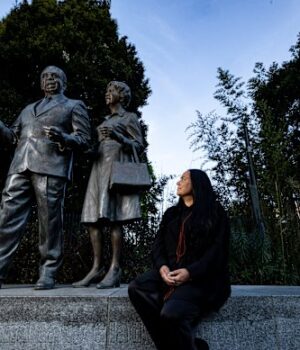
Less than a year ago, on a stage in the middle of Melbourne’s John Cain Arena, Ngarra Murray placed her ochre-stained palm onto a kangaroo skin alongside the imprints of other First Peoples’ Assembly members. This was the cultural assent given by Aboriginal people to an historic, statewide treaty setting out the terms of a new relationship between black and white Victoria.
The pelt also carries the prints of former premier Jacinta Allan and minister for treaty Natalie Hutchins, two women who have since quit politics but had a hand, both literally and figurative, in the most profound social policy change during Labor’s 12 years in office.
Murray, who was then co-chairing the assembly alongside Rueben Berg, says the kangaroo skin and the authorising power it represents is essential to understanding treaty. It also helps explain why Jess Wilson’s promise to repeal within the first 100 days of a Coalition government the laws enacting treaty can go only so far.
“Only the people who put their handprints on that treaty can undo that relationship,” says Murray, now retired from the assembly. “That is an agreement we made in good faith with the state. They can repeal the legislation but they can’t repeal the reason why we did it.”
Victoria’s treaty, the first of its kind reached between First Peoples and the Crown in Australia, has gained an oversized prominence in this state election.
According to the last Census, only 1 per cent of people living in Victoria identify as Aboriginal or Torres Strait Islander. According to Victoria’s Parliamentary Budget Office, dismantling the entire statutory framework associated with treaty would save the state’s budget $247.8 million over the four years of the next government. The Coalition over the same time frame has pledged to spend $5 billion fixing potholes.
In Jess Wilson’s seat of Kew, the opposition leader is being buffeted from both sides of a fierce treaty debate. Teal challenger Sophie Torney and Common Threads, a First Peoples’ activist group, are highlighting the tension they see between Wilson’s pledge to abolish treaty and the progressive sensitivities of traditional, small-l Liberal voters in her electorate. One Nation’s Victorian leader Warren Pickering is targeting the social media accounts of Kew voters with ads questioning whether Wilson can be trusted to get rid of treaty – an issue that feeds into Pauline Hanson’s 30-year-old grievance about special treatment for Aboriginal people.
Last weekend, TWK Research, a Melbourne-based research company used by political pollsters, was cold-calling voters in Kew, quizzing them about their voting intentions and attitudes towards treaty. The sequence of leading questions suggests whoever commissioned the poll is worried about treaty being a drag on Wilson’s vote. The Liberal Party’s campaign headquarters did not confirm or deny knowledge of the survey.
Amid this noisy, if localised political spat, few people have stopped to consider what the promise to scrap treaty means. Although treaty is new to Australia, it is well established in other common law countries, most notably New Zealand. The Māori experience is that, while governments can make and unmake laws designed to give legal force to treaty agreements, they cannot undo the agreements themselves. In Victoria, a government can repeal the Statewide Treaty Act that provides statutory authority and public funding for Gellung Warl, the principal architecture of treaty, but it cannot unilaterally unmake the agreement from which the legislation derives.
Kelvin Davis, a former deputy leader of the New Zealand Labour Party, served as the minister for Māori Crown relations under the Jacinda Ardern government. He belongs to the Ngāpuhi tribe whose traditional lands include Waitangi, the North Island town where, in 1840, Māori chiefs entered into a treaty with the British government.
Nearly two centuries on, the legal effect of that treaty is still being fiercely contested ahead of next month’s New Zealand election. Davis says laws are always subject to change but Victoria’s treaty, like the Treaty of Waitangi, stands on its own mana, a Māori term for spiritual authority or power.
“Any parliament around the world has the right to make laws that they see fit and to repeal laws,” Davis tells The Age. “So they’ve got the right to repeal the law, the Statewide Treaty Act. But that doesn’t mean that the treaty just disappears. The treaty is there.
“My advice to Victorians is ignore the treaty at your peril. The First Peoples have been around for 70,000 years and they’ll be around for another 70,000. As happened in New Zealand, governments throughout the decades after treaty was signed tried to hide it, push it into under the carpet, never to be heard from again. Māori did not forget. We used white man’s processes to make sure that it reclaimed its status, and it is now costing New Zealand government billions to rectify all the broken commitments and promises.
“They’ve got all these commitments in the Victorian treaty. They’re going to want those commitments to be fulfilled and they’ll just keep pushing. They will say: ‘This is our treaty, it is signed and if you renege, we’re going to sue you.’
“I hope that’s what they say and do.”
The Victorian Treaty Authority was established before the last state election as an independent body to oversee treaty negotiations. Its chair Jidah Clark says that here, like New Zealand, treaty reaches beyond its enabling legislation.
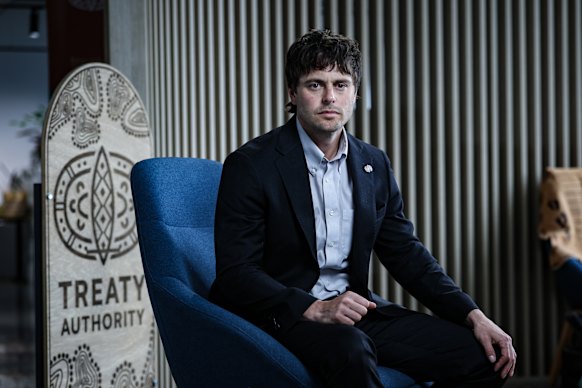
“The treaty itself is much more than a piece of legislation,” he explains. “It is a foundational document, which is unique in Australian history and solemnly undertaken by First Peoples in Victoria and the state government.
“Its spirit and intent makes amends for the wrongs of colonisation and establishes a constructive relationship for the future. From the Aboriginal perspective, it’s a sacred covenant that is made between the two polities, having two systems meeting and recognising each other. Under the Aboriginal system, that ceremony that occurred on 12th of December 2025 was cultural assent and the point moment at which the treaty commenced.
“The Treaty of Waitangi was not unilaterally severed and that can’t happen here in Victoria. It may be not honoured by a particular party, which is a common experience, again, around the world, but the treaty would still exist. It becomes a political and social question and a moral one too.”
Dr Carwyn Jones, an expert on Māori law and treaty from the Victoria University of Wellington, says it took 135 years for the New Zealand parliament to legislate to give the Treaty of Waitangi legal force. This included the establishment of the Waitangi Tribunal, a standing commission of inquiry which resolves claimed breaches of treaty principles.
He says that courts have long held that treaties need enacting legislation to give them legal teeth but if parliaments refuse to pass or, in Victoria’s case, repeal treaty laws, the agreements retain potency. “There can be some real power in having that agreement, and in thinking about the way that that can be used,” he says. “It may create different kinds of obligations, even if they aren’t legally enforceable, that have political leverage.”
This is where organisations such as Common Threads come in. Co-founder and chief executive Larissa Baldwin-Roberts, an experienced political activist who previously ran GetUp, says a national Together for Treaty campaign created from the bitter defeat of the Voice referendum is now squarely focused on the Victorian election and Liberal-held marginal seats such as Hawthorn and Kew.
“At this point there is over 10,000 Victorians active on the campaign,” she says. “People have been trained in how to talk about treaty, particularly in places like Kew and Hawthorn, which are definitely a big part of our target seats.
“When you’re having conversations on the doors and at stalls, people are shocked to hear that it’s going to be repealed and that the opposition is putting that forward. People think it is a One Nation policy. Maybe Jess Wilson thought that this message would only hit people that were curious about voting for One Nation. We need to tell her voters that this is what she said and what her party’s position is.”
Wilson has made no secret of her plans to repeal treaty. She spoke against the legislation when it was debated in parliament, voted against it and committed to repealing it within days of becoming opposition leader. Although she supported a Voice to Parliament during the referendum, she accepts that most people didn’t. She argues that Gellung Warl is “vastly different in both scope and scale” to the proposed Voice.
“I have been very, very clear and I spoke about this at length in the parliament, that I oppose the treaty,” she said during a 3AW Radio interview during her first week as Liberal leader. “That is our position as a party and we have said that we will repeal that, upon coming into government, within the first 100 days. That is our position and our position is not changing.”
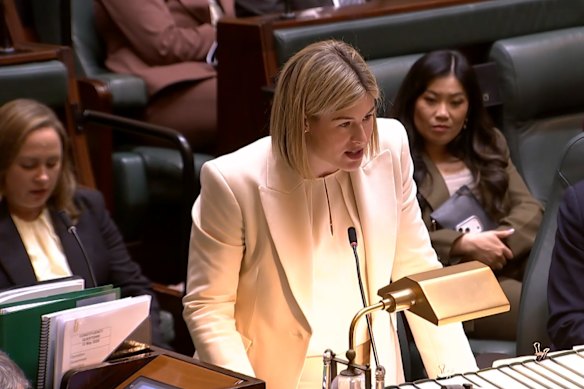
Sophie Torney says this is not what most Kew voters want from their local member of parliament. “I think she is worried because lifelong Liberal voters are telling me they don’t recognise this party. Why would you sacrifice treaty chasing votes from One Nation?”
Where the Treaty of Waitangi is an agreement on a broad set of principles, the Victorian treaty is a more prescriptive agreement that sets out the design and powers of Gellung Warl, an independent statutory body authorised to make decisions on behalf of First Peoples in Victoria, consult and advise government and hold their policies to account. Gellung Warl houses the First Peoples’ Assembly, a standing truth telling commission and an accountability commission.
Victoria’s Statewide Treaty Act, legislation that passed through parliament in November last year, established Gellung Warl as a legal entity and guaranteed it funding of just over $70 million a year, indexed for inflation. It also includes a section that contemplates its abolition. A government intent on abolishing Gellung Warl must report to parliament about the extent of its consultation with the First Peoples Assembly and the Treaty Authority about its plans. The Act stipulates that consultation should take place six months before repeal legislation is introduced, but does not compel governments to do so.
If a Wilson government, upon coming to power, is determined to repeal the Statewide Treaty Act quickly and without consultation, it can. But it can’t, on its own, amend the treaty. This would require consent from the First Peoples’ Assembly – an organisation that spent its first seven years working towards securing that agreement.
Ngarra Murray says it would be devastating for a new government to dismantle Gellung Warl within months of it getting started. “We should be proud that, as the first jurisdiction in this country, we now have a better relationship with First Peoples and a new way going forward,” she says. “It just absolutely baffles me that we’ve got One Nation coming down here talking to our treaty, and we’ve got the Liberal and Nationals with this view. It’s really disheartening.”
Murray adds that this would also make little difference to the long-term aspirations of Aboriginal Victoria articulated in the treaty agreement. “Self-determination has always been the goal, so we would continue to follow that pathway,” she says.
Supporters of treaty say this goes to a critical misunderstanding of what the Victorian agreement aspires to achieve. Although self-determination is a political end, it is also a means – giving Aboriginal people a greater say to try to improve their socio-economic circumstances and outcomes beyond the failures of past government policies. As Jidah Clark points out, the alternative carries an enormous financial burden for all Victorians through our hospitals, prisons, schools and social services. He asks that when people consider treaty, they think about both sides of this ledger.
“Treaty is a vehicle for a better future, not only for Aboriginal communities but all Australians. To see it as just giving something to Aboriginal people is a misnomer,” Clark says.
“It carries not only the gift of recognition, legitimacy and absolving the moral stain this country has in its history, but also the potential to bring significant social and economic benefits to the wider community,” he says.
“Victorians are hearing what the cost of treaty is, but they deserve to know what the benefits are.”
Start the day with a summary of the day’s most important and interesting stories, analysis and insights. Sign up for our Morning Edition newsletter.