Source : the age
One of the most memorable scenes from the 1995 cult classic film Clueless (a movie full of memorable scenes) occurs early on, inside Cher Horowitz’s bedroom.
After waking up, Horowitz, played by Alicia Silverstone, walks over to her closet and consults a computer for what she should wear to school that day. The computer shows her different combinations of her clothes, and informs her when something clashes via an aggressive “MISS-MATCH” warning. When she finds an outfit she wants to wear, it gives her an image of what it would look like on her.
In 1995, the scene felt like a far-flung possibility. In 2026, it’s not that far off how AI is shaping the way we interact with fashion and shopping today.
Like all industries, AI is disrupting fashion. In 2023, Oroton was one of the first local labels to experiment with augmented reality (AR) similar to Cher’s computer in Clueless, unveiling AR windows at the Queen Victoria Building in Sydney and Queen Street Mall in Brisbane where customers could virtually try on their bags in the windows.
Since then, AI has become deeply embedded in every stage of how people shop online, improving fit recommendations, virtual try-on, trend forecasting and stock management.
According to a new report by Stripe and Thoughtworks, 81 per cent of shoppers in Australia and New Zealand have already used AI to help them shop online.
“Most use it for advice rather than buying and the businesses we talk to are asking, not whether this is coming, but how quickly they need to build the trust, capability and infrastructure to keep up,” says Kathryn Heffernan, Thoughtworks managing director for retail and travel, APAC.
One of the most recent developments has been agentic commerce, with spending on the technology projected to grow from $5 billion to $47 billion by 2030.
Traditionally, when you shop online you do all the work: search, scroll, filter, compare and then buy.
Agentic commerce outsources the bulk of that labour to an AI assistant.
You tell the assistant what you’re looking for – “a cotton midi dress for a summer wedding that is under $300 and will arrive by the end of the week” – then it goes out, finds sites with options in your size, and compares them for you. If you allow it, the assistant can also make the purchase.
Heffernan says it’s a welcome advancement for time-poor people who want to cut back on the admin of online shopping.
“Comparing options is tedious: opening tabs, checking fabrics, decoding size charts. An AI assistant can read product descriptions, reviews and size guides in seconds and pull them into one side-by-side summary,” she explains.
“Done well, it can also help people buy less but better. When it’s easy to compare fabrics, care instructions and reviews, you can make a more considered choice rather than an impulse one. That depends on the tool being built to serve the shopper rather than to push more sales, which is why trust matters so much.”
In this process, however, the joy of discovery is lost.
Ask any fashion editor, and they’ll tell you about the meditative state they enter when they start trawling online websites for the specific cut of black pants they’ve spent months searching for.
Likewise, designers are still figuring out how they can meaningfully integrate AI into their business without affecting their creative output.
“AI has helped me code my website and add plugins that track sales and improve the site layout,” says Gautam Kapoor, founder and designer of Melbourne-based label Gotham.
While the technology is helpful, Kapoor isn’t worried about it impeding their creativity. “AI usually creates from what has already come before. Designing involves going back and forth with an idea many times, and that push and pull is what creates something original and unique,” Kapoor says.
“In fashion, this happens in the toiling process, when prototyping a garment, and I don’t believe AI could replicate that.”
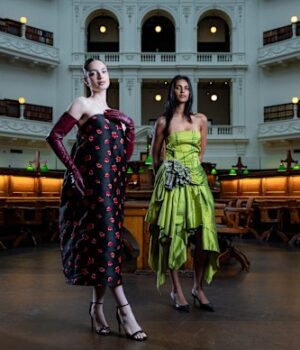
On Wednesday evening, Gotham will be one of nine designers showing designs as part of the Cult Status runway at Melbourne Fashion Week.
Chris Ran Lin, Club Venus, Hunter Gatherer x BSL, Liandra, Perple, R.Sport, Toilè Studios, Wah-Wah Australia and Wilson Jedd Adams are all inspired by subcultures that sprout from the underground, their work challenging the hyper-perfection of AI in favour of experimentation and individuality.
“AI has made me value the importance of the creative journey at a deeper level and appreciate the unique perspective designers across all mediums bring to their art form,” says Huiliana Chandra-Curry, designer of slow fashion label, Perple.
“Without a doubt, the importance of well-made, intentional garments will continue to command respect and attention. In an era where AI models will homogenise aesthetics, there is an opportunity for originators to find their people.”