Source : the age
(M) 117 minutes
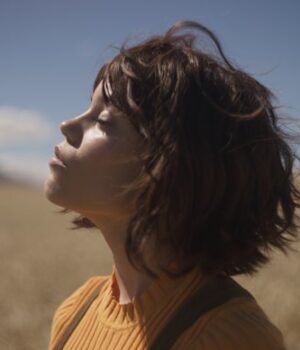
By any sensible person’s standard, Taika Waititi’s Klara And the Sun is an uncommonly annoying movie. But it also might move you to tears – and if it does, I wouldn’t hold you to blame.
The sadness derives from the 2021 novel of the same name by Kazuo Ishiguro, a master of the kind of terribly British tearjerker where the characters are obliged to keep calm and carry on.
The butler hero of Ishiguro’s The Remains of The Day is made of such stuff, and so are the boarding school students in his Never Let Me Go, both previously adapted to the screen with a restraint to match the source material.
The android heroine of Klara And the Sun, played in the film by Jenna Ortega, belongs to the same tradition. Waititi, however, wouldn’t know the meaning of the word “restraint” if you screamed it in his face, although he favours the kind of deadpan comedy where the characters might as well be waving signs that say “I AM BEING DEADPAN” in big glittery letters.
Still, the screenplay by Waititi and Dahvi Waller streamlines the plot of the novel efficiently, adding a sprinkling of Waititi’s usual wilfully corny gags (including allusions to Grease and Star Wars). A couple of lines that sound like pure Hollywood are in fact straight from the book, as is the core concept of a story told through the eyes of a pure-hearted naif.
The setting is a vaguely imagined near future some time after World War III, which hasn’t noticeably affected the society portrayed onscreen aside from bringing about the end of the internet, conveniently for plot purposes.
Deprived of knowledge of the wider world, Klara in theory is a blank whose personality can be moulded to suit the needs of her human companion Josie (Mia Tharia), a well-off but lonely and sickly teenager who has acquired genius-level intelligence through a dubious procedure known as “lifting”.
In practice the story has little to do with technology, and nothing to do with the current reality of AI. Klara retains the jerky eye movements and unnaturally smooth gait traditional for cinematic androids – but as played by Ortega, she’s a livewire from the moment she first appears as a living mannequin in a shop window, powered by the sun streaming through the glass.
Brazen mugging and all, this is a full-on clown performance in a tradition that stretches back through Giulietta Masina in La Strada to the wide-eyed child-women beloved of 1920s silent cinema.
There are only two ways for any viewer to respond: either you’re charmed, or you yearn for someone to dismantle Klara forthwith. I was charmed, and had no trouble grasping why Josie pushes back against the scepticism of her chilly mother Chrissie (Amy Adams), insisting on taking Klara home in place of a more advanced model.
I was less entranced by the wilfully cluttered, fragmentary style, which uses lens flare and pixelated imagery to approximate Klara’s partial, aggressively sunny point of view.
The technique works some of the time, but there’s no sense of a firm hand at the controls: I can hardly think of a worse, more overblown scene in any film this year than the one where Josie meets a group of “lifted” kids her own age, who turn out to be a pack of lisping, screeching snobs.
No less manipulative in principle is the scene where Chrissie discovers Klara has learned to mimic Josie’s movements precisely. But for a few moments at least, Waititi trusts Adams and Ortega to put this simple idea across – and I can’t deny I was moved myself, if in defiance of good sense.
In cinemas now
(M) 131 minutes. In cinemas.
Oregon teenager Prue McKeel is on a quest. A murder of crows has swooped out of the sky and snatched her little brother while she was taking care of him. Now she must get him back – a mission which takes her into a nearby forest of the enchanted kind we’ve come to know so well from Shakespeare and the Brothers Grimm.
Nobody emerges from these without undergoing some fundamental change and this one is busier than most, heavily populated with witches, warlocks, battling armies, marauding bandits and talking animals.
That’s the premise of Wildwood, the new animated feature from Laika, the American independent studio devoted to stop-motion animation, a painstaking art relying on articulated puppets and handmade sets photographed frame by frame. Wildwood is the studio’s sixth film. Its predecessors, which include Coraline, The Boxtrolls and Kubo and the Two Strings, have all been nominated for Oscars, but only Coraline has been a hit at the box-office.
(CTC) 106 minutes
It’s hard to believe that Noël Coward’s giddy comedy, Fallen Angels, was considered scandalous by the London tabloids when it opened in the West End in 1925.
One critic sniffily conceded that audiences with a taste for the decadent might be entertained but he was not among them. Coward’s account of two happily married women who are thrown into a state of drunken confusion by the prospect of a reunion with the Frenchman who seduced each of them when they were single struck the critic as being distinctly unpleasant.
Fortunately, the decadent prevailed and the play has been done many times in London and New York. This is a screen version of the latest production, filmed live on Broadway in April with Rose Byrne and American stage star Kelli O’Hara as the nervous wives, Jane Banbury and Julia Sterroll. Both actors were nominated for Tony Awards because they infuse their performances with such an elegantly superior brand of slapstick.
(MA) 108 minutes. In cinemas
No-one told me Clayface was an actor. Granted, he hasn’t always been an actor: like other enduring DC comic-book villains, the character has been given a new origin story every few years. But reliable sources tell me that through it all, he’s retained a special ability to masquerade as other people, through some combination of advanced psionic powers and sheer showmanship.
The showbiz angle is critical to the gruesome new Clayface movie from British director James Watkins (The Woman In Black) – not a superhero adventure but a traditional exercise in grand guignol, although it takes place in Batman’s hometown of Gotham City and was overseen by the same producers as the recent screen versions of Superman and Supergirl.
The anti-hero Matt Hagen (Tom Rhys Harries) is an up-and-coming movie star whose career takes a downturn when he makes the rookie mistake of sleeping with the girlfriend (Joana Ribeiro) of a mob boss (David Dencik).
(M) 119 minutes
As campy video-game adaptations from the 1990s go, the original version of Street Fighter, starring Jean-Claude Van Damme, sets a high bar. More specifically, the bar is set by the late Raul Julia’s performance as the levitating drug lord and would-be global dictator General Bison, strutting and glowering in his red uniform and peaked cap adorned with a winged skull, more feverishly high on his own supply than most Bond villains ever managed to be.
This new bid to launch a Street Fighter movie franchise is not a direct remake, but as a reimagined version of the character – now known as Lord Bison – David Dastmalchian seems very conscious of not wanting to mimic his predecessor. He goes for a more internalised kind of madness, speaking in uncanny hushed tones and periodically letting his big sorrowful eyes roll back in his head.
Still, he has some welcome moments of flamboyance, including a version of the most famous scene from the original, where Bison confronts Chun-Li (played here by Callina Liang), an Interpol agent who has infiltrated his criminal organisation in order to avenge her father’s death.
(M) 106 minutes
Whalefall comes to you from inside the belly of a whale. By the time it’s over, you’ve been treated to a comprehensive tour of a sperm whale’s digestive system. I now know that its stomach is split into four separate compartments.
Set on the craggy Californian coast near Monterey, the film is adapted from a bestselling novel by American writer Daniel Kraus, who was inspired by true stories of swimmers being swept into the mouths of whales and spat out again. Kraus’s teenage hero, Jay Gardiner (Austin Abrams) is not so lucky. His scuba gear becomes entangled in the tentacles of a giant squid chosen by a sperm whale as its next meal and in the confusion, which is terrifying, he’s swallowed whole.
This puts him in select company. I count Jonah, Pinocchio and his father, Geppetto, as those who have had firsthand experience of life inside a whale. Then my list cuts out. Jay does have a slight advantage. His scuba tank is still functioning, giving him an hour to make his way to the exit.
(MA) 159 minutes
Homophobia is hardly extinct in Spain, any more than elsewhere. Still, it says something that one of the biggest locally made hits at the Spanish box office this year is La Bola Negra, a crowd-pleasing, century-spanning epic that is thoroughly conventional in nearly all respects aside from its emphasis on same-sex desire.
Directed by the team of Javier Calvo and Javier Ambrossi, known in Spain as Los Javis, the film shares its title with an unfinished work by the celebrated Spanish playwright Federico Garcia Lorca – a gay man who was murdered by a fascist death squad in 1936, soon after the start of the Spanish Civil War.
The few pages of Lorca’s play that survive tell the story of a young man blackballed from a casino (“black ball” is the literal meaning of the title). Much the same happens to Carlos (Milo Quifes), a well-off young man rejected as a member of a prestigious social club in Granada.
(PG) 132 minutes
I was astonished to realise that Ang Lee’s film of Jane Austen’s Sense and Sensibility is now more than 30 years old.
It is so fresh in my memory and the performances still seem so perfectly pitched that I approached Georgia Oakley’s new version, with its screenplay by Australian novelist Diana Reid, expecting to find it redundant. But Austen is infinitely adaptable. Like all classic works, her novels offer something new to every generation so they go on re-appearing in film and television, having undergone slight changes of shape each time.
Oakley and Reid’s take on Austen produces an up-market bodice ripper, loosening the novel’s constraints, punching up the emotional temperature and taking the story out of the drawing room whenever it can to roam Devonshire’s forests, fields and beaches.
(M) 77 minutes
In a famous scene from Carol Reed’s moody 1949 thriller The Third Man, shot in Allied-occupied Vienna, a war profiteer played by Orson Welles looks down from a ferris wheel at the tiny figures on the ground. “Would you really feel any pity,” he asks rhetorically, “if one of those dots stopped moving forever?”
It’s a chilling speech, but not as chilling as any sequence in NAZA, the forceful new documentary from the Israeli journalists Yuval Abraham and Rachel Szor (both members of the Palestinian-Israeli collective responsible for No Other Land, which won the Oscar for Best Documentary in 2025).
NAZA consists primarily of one-on-one interviews with two dozen Israeli soldiers and intelligence officers, shot at night on rooftops in central Tel Aviv. The anonymous subjects are reduced on screen to silhouettes, freeing them to speak with unusual frankness about their involvement – mainly from afar – in the killing of Palestinian civilians during the ongoing Gaza war (in response to Hamas’ October 7, 2023, attacks in Israel, in which 1200 people were killed).
(MA) 94 minutes
The outline of a strong idea is visible in Rob Savage’s Other Mommy, enough so to indicate why the star Jessica Chastain wanted to do it. But not enough to make this more than the usual kind of toothless Hollywood horror movie, which backs away from anything too genuinely horrific, and frantically over-explains itself without becoming any less disjointed.
One aspect of the idea strongly recalls Coraline – both the 2002 children’s book by Neil Gaiman, and Henry Selick’s 2009 stop-motion adaptation – and can be traced back further to The New Mother, a genuinely terrifying short story by the 19th-century British writer Lucy Clifford, which Gaiman admitted to plundering freely.
Clifford’s story concerns two misbehaving children who are punished when their affectionate mother is replaced by a horrible substitute with “glass eyes and a wooden tail”. Bela (Arabella Olivia Clark), the eight-year-old heroine of Other Mommy, is more fortunate in a way, having two mothers who take turns looking after her.