Source : INDIA TODAY NEWS
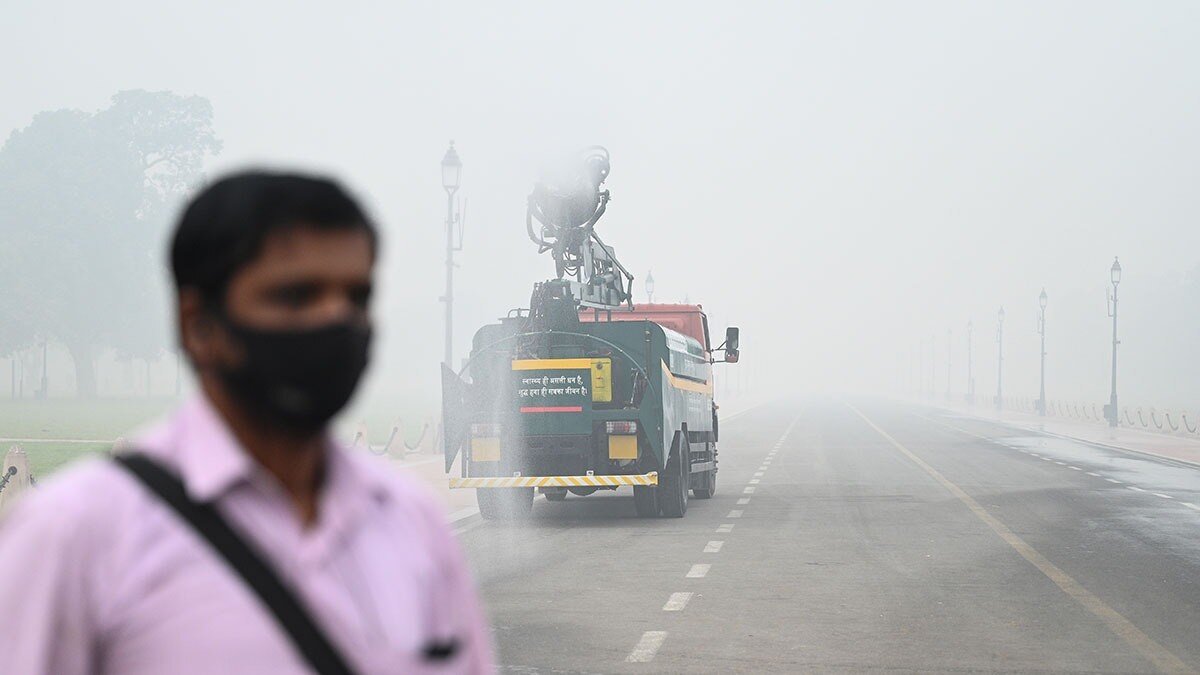
Delhi’s annual battle with toxic winter air continues despite nearly a decade of emergency pollution-control measures, with the city recording no sustained improvement in its winter air quality over the past four years, a new analysis by the Centre for Research on Energy and Clean Air (CREA) has found.
The average Air Quality Index (AQI) climbed from 280 in the winter of 2022-23 to 295 in 2025-26, raising questions about whether the Graded Response Action Plan (GRAP) is delivering lasting results.
advertisement
The findings raise questions about the effectiveness of the emergency pollution-control framework, which has been in place since 2016. However, experts caution that the absence of a sustained improvement does not necessarily mean GRAP has failed to limit pollution peaks.
Nearly four in five winter days saw restrictions under Stage II of GRAP or higher, highlighting Delhi’s continued dependence on emergency measures to tackle its recurring air pollution crisis.
CREA examined 12 episodes across four winters in which Delhi’s AQI rose from below Stage III to Stage III or IV, analysing three episodes in each winter. Pollution worsened in the week following 10 of these episodes and eased after the remaining two.
The largest increase followed the November 2, 2023, episode, when the average AQI rose by 114 points, from 317 before the episode to 431 afterwards. Other major increases followed episodes on October 29, 2022, when the AQI increased by 100 points, January 3, 2025 (+94 points), and January 28, 2025 (+92 points).
CREA said pollution often remained high or increased in the week after Delhi entered the more severe stages of GRAP.
However, the analysis does not establish that the restrictions caused pollution to rise or that air quality would have been the same without them.
DID GRAP HELP DELHI’S AIR IN ANY WAY?
A separate study, titled Possible effectiveness of Graded Response Action Plan restrictions in New Delhi, India, by scientists from the Indian Institute of Tropical Meteorology (IITM), Pune, and the Commission for Air Quality Management (CAQM), found that without GRAP restrictions, Delhi could have experienced 60 per cent more hours of severe air quality.
The study also estimated that hours with AQI above 300 could have been around 60 per cent to twice as high without the measures.
This distinction is crucial: GRAP is designed primarily as an emergency response to prevent pollution from escalating during unfavourable weather conditions, rather than as a standalone solution to eliminate the sources of emissions.
“GRAP basically helps to reduce the peaking of pollution,” said Shambhavi Shukla, programme manager for Clean Air and Sustainable Mobility at the Centre for Science and Environment (CSE).
As the AQI crosses thresholds of 300, 400 and 450, progressively stricter measures are introduced to curb emissions and arrest further deterioration, she explained.
Shukla added that pollution concentrations can exceed the maximum AQI reading of 500. This is because the AQI scale is capped at 500, meaning extremely high pollutant concentrations may not be reflected in a higher headline index value.
She also noted that GRAP implementation has evolved, with forecasts of deteriorating air quality allowing authorities to introduce restrictions pre-emptively rather than waiting for pollution to remain elevated for a prolonged period.
DELHI NEEDS ACTION THROUGHOUT THE YEAR
According to Shukla, the larger problem is the continued presence of pollution sources throughout the year, including transport, industrial emissions and other urban activities.
Winter weather traps pollutants closer to the ground, worsening the crisis, while stubble burning and other episodic sources can add to the burden.
“The major problem is there is a vast difference in the policies and the enforcement strategies,” she said, arguing that existing measures need stronger implementation on the ground.
She added that monitoring systems, including Delhi’s integrated command and control centre, could help authorities identify pollution sources and respond more quickly if the data generated is translated into immediate action.
CREA similarly called for emission reductions at source to become the primary objective of clean-air policy, with GRAP serving as the last line of defence during severe pollution episodes.
The findings suggest that Delhi needs to move beyond its dependence on winter emergency restrictions. While GRAP may help contain pollution peaks, lasting improvements will require year-round enforcement and sustained reductions in emissions.
– Ends
SOURCE :- TIMES OF INDIA