SOURCE :- THE AGE NEWS
Après nous, le déluge. After us, the flood. We live for now, let the world go to hell when we’re not in it.
The nihilistic declaration is famously attributed to the extravagant Madame de Pompadour, mistress to pre-French Revolutionary King Louis XV. It was appropriated by the Parisian student protesters of May 1968, beloved of the avant-garde art scene which dramatised their “struggle”. They thought they were dismantling establishment values. It never occurred to the protesters that they were aping them.
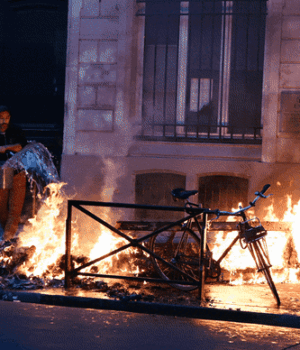
Nor has it occurred to the protesters who, over the past weeks, ripped up the streets of France. Nor those who picked up their refrain in Italy, Spain, Portugal, the geriatric school protesters in Berlin, or the German “Gen Z uprising” movement calling for nationwide protests on October 31.
They say they are revolting against a system that holds them back. So were their grandparents who ripped up paving stones in 1968. And their parents, who held up placards of murderous communist dictators Lenin, Stalin and Mao in May Day marches over the past few decades.
They are the entitled heirs of entitlement. A generation which learned there is always someone responsible for you; always someone else whose choices are more powerful than yours.
Spanish sociologist María Silvestre says young Europeans are experiencing “a strong sense of uncertainty and a lack of control”. My own research found many Australian young people also feel helpless – and that a lack of a sense of personal agency is associated with low life-satisfaction.
It is impossible not to empathise with young people who can’t get a start in life. But we owe it to them to show them the structural barriers are not just material but attitudinal. Where the situation is particularly bad, as in France, they are taking their howl of powerlessness to the streets. They are the children of the middle class, who should have every chance to get ahead, mingled with the children of immigrants who feel they’ve never been accepted. Finally, they are united in their anger. In their desire to destroy something because they can’t tackle the real root cause of their anger.
In a time of heightened tension over immigration, the riots have fed a narrative of failed integration; of migrants coming to smash the physical structures and civic traditions of Western culture. But it’s not enough to explain what’s going on. Yes, immigration is another of Europe’s failures. What was meant to be kindness has turned out to be cruel.
France, with its porous borders, generous welfare state, and philosophy of laïcité (the hands-off secular state) assumed people of different beliefs would just work it out if they were left alone. Instead it has created vast ghettos of unintegrated migrants, at odds with each other and the native French population. Cultural differences, ignored and unresolved, have become points of mutual distrust. The children of the first generation were supposed to be automatically French by virtue of being born there. Instead they became marginalised communities, stuck with high levels of unemployment.
Germany thought it could invite in guest workers to rebuild post-war, but then didn’t have the heart to send them home. Instead, a neglected community emerged which never learned to properly speak the local language. Over time, as the welfare state grew, these families brought over wives and cousins, who learned that money was obtained through the government – passing down dependency with no knowledge of how to climb out of it.
The violence of the protests in France is the reason we’re talking about it now. But this is a routine rehearsed for years. Across Europe, May Day marches are known to descend into a more anarchic form of protest, with cars set alight and shop windows smashed. When I was living in Germany in the 2000s, immigrant youths would join at the point the marches turned to riot.
Knowing many of these second-generation immigrants, I thought then that the violence was a helpless expression of resentment against a home that didn’t feel like a family. This is another area into which I’ve been conducting research in the Australian context. And I wasn’t far off – in Australia there is a picture of mutual grievance – both locals and newcomers feeling they’re giving more than they’re getting back from the multicultural bargain. Unchecked, Australia could develop the problems we see elsewhere. People who feel they are getting the worse end of the deal respond with resentment to the whole social project.
But the European protests aren’t a consequence of poorly run immigration only. They are a combination of resentments which intersect at the juncture of powerlessness. The young migrants and the young Europeans have had the same hoax played on them. The maternalistic social state promised them everything, but it can’t give them the one thing they crave: the wherewithal to make a life without the state.
And so they rip up the streets and set fire to things they have not built, just as students did in 1968 and have done since. Because they don’t know any other way to prosperity other than petitioning the government. They are permanent children throwing a tantrum because the pocket-money raise didn’t come through.
It’s too late. The tantrums won’t work any more. The 1968ers and their heirs are soaking up the social spending. Generous pensions, tenured government jobs, discounted housing, generous but careless immigration programs – they all have to come from something. They depend on that reviled class, the native petite bourgeoisie, to work long hours, squirrel away nest eggs, and pay the taxes that fund the state.
From Madame de Pompadour to the modern day, it has been chic to hold these people and habits in contempt. But if everyone is a radical today, no-one is paying for the lifestyle to which the radicals have become accustomed.
A government which gives its citizens everything leaves them with nothing at the end of the day.
Parnell Palme McGuinness is an insights and advocacy strategist. She has done work for the Liberal Party and the German Greens and she is a senior fellow at the Centre for Independent Studies. She is also an advisory board member of Australians For Prosperity, which is part-funded by the coal industry.
 Parnell Palme McGuinness is an insights and advocacy strategist. She has done work for the Liberal Party and the German Greens and is a senior fellow at the Centre for Independent Studies. She is also an advisory board member of Australians For Prosperity, which is part-funded by the coal industry.